
From Fibre to Fabric: Sagar Manufacturers Evolution From Spinning Unit To An Integrated Textile Powerhouse
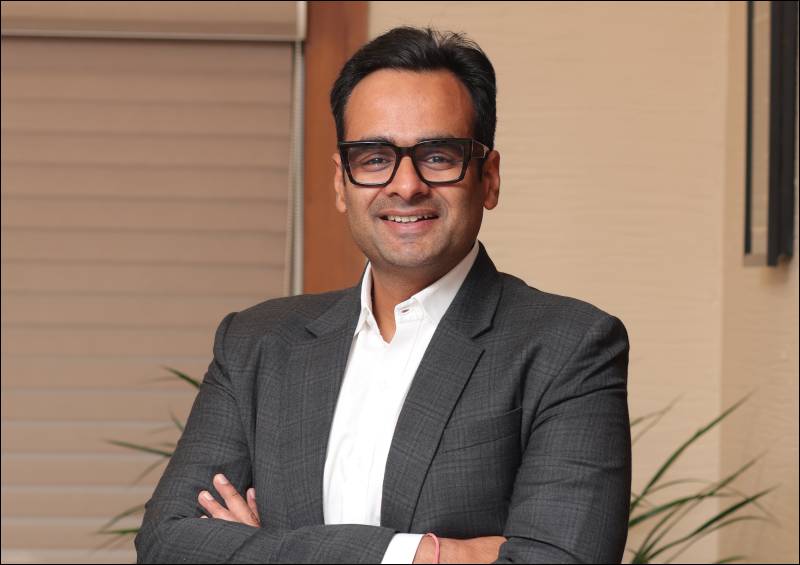
In an industry often defined by scale, Sagar Manufacturers Integrated Textile Industry is building a differentiated identity, one rooted in integration, process control and disciplined expansion. In an exclusive conversation with Henry Dsouza, Associate Editor of Textile Insights, the company’s Managing Director Siddharth Sudhir Agrawal, speaks on the company’s journey from a modest spinning unit to an emerging integrated textile player, while outlining its strategic direction in processing, sustainability and market positioning.
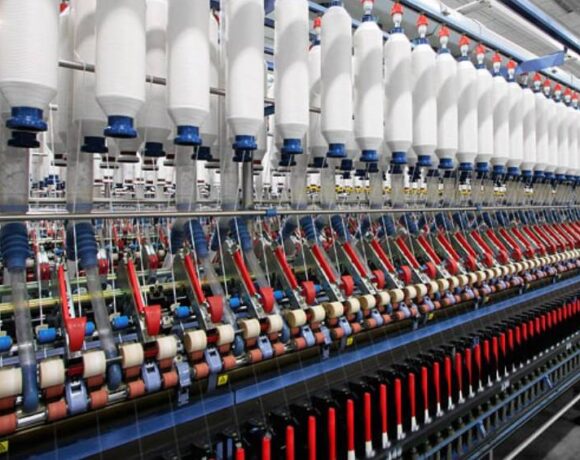
“We began our journey in 2011 near Bhopal with a very clear intent to build a quality-driven textile business,” Agrawal says. “Our first spinning unit came up in early 2013 with 33,000 spindles, focused on cotton yarns in the 20s to 30s count range. From day one, the emphasis was never on scale alone, but on quality.”
What followed was a steady and deliberate growth trajectory. “Over the past 15 years, we have expanded almost every alternate year. At the same time, we kept diversifying our product portfolio. We have always believed in pursuing both vertical and horizontal expansion, deepening capabilities while broadening our offerings.”

This dual approach helped Sagar carve a niche in spinning. “We are not a volume-driven player,” he explains. “Our focus has been on specialised, high-quality yarns, with a diversified portfolio spanning counts, certified products and strong doubling capacities.”
A turning point came when the company identified a structural gap in the Indian textile ecosystem. “India is very strong upstream, but finished fabric has traditionally been a bottleneck. With our strong base in greige yarns and knitted fabrics, producing nearly 50 tonnes per day, the move into finished fabrics was a natural evolution. Integration allows us to control quality across the value chain and offer end-to-end solutions.”
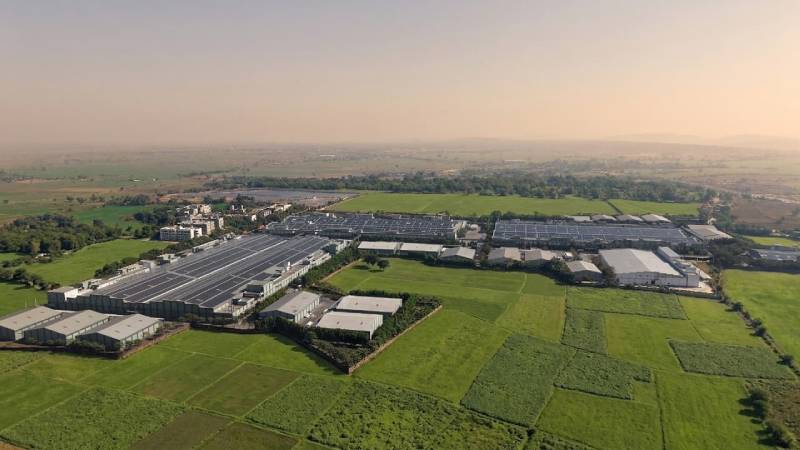
Today, Sagar Manufacturers operates close to 2.5 lakh spindles, with another 90,000 spindles set to be commissioned soon.
The next step in this evolution was entry into processing. “Dyeing and printing were a logical extension,” Agrawal notes. “Processing is the most critical and often fragmented part of the value chain. To truly integrate, we needed control over this segment.”
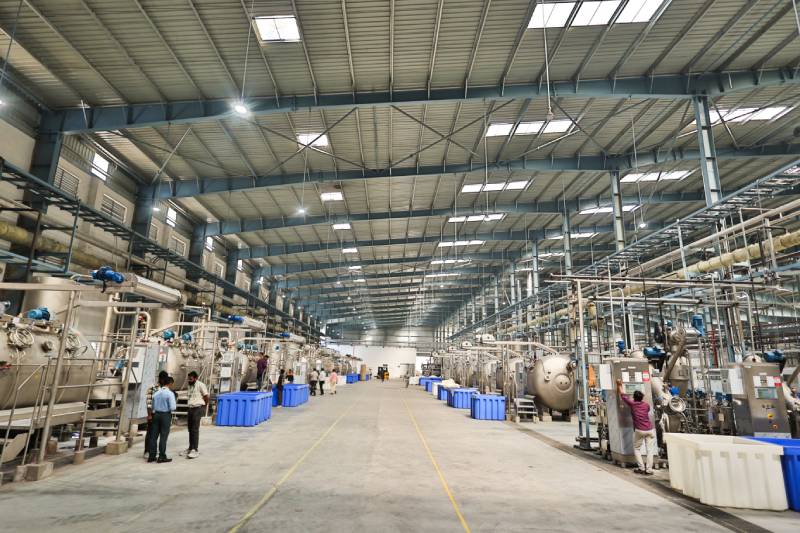
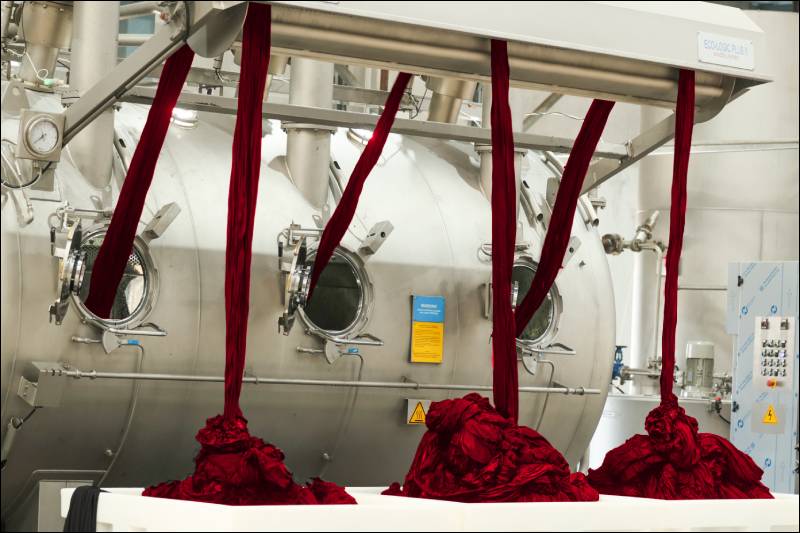
Technology, he emphasises, has been central to this transition. “Quality is non-negotiable for us. Instead of sourcing from a single supplier, we adopted a best-in-class approach, selecting machinery from global leaders for each specific function. This ensures optimal performance at every stage.”
The facility is designed as a digitally driven operation. “We have fully automated dyeing systems, advanced chemical dispensing and complete integration through SAP S/4HANA. This enables real-time monitoring, process control and data-driven decision-making. From day one, we embedded standardisation tools to ensure consistency and reproducibility.”
The benefits are tangible. “With in-house yarn and greige fabric, we have far greater control over raw materials. Integration reduces external dependencies, improves turnaround times, and enhances our ability to handle customised orders.”
In a fiercely competitive market, Agrawal believes differentiation lies within the company. “Textiles offer no easy margins. Everyone chases price, but the real edge comes from internal efficiencies. Our integrated model allows us to optimise both cost and quality.”
Service, he adds, is where the impact is most visible. “For finished fabric buyers, synchronising deliveries is a major challenge. With greige availability within our ecosystem, we can deliver finished fabrics within 10–15 days post-approval. That level of responsiveness is a significant advantage.”
This operational strength is backed by disciplined planning. “Our production planning and control systems are robust. We believe in making honest commitments and delivering on them.”
Sustainability has been embedded into the project from inception. “We knew water, energy and waste would be critical challenges. So we addressed them holistically,” he says.
On the energy front, the company has adopted biomass-based solutions. “We run 100% rice husk-based boilers. Given our location in Madhya Pradesh and our own husk milling capabilities, we are able to use agricultural waste as fuel, reducing dependence on fossil fuels.”
Water management has been equally rigorous. “We were committed to Zero Liquid Discharge (ZLD) from day one. Today, we recycle nearly 90% of our water consumption, which significantly reduces freshwater dependency.”
Renewable energy is another pillar. “We already have over 28 MW of solar capacity within the campus, and this is being expanded further.”
Addressing concerns around biomass emissions, he adds, “We have installed electrostatic precipitators and bag filters. Emissions are minimal, our chimney output is almost invisible. The collected ash is responsibly reused, including in brick manufacturing.”
Setting up such a facility, however, came with its challenges. “A processing unit is far more complex than spinning or knitting. Our vendor ecosystem involved nearly 300–400 suppliers. A large portion of machinery had to be imported and with global supply chain disruptions, coordination became a major hurdle.”
Execution, therefore, was key. “The real challenge was synchronization, ensuring that everything arrived and was installed in a coordinated manner. Through meticulous planning and strong vendor management, we were able to commission the entire facility within 18–19 months from ground breaking.”
On the market front, Sagar is adopting a diversified approach. “The Indian domestic market is currently very strong. Both Indian and international brands are shifting manufacturing to India, not just for local demand, but also for exports.”
“We cater to all segments, local brands, large Indian brands and global brands through nominations. Around 30% of our fabric is linked to global brands, while 70% serves domestic consumption. Overall, about 90% of our sales are domestic, as fabrics are largely consumed in India and exported as garments.”
While garmenting is a logical next step, the company is cautious. “Garmenting is design and sourcing driven. It cannot rely solely on in-house fabrics. For now, our focus is on strengthening spinning and scaling processing from 600 to 1000 tonnes. Once stabilised, we will evaluate garmenting more strategically.”
Compliance and traceability, Agrawal believes, are rooted in intent. “For us, sustainability is about honesty. It’s about respecting the law, the workforce and the environment. We undergo regular audits by global brands and consistently meet their standards.”
He points to the company’s broader ecosystem as a differentiator. “We are a women-centric organisation, with nearly 60% of our workforce being women. Our campus houses around 2000+ people, with residential, recreational and social infrastructure. It’s a green, inclusive environment and that reflects in our productivity and culture.”
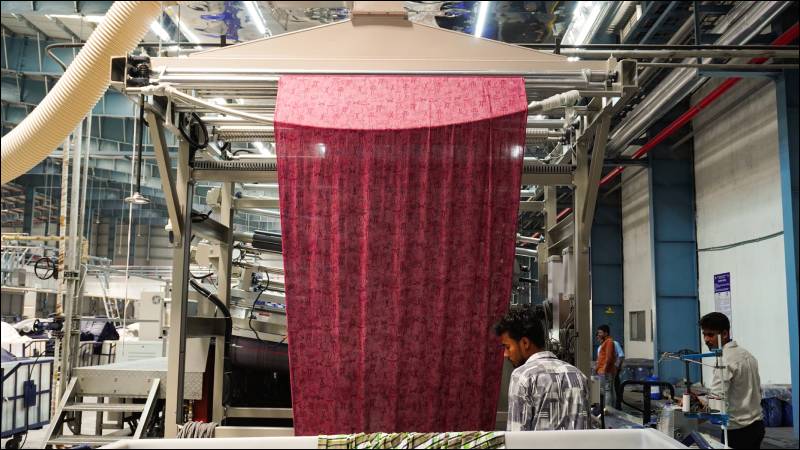
Looking ahead, the outlook for the industry remains positive. “Processing has long been the missing link in India’s textile story. Now, with investments coming in and garmenting expanding beyond traditional hubs like Tirupur and Ludhiana into states like Odisha and Madhya Pradesh, the ecosystem is evolving.”
“Garmenting and processing will grow together. India is not weak in garmenting — it has simply been underdeveloped relative to spinning. That is now changing.”
For Sagar, the roadmap is clear. “We are adding 90,000 spindles, expanding knitting with 50 machines and scaling processing capacity. All expansions are within our integrated campus and funded through internal accruals and debt.”
Yet, the ambition remains measured. “We do not aspire to be the largest. We want to be a focused, niche player, an important part of the textile ecosystem, known for quality, reliability and consistency,” states Agrawal.
As the company prepares to showcase its finished fabrics at Bharat Tex 2026, Agrawal reflects on the journey. “Earlier, we were present in the greige segment. This time, we step into the ‘colourful’ side. It’s a proud moment for us.”
His message to the industry is equally grounded. “The last few years have been challenging, but India is well-positioned today. Global interest is rising, demand is improving, and the outlook is positive. The key is to stay resilient, stay optimistic, and be ready for the opportunities ahead.”