From Khelo India To Made-In-India Sportswear: Is The Textile Industry Ready To Run?
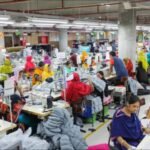
India is putting serious financial muscle behind sport. The revamped Khelo India Scheme, together with enhanced support to National Sports Federations, carries an outlay of ₹36,441 crore for 2026–27 to 2030–31. The Union Budget 2026–27 has added further pace, allocating ₹4,479.88 crore to the Ministry of Youth Affairs and Sports and another ₹500 crore for sports goods manufacturing.
The money is clearly on the track. The question is whether India’s textile industry is properly warmed up.
The opportunity extends beyond stadiums, coaching and medals. It is also about what athletes and the millions inspired by them will wear. Every new athlete creates demand for training jerseys, competition apparel, compression garments, thermal layers, towels, kitbags and recovery products. Unlike a stadium, which is built once and admired for years, sportswear must be worn, sweated in, washed, tested and replaced. It is less a one-time sprint and more a dependable relay race.

The opportunity has also moved beyond competitive sport. Running, gym training, yoga and cycling have made athleisure wear part of everyday urban dressing. Even those whose most demanding sporting activity is walking from the parking lot to the coffee shop increasingly prefer to perform it in technical fabric.
The boundary between sportswear and casualwear has therefore stretched almost as much as the garments themselves. India’s athleisure market, estimated at about USD 13.9 billion in 2025, could reach USD 22.4 billion by 2034. The narrower sports apparel segment, valued at approximately USD 706 million in 2024–25, is expected to more than double by 2030. The athlete may set the category in motion, but the everyday consumer carries it across the finish line.
Yet sportswear is not merely a T-shirt with a faster-looking logo. It is increasingly a technical textile category.
A performance garment may need to manage moisture, regulate body temperature, control odour, reduce friction, resist abrasion, protect against ultraviolet exposure and retain stretch after repeated washing. Para-sports apparel may require adaptive openings, pressure-sensitive construction and compatibility with prosthetics. Women athletes need products developed around their physiology, movement and fit, not smaller versions of garments designed for men.

India’s sports fabric market is estimated at around USD 1.66 billion, with polyester accounting for nearly 60 per cent. Dry-fit microfibre alone may represent a USD 500–700 million segment. Despite this demand, India still does not produce high-performance activewear fabrics at the required depth and scale. Premium brands often depend on imported fabrics, specialised finishes or overseas product development knowledge.
This reveals a “missing middle” between India’s textile capabilities and the needs of sport.
The country has strength in fibres, yarns, knitting, synthetic textiles and garment manufacturing. It also has capable research institutions and an emerging start-up ecosystem. But manufacturers often wait for buyers to provide specifications. Research institutions may develop promising materials without finding commercial partners or athletes for field trials. Athletes use the finished products but are seldom involved systematically in designing them.
That connection needs to be strengthened. Textile mills, garment manufacturers, researchers, designers, coaches and athletes should jointly develop and test products under actual Indian conditions. Heat, humidity, movement, body type, washing practices and affordability all matter. The athlete should not be invited only to endorse the garment after it is made; the athlete should help shape it while it is being developed.
Circularity must also enter the conversation early. Performance textiles depend heavily on synthetic fibres, elastane, coatings and chemical finishes. These improve functionality but often make recycling difficult. Regular replacement by schools, teams, academies and institutions can create a considerable stream of textile waste.
The industry could explore recycled polyester and nylon, bio-based fibres, mono-material construction, safer finishes, lower-impact dyeing, repairable designs and collection systems for institutional sportswear. Product information could record fibre composition, chemical treatment, expected durability and recovery options.
The practical test of circular sportswear is not whether it looks green in a presentation. It must perform under sweat, stretching, repeated washing and competition and still offer a credible route for recovery afterwards. Sustainability without performance will not satisfy the athlete; performance without an end-of-life plan will eventually trouble everyone else.
The ₹500 crore sports goods manufacturing initiative provides a useful beginning. Apparel and performance textiles should now be explicitly included within the larger sports-manufacturing agenda. A focused programme could support shared testing facilities, athlete-led trials, material research, design grants, certification and technology upgradation for MSMEs.
A national sports-textile innovation platform could connect Khelo India, the Ministry of Textiles, research institutions, manufacturers, brands, federations and athletes. Its success should be visible in Indian-developed fabrics, tested products, reduced imports, institutional orders, athlete adoption and exports not merely in meetings held or agreements signed.
India’s sporting experience shows that talent responds when pathways, coaching and support systems improve. Manufacturing capability behaves similarly.
Khelo India is helping athletes move from the playground to the podium. The textile industry now has an opportunity to build a parallel journey—from fibre to fabric, laboratory to field, and factory to the global market.
The nation is preparing to run faster. It would be useful if Indian sportswear kept pace.
(Rony Banerjee is a strategy and policy advisor working at the intersection of textiles, MSMEs, sustainability and public policy.)