Future Looms, Second-Life Fibres
Reimagining Handloom for AI-Enabled Technical Textiles
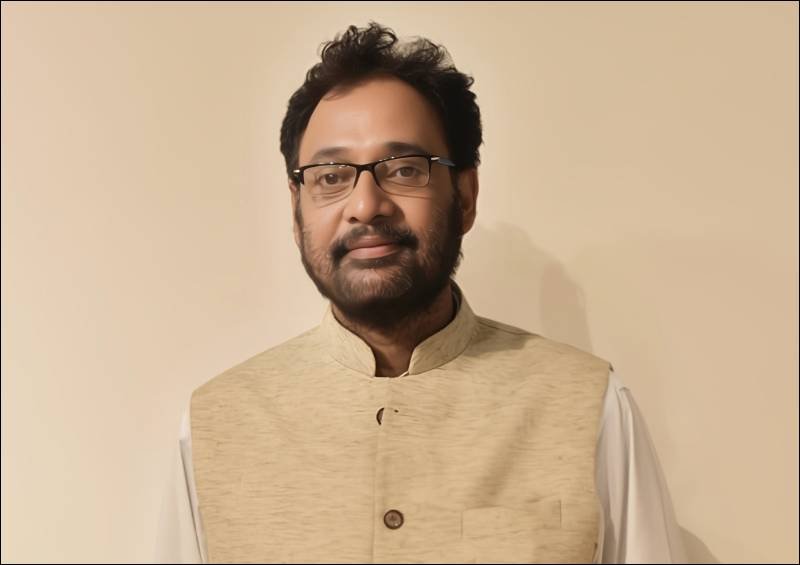
By Rony Banerjee
I returned from Bharat Tex 2026 with optimism, but also with a familiar discomfort.

Everywhere there was confidence. Technical textiles, sustainability, AI, circularity, traceability, ESG, exports, global markets. All the right words were there. India looked ready to speak the language of the future textile economy.
But one question kept sitting quietly in the corner.
If India is preparing for the textiles of tomorrow, what are we doing with the textiles of yesterday? And more importantly, where does the traditional handloom fit into this new conversation?
For too long, handloom has been treated like a beautiful museum piece. We praise it, photograph it, wear it on special days, write emotional captions, and then leave the weaver to fight the market alone. Sarees, stoles, dupattas, shawls, exhibitions and designer collaborations are important. But honestly, how much more can the same story be stretched?
A craft cannot survive only because the middle class feels proud of it twice a year. And a weaver cannot keep weaving dignity into cloth while his own household remains stitched to uncertainty. Respect is necessary. But repeat orders are oxygen.
This is where Future Looms becomes important.
The idea is simple. Let the weaver remain a weaver. Let the loom remain a loom. But change the material, the function and the buyer.
India generates huge quantities of post-consumption textile waste. Old garments, uniforms, hotel linen, household fabrics, discarded clothing and institutional textiles eventually lose all wearable value. Much of it passes through informal reuse, downcycling or waste channels. That system has its own value, no doubt. But the question is, can this so-called waste become raw material for the next generation of handloom-linked technical products?
Used textiles can be sorted, graded, opened into fibre, blended with jute, banana fibre, hemp, wool, recycled PET or coated yarns, and then converted into functional handloom-based industrial materials.
Not fashion products. Not decorative sympathy products. Real utility products. That is where the conversation must move. The next textile opportunity may not come from another beautiful fabric alone. It should come from what that fabric becomes after its first life is over. Old garments, discarded uniforms, surplus cloth and textile waste should not be seen only as charity, scrap or municipal burden. They can become acoustic panels, insulation layers, agro-mats, filtration cloth, packaging boards, geotextile supports and industrial textile components, made on handlooms.
This is the real waste-to-wealth bridge, not turning every waste fabric into another crafty handbag, but converting second-life fibres into products that solve practical problems for agriculture, infrastructure, roads, buildings and packaging industry.
Why should selected handloom clusters not produce acoustic wall panels for schools and offices? Why not thermal mats for low-temperature insulation for defence services? Why not agro-textile mats for nurseries and FPOs (Farmer Producer Organisations)? Why not composite reinforcement sheets for panels and green building materials?
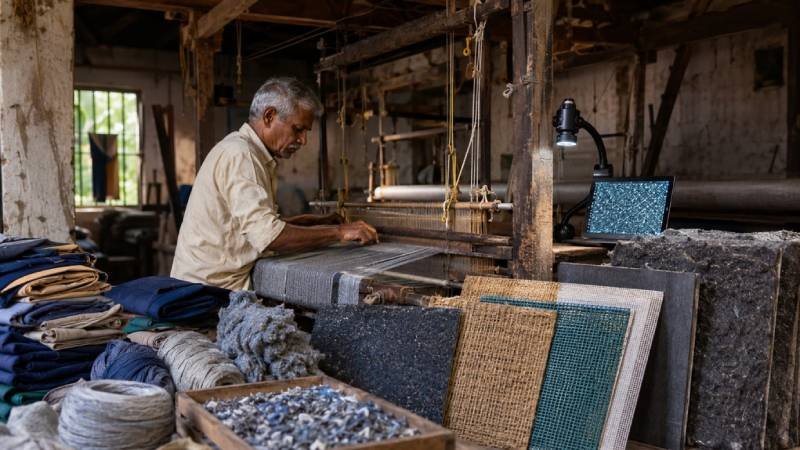
This is not about making the artisan a scientist overnight. It is about taking existing weaving intelligence and placing it inside an emerging market. The opportunity will not look the same in every state. Bihar can look at banana pseudo stem, old household textiles and Bhagalpur’s weaving memory to create packaging sheets, mulching-mats, filtration cloth and rural processing textiles. Bengal can look at water hyacinth from ponds and wetlands, jute familiarity, handloom clusters and Kolkata’s institutional textile waste to create agro-textiles, acoustic panels and biodegradable utility and packaging materials.
Odisha, Jharkhand and Chhattisgarh can connect tribal weaving, tasar, forest fibres and rural livelihoods with climate-smart mats, insulation layers and natural fibre composites. Uttar Pradesh can link Varanasi, Bhadohi and ODOP (One District One Product) clusters with industrial meshes, carpet waste recovery and functional interior panels. Every state has its own textile memory and its own waste stream. The task is to stop treating them separately and start converting them into a future material economy at every state levels and not only at Panipat!
AI can help here, but not as drama. AI should be the silent assistant. It can help identify which cluster can handle which material, which waste stream can be used for which product, what weave structure can support what function, what the costing will be, and which buyer may actually purchase it. Camera-based AI can inspect defects, broken yarn, density variation and inconsistencies. This can give buyers confidence that handloom can also become specification-driven industrial textiles.
Future Looms is not about saving handloom with emotion alone. It is about giving handloom a future market. It connects circular economy with traditional skill, AI with artisan intelligence, and waste-to-wealth with technical textiles. The larger point is simple. Post-consumption textile waste should not end its life in a dump. It can return to the loom, not as old cloth, but as new functional material.
Bharat Tex showed India’s manufacturing confidence. The next Bharat Tex must also show India’s recovery confidence. Because the future of textiles may not only come from new mills, new machines or new fibres. It should also come from old garments, old looms and old skills being given a new industrial purpose.
The old loom does not need pity. It needs a new buyer.
(Rony Banerjee is a strategy and policy advisor working at the intersection of textiles, MSMEs, sustainability and public policy.)