Global Cotton Trade Set For Growth Even As Supply Tightens
Global cotton trade is expected to remain on a growth trajectory over the medium term despite increasing supply-side pressures and geopolitical uncertainties, according to the latest World Cotton Trade Report – July 2026 released by the International Cotton Advisory Committee (ICAC).
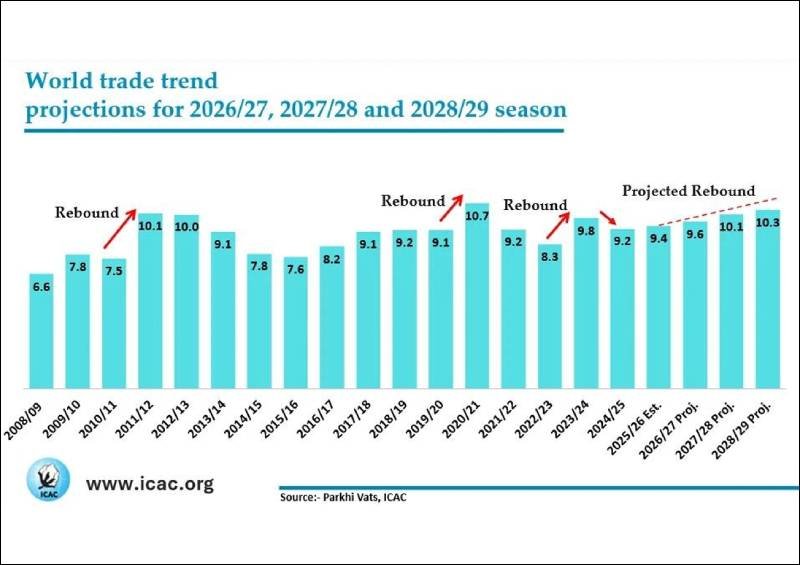
The report projects global cotton trade to reach 9.6 million tonnes in 2026/27 and expand further to around 10.3 million tonnes by 2028/29. The growth is being driven by a tightening balance between global production and consumption, increasing reliance on inventories held by major exporting countries, and sustained demand from key textile manufacturing nations.
Tight Supply to Support Trade
ICAC estimates global cotton production at 25.8 million tonnes in 2026/27, down 2 per cent from the previous season, while consumption is expected to remain relatively stable at 25.5 million tonnes. As production and consumption move closer together, international trade will play a more critical role in balancing supply and demand.

The report also warns that continued energy-related cost pressures, disruptions to fertilizer supplies and geopolitical tensions could further constrain production, potentially pushing cotton prices higher.
Brazil Consolidates Leadership
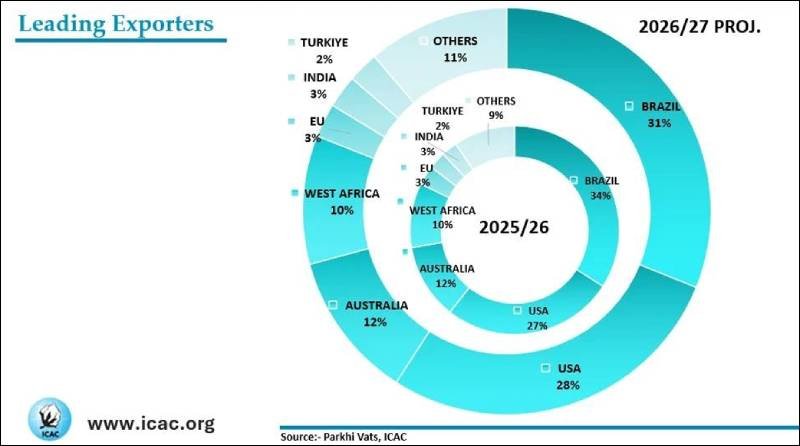
Brazil has strengthened its position as the world’s largest cotton exporter, supported by record production of 4.2 million tonnes during the 2025-26 season. Competitive pricing, trade agreements, strategic warehousing investments in Singapore and strong demand from China have enabled Brazil to surpass traditional leader United States and maintain its dominance in global cotton exports.
Although Brazilian cotton area is expected to decline in 2026-27 due to rising costs and competition from other crops, the country is projected to remain one of the world’s leading suppliers.
China Returns to the Market
China continues to exert a significant influence on global cotton trade dynamics. After imports fell sharply in the previous season, Chinese cotton imports are projected to recover by around 42 per cent in 2025/26, reaching approximately 1.6 million tonnes. Additional import quotas and stronger demand from the textile sector are expected to support the rebound.
Brazil remains China’s largest cotton supplier, while Australia and the United States continue to compete for market share.
India’s Cotton Story Is Changing
One of the most significant developments highlighted in the report is India’s evolving role in the global cotton economy.
India’s cotton export outlook continues to weaken as rising domestic consumption absorbs a larger share of production. While cotton output is expected to increase by 8 per cent in 2026-27 due to improved yields and favourable monsoon expectations, most of the additional cotton is likely to be consumed domestically rather than exported.
According to the report, growing demand from India’s spinning, textile and apparel sectors, coupled with increasing exports of value-added products such as cotton yarn and textiles, is reducing the availability of exportable cotton surplus.
The report also notes that India’s trade agreement with the European Union, which provides improved access for labour-intensive textile products, is expected to further boost domestic cotton consumption by strengthening downstream manufacturing activity.
Trade Agreements Reshaping Cotton Flows
The report highlights how trade agreements are increasingly determining cotton trade patterns. Vietnam’s growing ties with the United States, Australia’s free trade agreements with Vietnam and the strengthening cotton relationship between China and Brazil are influencing sourcing decisions and global trade flows.
At the same time, geopolitical developments, tariffs and logistical disruptions, including concerns surrounding the Strait of Hormuz, continue to add uncertainty to global cotton supply chains.
Outlook
The report concludes that global cotton trade has historically demonstrated resilience and the ability to rebound strongly following disruptions. With demand expected to remain firm and production growth constrained, international trade is likely to play an increasingly important role in balancing global cotton markets over the coming years.
For India, the findings reinforce a broader structural shift already underway—moving from being primarily a raw cotton exporter towards becoming a larger consumer of cotton and a more significant exporter of value-added textile and apparel products.