Hercules Twist Number
The Hercules twist number is a fascinating concept that helps quantify the optimal twist in cotton yarns-beyond which the yarn’s strength actually begins to decline.
I always like to embrace new challenges, because they help us develop resilience, courage and perseverance. Additionally, we can develop new skills and gain valuable experiences.
However, this time the challenge was really challenging me.
The 60s Ne, organic cotton yarn supplied to a Japanese customer brought us some complaints: Poor performance!
The yarn was used for yarn-dyed applications.
Our customer requested more yarn strength for that type of application.
The process of finding a solution to improve yarn strength proved to be more complex than initially anticipated.
Our technical team set out to analyze the root causes.
Was it the fibre quality? The spinning parameters? Or something deeper, hidden within the process itself?
To find answers, we revisited every stage—from sourcing the GOTS-certified cotton to adjusting the twist of the yarn.
Theoretically, if both organic and conventional variants come from the same DCH-32 genetic stock, the inherent fibre strength potential should be similar. But, with practical observation in the spinning industry, the organic variety is about 5 to 10% weaker than that of the conventional variant. This may be due to how the crop is managed after harvesting.
Finally, we applied the age-old solution to increase the yarn strength. Increasing the TPI of the yarn!
We got the approval from the buyer to increase the TPI because the increased TPI should not create any other problems, like poor fabric appearance and feel.
We had positive results when we increased the TM from 4.1 to 4.3. Encouraged by the positive results, we further increased the TM. But, to our surprise, the strength started to drop.
We tried every approach we could, but nothing worked. Admitting defeat, we discussed the situation with the customer. Together, we decided to tweak the yarn count and adjust the yarn conditioning parameters. This led to an increase in absolute yarn strength and elongation. We supplied the lot and are keeping our fingers crossed as we wait for their feedback.
Yet, I still wondered why the yarn strength decreased after a certain TM level. Will it be the same for all kinds of yarn?
The answer came from a senior technocrat whom I met recently.
“It’s because of ‘Hercules’ twist number,” he stated briefly.
“What, Hercules? What is it?”. I was clearly puzzled.
With enthusiasm, he started to explain.
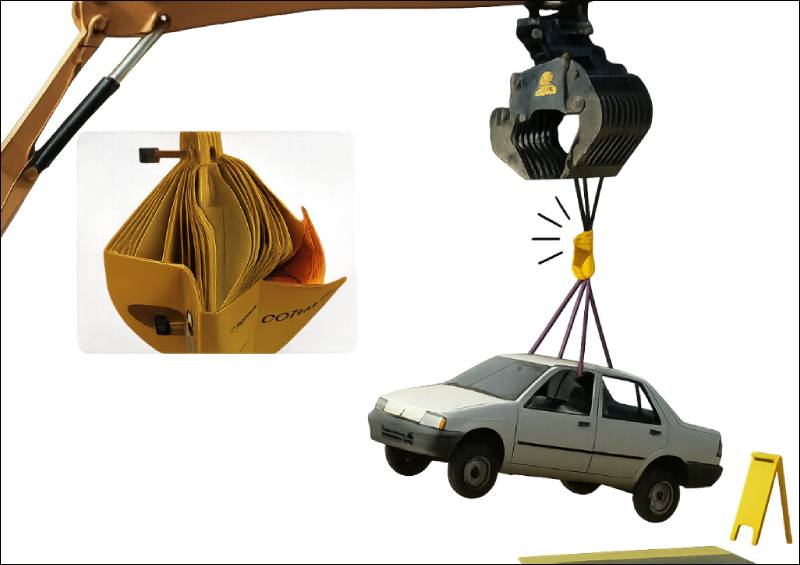
“The term ‘Hercules’ was inspired by a famous physics demonstration involving two phone books. When their pages are interleaved and pulled apart, the friction between them becomes so strong that it takes a Herculean force to separate them—strong enough to lift a car!
Researchers noticed a similar phenomenon in yarn. As fibres are twisted, friction between them amplifies nonlinearly. This frictional locking behaves like the phone book pages—once a required twist is reached, the fibres bind so tightly they resist slipping. The dimensionless parameter that governs this transition was named the Hercules twist number, honouring that dramatic frictional effect.”
“Ok, I understand about the name, sir. Is there any threshold for this number?” I asked him.
“Yeah, often after around a Hercules twist number of 30, the internal friction becomes so high that the fibres themselves become the weakest link, causing the yarn to break rather than unravel.” He explained.
“Could you explain more about this number, sir?” I asked him, still struggling to catch his point.
“The Hercules twist number is a fascinating concept that helps quantify the optimal twist in cotton yarns—beyond which the yarn’s strength actually begins to decline. It’s a non-dimensional parameter that combines several physical and geometric properties of the yarn and fibres. It’s a measure that reflects the balance between the twisting angle, the fibre length, the coefficient of friction between fibres, and the yarn geometry (diameter, packing density).” He paused and showed me the formula, which is as follows.
H=(tanθ)2⋅μ⋅L/r
Where:
- θ = twist angle (angle between fibre helix and yarn axis)
- μ = coefficient of friction
- L = fibre length in metres
- r = yarn radius in metres
After examining the formula, I informed him of my observation.
“So, I think the critical threshold of Hercules twist number will change for different kinds of yarns.”
“No, it will always be around 30. If, for whatever reason, this threshold is reached, the yarn will tend to be weaker.”
Saying this, he showed me a simulation chart to explain how the twist affects strength for compact vs conventional yarns in different counts.
Though I am not very adept at understanding these kinds of theories, I appreciated his efforts in helping me grasp the concept.
“And finally, may I know who invented this Hercules Twist Number?” I asked him.
“The Hercules twist number isn’t attributed to a single inventor in the way some textile innovations are. Instead, it emerged from theoretical modeling in yarn mechanics, done by many people to understand the relationship between twist angle, fibre friction, and yarn strength,” he replied.
I don’t know whether he is correct or not, but I bid him goodbye and thanked him for this invaluable teaching.
(Murugan Santhanam is the author of this article. He is the Managing Director of Texdoc Online Solution Pvt. Ltd.)