Smart Textile Vest Developed To Detect Hypothermia Risk In Older People
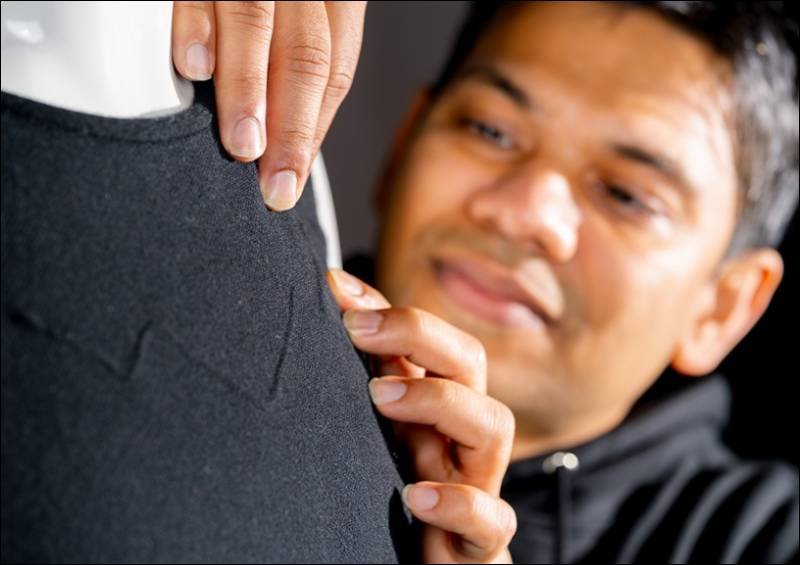
Scientists at Nottingham Trent University (NTU) have developed a smart textile vest that can continuously monitor body temperature and identify potential signs of hypothermia in older people.
The technology is designed to address the higher risk of hypothermia among elderly people, who can lose body heat more quickly and may have reduced temperature regulation due to age, chronic health conditions, medication or frailty.
Led by Dr Theo Hughes-Riley of NTU’s Advanced Textiles Research Group (ATRG), the research uses four miniature thermistors integrated into the vest’s yarn to monitor sustained changes in body temperature.

Measuring just 1mm in length and 0.5mm in width, the thermistors are connected to a microcontroller through Bluetooth. This enables temperature data to be transmitted in real time to a mobile phone or another connected device. If abnormal temperature readings continue for a specified period, the system could potentially trigger an alert to carers or medical professionals.
The sensors are encapsulated in resin to make them washable and are covered with a polyester braid. Two thermistors are positioned on the chest and two around the scapula area. The sensors are designed to remain unobtrusive and cannot be felt by the wearer.
Researchers tested a prototype of the vest during everyday activities, including sitting, walking, jumping and reaching, to assess its performance under different movement conditions. The trials identified distinct patterns in temperature changes that could potentially help detect abnormal physiological responses before they become serious.
“Hypothermia is a very dangerous condition, particularly for those who are elderly and live alone without anyone to raise the alarm for them should they become ill,” said Dr Hughes-Riley of NTU’s Nottingham School of Art & Design.
“By combining electronic textiles with an everyday garment such as a vest, carers and medical professionals would be able to respond immediately to any detected risk and help save the lives of older people who may need urgent support.”
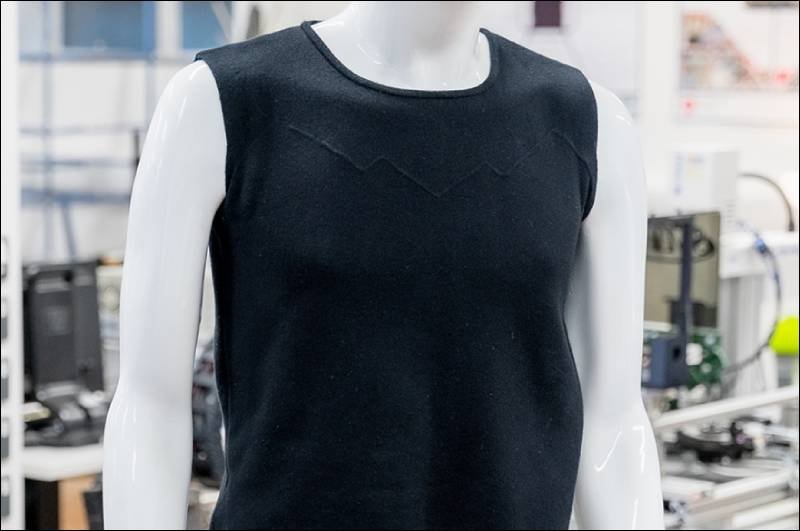
The thermistors operate using a semiconductor principle in which their electrical resistance decreases as temperature increases. They are positioned on flat contact areas of the garment to maintain consistent contact with the wearer’s skin.
The sensors are also calibrated for the specific yarns used in the vest. The resulting temperature measurements are then used to estimate the wearer’s core body temperature.
Dr Arash Moghaddassian Shahidi, senior research fellow at NTU, said smart textile technology could provide continuous monitoring of vulnerable people and help identify serious conditions requiring urgent medical attention.
PhD researcher Kalana Marasinghe, who tested the prototype, said the research demonstrates the potential of smart textiles to provide carers and clinicians with real-time health data and support faster responses when intervention is required.
The research team also includes Experimental Officer Carlos Oliveira, Dr Zahra Rahemtulla and Emeritus Professor Tilak Dias.
The development highlights the growing potential of electronic textiles to combine everyday garments with sensing and connectivity technologies, creating wearable systems capable of monitoring physiological parameters without significantly changing how the garment is worn.