Squeezed Dry: Why Bangladesh’s Garment Suppliers Are Bearing The Cost Of Fashion’s Price War
The global fashion industry’s relentless pursuit of low-cost sourcing is intensifying pressure on Bangladesh’s garment manufacturers, with new evidence showing that sourcing prices for basic apparel have failed to keep pace with rising production costs and inflation.
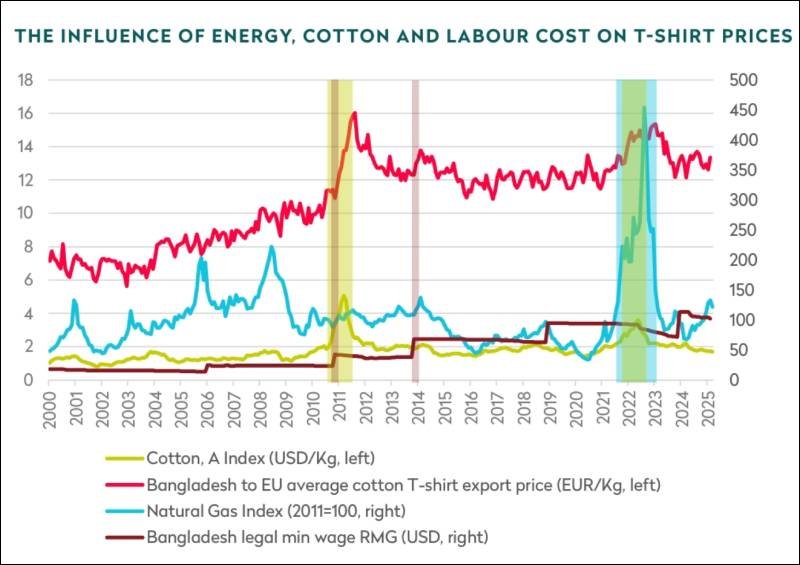
A recent report by Public Eye, Squeezed Dry: Pricing Pressure in the Global Fashion Industry, reveals that while cotton and energy price spikes are often reflected in sourcing costs, increases in labour costs are rarely passed through the supply chain. The findings raise serious concerns over the sustainability of current purchasing practices and their impact on workers and suppliers in one of the world’s largest apparel manufacturing hubs.
Labour Costs Still Ignored
The report highlights a striking pattern when cotton prices rise, brands adjust sourcing prices accordingly. However, wage increases in Bangladesh’s ready-made garment (RMG) sector have shown little measurable impact on export prices.

Despite several minimum wage hikes over the last two decades, including significant revisions in 2019 and 2024, sourcing prices for cotton T-shirts remained largely stagnant. This suggests that labour costs continue to be treated as an expendable variable in price negotiations, rather than a non-negotiable component of ethical sourcing.
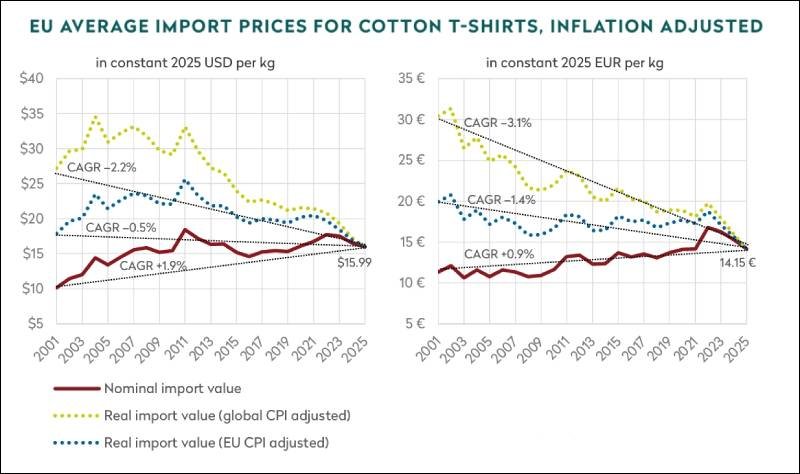
Real Prices Are Falling
Analysis of sourcing data from major international buyers between 2021 and 2025 indicates that even where nominal prices increased slightly, they failed to match global inflation levels.
For many major brands, this translates into a real-term decline in what they are paying Bangladeshi suppliers. The report notes that even higher-paying buyers remained within a narrow pricing band, leaving little room for suppliers to absorb increasing compliance, energy and labour costs.
Pressure on Suppliers Intensifies
Interviews with factory managers and merchandisers paint a troubling picture of mounting buyer pressure.
Suppliers report being forced to accept razor-thin margins simply to keep production lines running and maintain worker payments. In many cases, factories accept orders at near-break-even prices rather than risk idle production.
The report also identifies aggressive competition among Bangladesh’s more than 4,000 garment factories, often intensified by buying houses that solicit multiple quotations to secure the lowest possible price.
This has created what industry insiders describe as a race to the bottom, where factories prioritize survival over profitability.
Brand Commitments Under Scrutiny
Many global brands publicly endorse responsible purchasing and fair wage commitments. Yet the report argues that these pledges are increasingly difficult to reconcile with actual sourcing behaviour.
While companies including H&M, Inditex, Primark and others reiterated commitments to responsible purchasing, few disclosed detailed pricing data to substantiate their claims.
The disconnect between public sustainability commitments and commercial purchasing practices remains one of the industry’s biggest credibility challenges.
The Need for Greater Transparency
The findings support growing calls for pricing transparency across fashion supply chains.
Industry experts argue that without clear disclosure of sourcing prices and purchasing practices, it will remain difficult to determine whether brands are genuinely supporting fair wages and sustainable production.
For Bangladesh’s garment sector, the stakes are high. As cost pressures mount and competition intensifies, the long-term viability of ethical production will depend on whether buyers are willing to move beyond lowest-cost sourcing and pay prices that reflect the real cost of responsible manufacturing.
The message is clear: sustainable fashion cannot be built on unsustainable pricing.