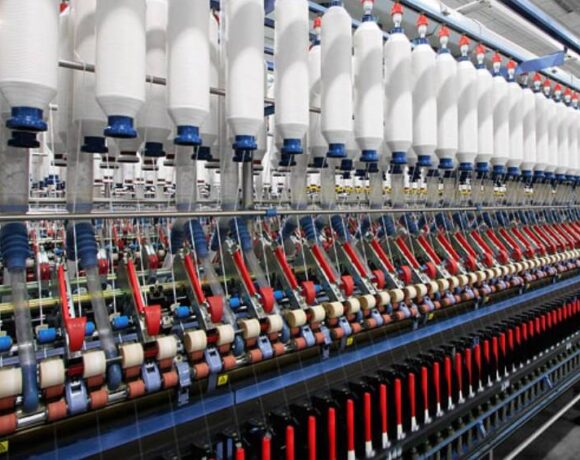

Surat Embroidery Workers Demand Eight-Hour Shifts, Weekly Holidays
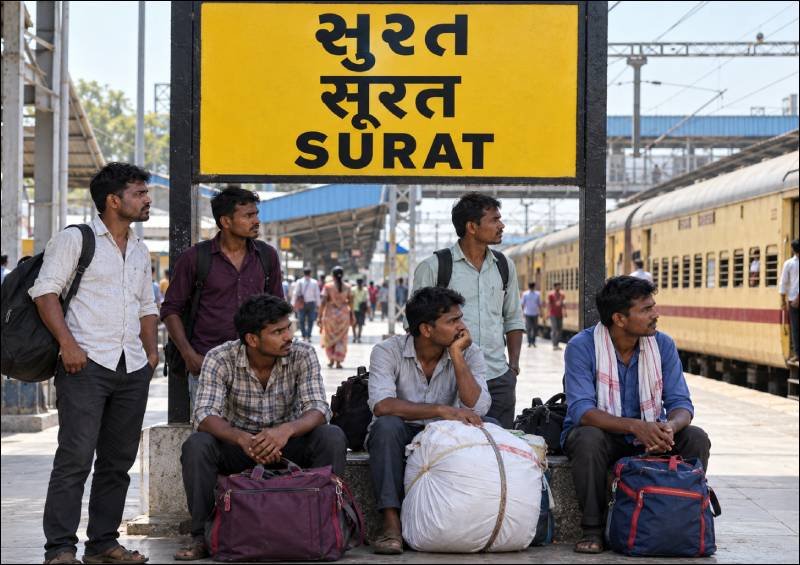
Migrant embroidery workers in Surat are demanding eight-hour shifts and weekly holidays under the ‘Gaon Chalo’ campaign, threatening to return to their villages unless working conditions improve. A proposed wage structure offering shorter shifts at lower monthly pay has become a key point of disagreement between workers and employers.
The agitation began in August 2026 and has involved strikes, negotiations and allegations of dismissals. Workers also announced plans to protest outside the Surat district collector’s office on October 15.
Surat’s textile and diamond industries rely heavily on migrant workers from Bihar, Uttar Pradesh, Odisha and other states. Labour organisations estimate that between 25 lakh and 30 lakh migrant workers live and work in the district.

Embroidery workers say they earn between ₹25,000 and ₹30,000 a month but frequently work long hours without weekly holidays. Those operating specialised machinery maintain that their wages should reflect their skills and contribution to production.
Thousands of embroidery workers went on strike on August 16. Clashes at some industrial units resulted in eight arrests. Between August 18 and 21, the Labour Department held discussions with around 400 factory owners to resolve the dispute. Employers reportedly agreed to provide weekly holidays but did not accept the demand for eight-hour shifts.
Workers staged another protest outside the District Collector’s office on September 12. On September 29, the Deputy Labour Commissioner directed the Textile Embroidery Job Work Association of Surat (TEJAS) and the Southern Gujarat Chamber of Commerce and Industry to comply with applicable central and state labour laws.
Following meetings on October 10 and 11, TEJAS reportedly proposed eight-hour shifts with weekly holidays at a monthly wage of ₹14,300. Workers opting for 12-hour shifts were offered ₹35,000 a month, along with financial assistance towards their children’s higher education.
Workers’ representatives alleged that the proposal included additional conditions for employees choosing eight-hour shifts, including penalties equivalent to 50% of the value of goods damaged during production and restrictions on carrying mobile phones inside factories. TEJAS reportedly represents around 40,000 embroidery unit owners.
The Sarvajanik Mazdoor Ekta Union has sought wages that recognise the specialised nature of embroidery work, alongside guaranteed weekly rest. While shorter shifts remain a central demand, some workers are willing to continue working 12 hours if employers ensure one holiday every week.
Union representatives alleged that 300–400 employees were dismissed during the protests. They also claimed that photographs of some dismissed workers were circulated to discourage other factories from employing them.
The arrest of labour leader Ajay Dubey, who helped initiate the campaign, has added to tensions. Workers’ representatives alleged that the arrest was intended to weaken the agitation. Police rejected the allegation, stating that the case concerned accusations of verbally abusing a factory owner and demanding money, and was unrelated to the protest.
Union Textiles Minister Giriraj Singh visited Surat on October 9 and 10 and met industry representatives. He urged employers and workers to resolve their differences through dialogue and denied reports of a mass exodus of migrant workers. Union representatives criticised the visit for not including discussions with workers.
The dispute has also renewed debate over the Factories (Gujarat Amendment) Bill, passed by the state legislature in September 2025, which included provisions allowing daily working hours to be extended to 12 hours under specified conditions. Opposition parties had raised concerns that longer working days could weaken worker protections and increase the risk of exploitation.