
The Rs 10,000-Cr. Dream Of India’s Fashion Industry
India’s fashion industry has moved beyond the aim of building a Rs 1,000-crore business. The next ambition is far bigger, creating brands that can dominate India, outlive their founders and eventually compete with the world.
India has spent decades waiting for its billion-dollar fashion brands. Today, that ambition no longer feels distant.
The Indian consumers are changing rapidly. They are more aspirational, more exposed to global trends and more willing to experiment. They may discover a brand on Instagram, browse its website, visit a store, place an order through an app and return the product at another physical location. They may live in a metro, a Tier-II city or a smaller town, but their access to fashion is increasingly similar.

This is the India that is creating the next generation of fashion brands. And the ambition is no longer modest.
The conversation has moved from the first Rs 100-crore brand to the Rs 1,000-crore brand and now to the Rs 10,000-crore brand.
Can India build fashion brands that achieve such scale? Can they dominate the domestic market, remain relevant across generations and eventually compete globally?
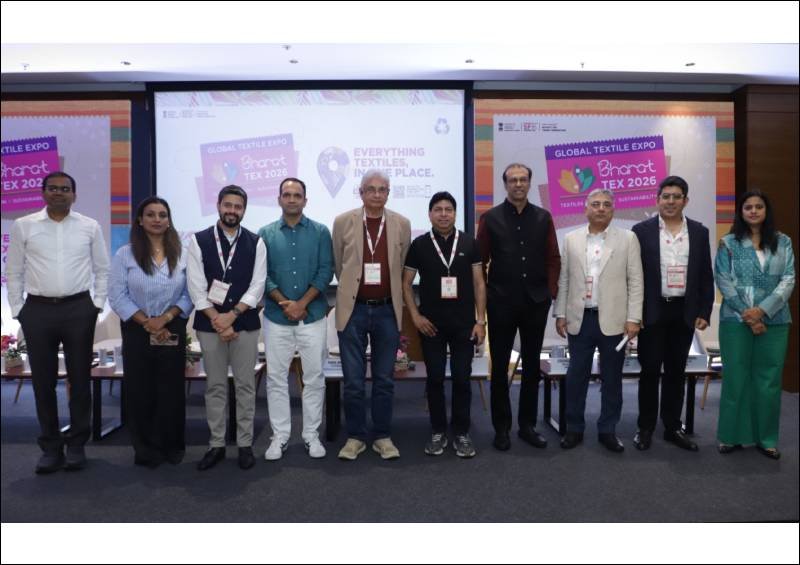
These were some of the central questions at Brands for a Billion: The Great Indian Retail Revolution, a panel discussion held at Bharat Tex 2026. The session brought together Gautam Saraogi, Founder & CEO, GoColors; Nikhil Upadhye, Managing Director, Benetton India; P Venkatesalu, CEO and Executive Director, Trent Ltd; Rahul Mehta, Chief Mentor, The Clothing Manufacturers Association of India (CMAI); Rajesh Jain, Managing Director & CEO – Indian Operations, Lacoste; Siddharth Bindra, Managing Director, BIBA Apparels; Shweta Agrawal, Founder & CEO, Tradyl; and Maya Pradeep, Creative Director, Haute Couture.
The discussion revealed an industry at an important inflection point. The opportunity is enormous, but so is the competition.

P. Venkatesalu
From Rs 100 Cr to Rs 10,000 Cr
There was a time when a Rs 100-crore fashion brand was considered a major achievement. The scale of Indian fashion has changed dramatically since then. P. Venkatesalu, CEO and Executive Director, Trent Ltd, reflected on the transformation.
“Today, I can say that I have an opportunity to sit next to somebody who has done a billion, and that’s a big change from what was in 1990,” he said.
The success of large Indian retail businesses has fundamentally altered the industry’s sense of possibility. The question is no longer whether Indian companies can build large fashion businesses, but how many can make the leap from successful businesses to powerful brands.

Gautam Saraogi
Gautam Saraogi, Founder & CEO, GoColors, represents this new generation of entrepreneurs. Starting with a focused proposition in women’s bottomwear, GoColors has expanded to more than 700 stores across India and is now extending into other categories.
The lesson is significant. Scale does not always begin with a broad portfolio. It can begin with a sharply defined consumer need, a strong product proposition and the ability to execute consistently, stated Saraogi.
Once the model is established, the opportunity is to deepen the relationship with the consumer.
India’s fashion consumption still has enormous headroom. Historically, lower incomes, the culture of reuse and the dominance of traditional clothing kept per-capita consumption relatively low.

Rahul Mehta
Rahul Mehta, Chief Mentor, CMAI, pointed out that Indian consumers have traditionally extracted maximum value from their garments. Clothing that is no longer worn is often reused for household purposes and repurposed again. India, in many ways, practised circularity long before it became a global fashion buzzword.
But the consumer is changing. Rising incomes, greater exposure to global trends and an increasing number of occasions for dressing are creating a powerful new fashion economy.
The Consumer Has No Longer One Geography
Perhaps the biggest structural change in Indian fashion is the blurring of traditional consumer boundaries.
For years, the market was divided into metro, Tier-II and smaller-town consumers. The assumption was that aspirations and fashion adoption moved downwards from the largest cities. That model is rapidly becoming outdated.

Nikhil Upadhye
“The hierarchy of demand in this country is blurring,” said Nikhil Upadhye, Managing Director, Benetton India.
According to Upadhye, a premium consumer does not necessarily live in a metro. A fashion-conscious consumer can exist across geographies.
“There is a Tier-I consumer in all the tiers of this country,” he said.
Digital platforms have accelerated this change. A consumer in a smaller city can follow the same global trends, watch the same content and discover the same brands as a consumer in Mumbai, Delhi or Bengaluru. For brands, this creates an extraordinary opportunity. It also creates a more demanding competitive environment.
Indian brands are no longer competing only with other domestic players. They are competing with international brands, digital-first labels, marketplaces and thousands of emerging businesses. The consumer has more choice than ever. And the cost of getting it wrong is rising.
India Is Large Enough For Many Ambitions
India’s fashion market is not one market. It is a collection of thousands of consumer segments. There is demand for value fashion, premium fashion, luxury, ethnicwear, westernwear, occasionwear, comfortwear and specialised products.
The challenge for a brand is therefore not to appeal to everyone. It is to understand precisely who it is serving and why that consumer should choose it.

Siddharth Bindra
For Siddharth Bindra, Managing Director, BIBA Apparels, the size and diversity of India create room for multiple successful business models.
India is large enough to accommodate brands with very different propositions, price points and ambitions.
BIBA’s own journey reflects the potential of Indian ethnic wear. The category has evolved from traditional clothing into a broader fashion proposition, increasingly influenced by contemporary lifestyles, changing occasions and younger consumers.
The opportunity for brands is not merely to preserve an existing category. It is to continuously reinvent it. That is where the idea of brand becomes critical.
A successful fashion business cannot depend only on distribution. It must give consumers a reason to return.
The Brand Must Create Demand
The fashion industry has traditionally focused on selling more. The next generation of brands may need to focus on making consumers want more.
Consumers are spending on smartphones, travel, dining, entertainment and experiences. Fashion is competing for the same discretionary income.
The answer cannot simply be lower prices. It must be stronger value. That value may come from design, quality, convenience, storytelling, experience or aspiration.
A strong brand can create a new category, establish a new consumer habit or convince consumers to upgrade their expectations.
The product may attract a consumer once. The brand must give them a reason to return.

Rajesh Jain
Rajesh Jain, Managing Director & CEO – Indian Operations, Lacoste, offered a clear framework for building a large and enduring brand: the five Cs – consumer, consistency, creativity, culture and capital.
The first is understanding the consumer deeply. The second is consistency. A brand must deliver the same promise across every touchpoint, whether online, offline, through travel retail or another channel. “One brand, one voice,” Jain emphasised.
The third is creativity and innovation. Fashion is constantly changing, and brands must keep responding to evolving consumer preferences.
The fourth is culture. “The brands need to outlive the founders,” Jain said. This may be one of the biggest challenges facing founder-led Indian businesses. A founder can create the vision, but a lasting brand requires an organisation capable of carrying that vision forward.
The fifth is capital. Building a major fashion brand requires patient capital. Stores, inventory, technology, talent, marketing and brand building all require investment. The returns, however, may take years. Short-term expectations can therefore become a serious constraint.
The Store Is No Longer Just A Store
The traditional debate between online and offline retail is rapidly becoming irrelevant. The future is not online versus offline. It is online and offline.
The same consumer may discover a brand digitally, buy online, visit a store to exchange a product and later make another purchase through an app.
The consumer does not think in channels. The consumer thinks in terms of convenience. This is forcing brands to rethink the role of physical retail.
A store can no longer exist simply as a place where products are stocked. With almost every product available online, the physical store must provide something more: discovery, experience, service and engagement.
The future of retail will also increasingly be defined by proximity and speed. Consumers want access to brands quickly. They want stores closer to where they live, rapid fulfilment and seamless returns.
For brands, this means that the right store network may be more important than simply having the largest store network.
The question is no longer merely, how many stores can we open? It is, how effectively can we connect with the consumer?
The Next Big Brand May Come From A Niche
The future of Indian fashion will not necessarily be dominated only by the largest categories. Some of the most interesting opportunities may lie in underserved niches.

Shweta Agrawal
Shweta Agrawal, Founder & CEO, Tradyl, pointed to the potential in specialised consumer needs and the opportunity to connect Indian manufacturing capabilities with global retail demand.
The next generation of Indian fashion companies may not necessarily follow the traditional path of building a large domestic retail network first. Some may be digital-first. Others may be export-oriented or cross-border businesses from the beginning.
The opportunity is not always to build the next mass-market brand. It may be to dominate a specific category first—and then expand. In a fragmented market, focus can become a significant competitive advantage.
India Has Always Been Fashionable
The idea that India is only now becoming fashionable was challenged during the discussion. India has always had a strong relationship with fashion.
Indian women have historically demonstrated extraordinary creativity in clothing, colour, fabric and styling. What has changed is the format.
The sari has increasingly become associated with occasions. The salwar-kurta has evolved. Westernwear, fusion fashion and casualwear have expanded.
A modern Indian wardrobe may include officewear, casualwear, partywear, ethnicwear and weddingwear. This diversity creates enormous opportunities.

Maya Pradeep
Maya Pradeep, Creative Director, Haute Couture, brought an international perspective to the discussion. Having worked with international labels and Indian suppliers, she emphasised the opportunity for India to play a larger role in global fashion, not only as a manufacturing hub but also as a source of design, creativity and brands.
The transition from manufacturing for the world to building brands for the world could become one of India’s defining opportunities.
Compete In Front. Collaborate Behind.
One of the most interesting ideas to emerge from the discussion was the possibility of greater collaboration among competing brands.
Upadhye argued that companies could compete aggressively for consumers while collaborating in areas such as sourcing, manufacturing and supply-chain infrastructure.
The automotive industry provides examples of competing brands sharing platforms and backend capabilities. Fashion could explore similar possibilities.
The logic is increasingly compelling. Customer acquisition costs are rising. Entering new markets is expensive. Sourcing remains fragmented. Greater cooperation could help brands reduce inefficiencies and create scale.
The future may therefore belong not only to the largest individual brands but also to more collaborative ecosystems.
The Rs 10,000-Crore Moment
The next decade could become a defining period for Indian fashion. The consumer is ready. The market is ready. Technology is ready. Capital is increasingly available. The question is whether businesses are prepared to make the long-term commitment required to build brands of consequence.
The next generation of Rs 10,000-crore fashion brands will not be built simply through aggressive expansion. They will require consumer understanding, product excellence, consistent brand building, omnichannel access, operational efficiency, patient capital and institutional culture.
Most importantly, they will require leaders willing to think beyond the next quarter. India has already demonstrated that large fashion businesses can be built.
The next challenge is to build brands that are remembered. Brands that remain relevant across generations. Brands that can move from a founder’s vision to an institution’s legacy. Brands that can begin in India and eventually belong to the world.
The billion-dollar conversation has already begun. The next chapter of Indian fashion may well be about the brands that take it to Rs 10,000 crore and beyond.
(By Henry Dsouza, Associate Editor, Textile Insights)