
Uster Recycled Fiber Matrix Brings Data-Driven Approach To Recycled Cotton
As the textile industry accelerates its shift towards circularity, mechanical recycling is gaining attention as a targeted approach to reducing textile waste and its environmental impact. Uster has developed the Recycled Fiber Matrix, a two-dimensional assessment tool for mechanically recycled fibers designed to guide optimum processing and end-use applications.
Mechanically recycled cotton fibers are difficult to categorize because of their inconsistency and variability. The Recycled Fiber Matrix provides an objective assessment of recycled cotton, helping recyclers, spinners and brands determine what can be made from different recycled fiber qualities and identify suitable processing routes.
Precise data on the physical characteristics of recycled fibers is essential to understand their behaviour during spinning and their suitability for different end-uses. The Recycled Fiber Matrix focuses on key parameters including fiber length (L(n)), the length of the longest 5% of fibers (5% L(n)) and short fiber content (SFC(n)).

The development of the matrix involved testing a significant number of 100% mechanically recycled cotton fiber samples from key recycling regions, including China, India and Europe. The samples covered greige, coloured and bleached recycled fibers, with sources categorised as post-industrial, pre-consumer and post-consumer waste.
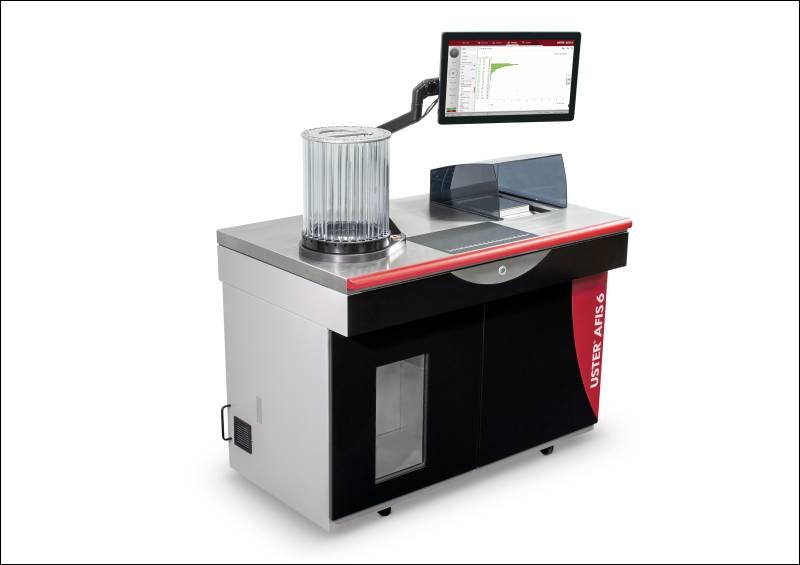
Measurements of the recycled samples using Uster AFIS 6 formed the basis for identifying trends and developing Uster’s application report on the Recycled Fiber Matrix. The report evaluates the current characteristics and potential challenges associated with using different types of mechanically recycled cotton fibers in spinning.
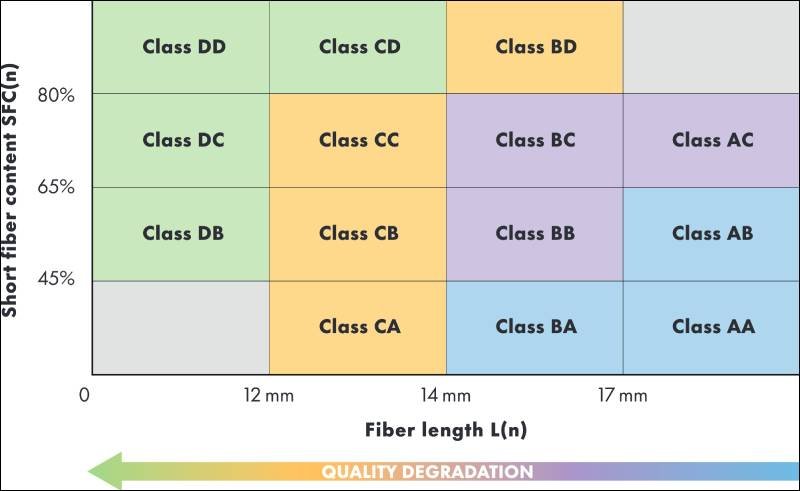
Uster Recycled Fiber Matrix for mechanically recycled cotton based on L(n) and SFC(n)
Uster said the Recycled Fiber Matrix is an ongoing and dynamic process, with additional samples being collected and analysed from global recycling hubs. This is intended to reflect changes in source materials and processing conditions and improve the understanding of recycled fiber variability.
The measured Uster AFIS 6 values are presented as quality levels from A to D and are colour-coded for practical application. The colour-coded regions correlate fiber parameters with typical raw material sources, providing a guide for optimising yarn production.
According to Uster, mechanically recycled cotton cannot be accurately classified using a single fiber parameter. The Recycled Fiber Matrix therefore uses a two-dimensional evaluation, combining two parameters to provide a clearer indication of processing behaviour and potential yarn quality.
For example, one axis may represent a length parameter such as mean fiber length, while the other may represent a quality-limiting factor such as short fiber content or nep count. This approach highlights how two fiber lots with the same mean fiber length can behave differently during spinning if their short fiber content differs.
The matrix also enables AFIS measurements to be translated into clear quality categories, making the quality level and limitations of individual lots more transparent. The classification can be applied to bale management and machine settings, while also helping estimate the expected short-fiber load and define suitable blending ratios.
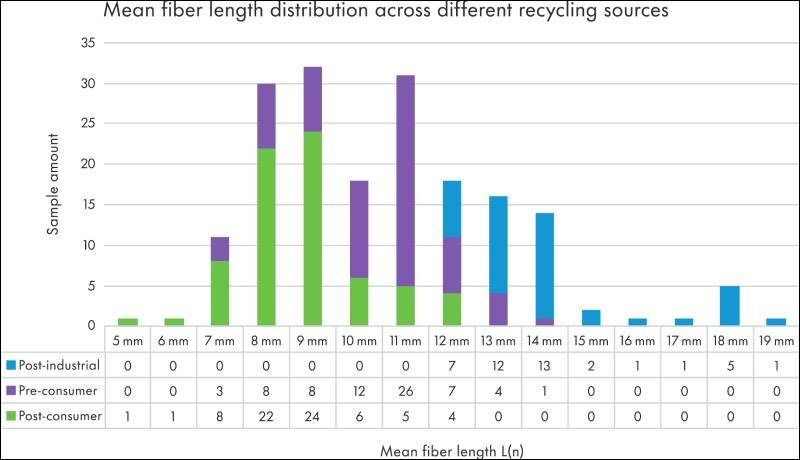
Mean fiber length distribution based on L(n) for different recycling waste types
Uster recommends separating bales according to length, source and colour to reduce variability. Improved bale management can help maintain consistency in key parameters and support uniform quality during production. Spinning processes can also be adjusted through draft settings, twist and spinning speed according to the quality of the recycled fibers. Increased maintenance and cleaning frequency may further support stable processing.
Blending recycled cotton with virgin cotton or synthetic fibers remains an important strategy for compensating for quality deficiencies. Uster is working to establish benchmarks for blend levels and assess their subsequent impact on yarn quality.
Uster has made its application report on the Recycled Fiber Matrix available as a free download. The report includes graphs and illustrations and provides insights for spinning mills, recyclers and brands seeking to assess fiber suitability and optimise processing parameters.
As recycling technologies and fiber preparation methods continue to evolve, Uster said ongoing data collection and updates to the matrix will help refine classification accuracy and support the wider use of recycled cotton in textile products and the industry’s circularity goals.