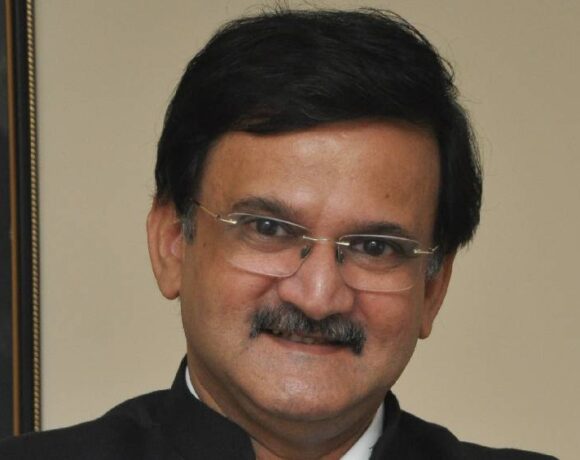

Birla Cellulose’s Focus Remains On Offering Tailored Solutions To Our Consumers: Manmohan Singh

Grasim Industries Ltd., a leader in man-made cellulosic fibres, is making sustainability the focal point of its showcase at Bharat Tex 2025. Manmohan Singh shared insights into the company’s product offerings, industry trends and collaborations aimed at driving circularity in textiles.
At Bharat Tex 2025, Birla Cellulose is presenting a comprehensive range of man-made cellulosic fibres, including viscose, dyed viscose, modal and lyocell. Notably, the company is emphasizing its recycled fibre, which consists of 30% cotton waste and 70% fresh pulp.
“We launched IntelliColor last year, and it has seen promising growth in the market,” Singh stated. “This year, we are set to introduce a mechanically recycled fibre by April or May, a breakthrough innovation for high-end textile applications.”

According to Singh, Bharat Tex serves as an essential hub for engagement across the textile value chain. “This platform enables us to connect with brands, spinners, weavers, knitters, processors, garment manufacturers and exporters,” he noted. He further highlighted that bringing the entire textile fraternity together strengthens collaborations and showcases the strength of India’s textile industry on a global scale.
Discussing current industry trends, Singh acknowledged that changing consumer preferences present both opportunities and challenges. “The demand for natural fibres continues to grow, which benefits us. Fast fashion is also an opportunity, but consumers are increasingly looking for durable and sustainable fibres,” he said.
Birla Cellulose is addressing these demands through its sustainability-driven innovations, including recycled products and its GreenTrack platform. “GreenTrack provides complete visibility from wood sourcing to the final retail garment, reinforcing our commitment to transparency and sustainability,” he explained.
Singh pointed out that geopolitical uncertainties, volatile freight costs and currency fluctuations pose significant challenges for the industry. “While these factors require close monitoring, they also present growth opportunities. Our focus remains on offering tailored solutions to our consumers,” he added.
Sustainability is at the core of Birla Cellulose’s strategy. Singh emphasized that their fibres are inherently biodegradable and decompose within six to eight weeks. The company is also advancing its circular economy initiatives with products like Reviva, a fibre made from 30% cotton waste.
“We are now developing a mechanically recycled version of Reviva in collaboration with innovators like CIRC, Renewcell, and Södra to enhance circularity in textiles,” Singh revealed.
One of the key partnerships in focus is Birla Cellulose’s collaboration with RSWM Ltd. “Together, we are developing a high-tenacity fibre with superior strength and durability. While still in the R&D phase, we expect this to be a game-changer for the industry,” Singh said.
When asked about consumer awareness, Singh acknowledged that sustainability adoption in India lags behind Europe by about five years. However, Birla Cellulose is actively working to bridge this gap. “We collaborate with 200 spinners and over 2,000 downstream customers. Additionally, we provide approximately eight crore tags annually, educating consumers about the sustainability benefits of our products,” he stated.
Singh emphasized the collective responsibility of industry stakeholders, retailers and academia in educating consumers. “Sustainability is not just about products; it’s about the legacy we leave for future generations,” he concluded.
With its pioneering efforts in sustainable textiles, Birla Cellulose continues to drive innovation, foster collaborations and reinforce India’s leadership in responsible textile manufacturing.