
Ireland’s Circular Strategy Puts Textiles At The Core Of Sustainable Transition
Ireland has unveiled its Circular Economy Strategy 2026–2028, placing textiles and clothing at the forefront of its push to reduce emissions, minimise waste and strengthen resource efficiency across industries.
Launched by Darragh O’Brien, Minister for Climate, Energy and the Environment, and Alan Dillon, Minister of State for the Circular Economy, the strategy positions circularity as a key lever for both climate action and industrial competitiveness. A central target is to raise Ireland’s circular material use rate to 12% by 2030, reducing reliance on virgin raw materials and enhancing supply chain resilience.
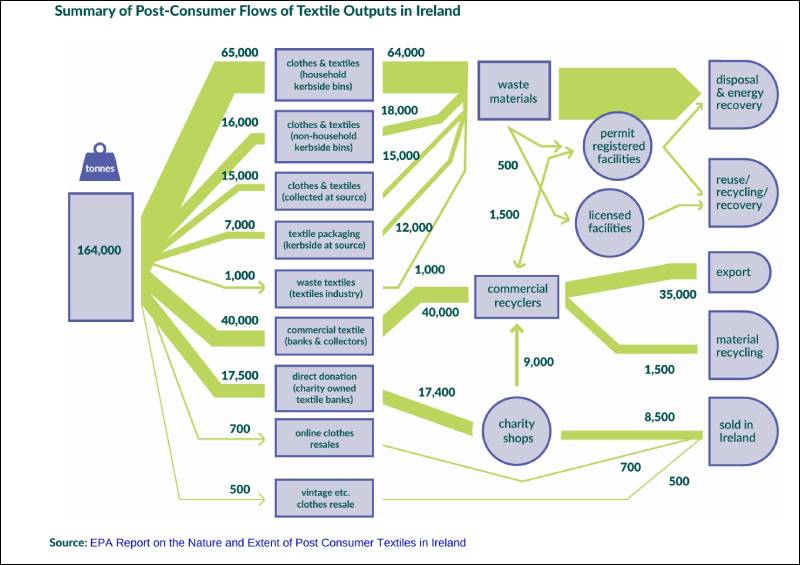
For the textile and apparel sector, the roadmap signals a significant regulatory and market shift. The government plans to introduce a National Textile Collection System alongside a dedicated Circular Textiles Roadmap by 2030, aimed at promoting reuse, recycling and sustainable product design. This aligns with broader European efforts to curb textile waste and improve lifecycle management across fashion value chains.

A key policy intervention likely to impact textile businesses is the rollout of Digital Product Passports, mandated under EU Ecodesign regulations. These passports will store detailed information on product sustainability, material composition and compliance, enabling greater transparency and traceability. For textile manufacturers and brands, this will translate into stricter data requirements, but also opportunities to differentiate through sustainable sourcing and circular design.
The strategy also introduces repair incentives through a national voucher scheme, designed to make product repair more economically viable than replacement. While initially targeting electronics and consumer goods, the initiative is expected to influence apparel consumption patterns by encouraging longevity and reuse key pillars of circular fashion.
From an industry perspective, the policy framework underscores a transition towards durability, recyclability and closed-loop systems in textiles. Companies operating in Ireland and across European markets will need to align with evolving compliance norms, including waste reduction targets, extended producer responsibility and sustainable product standards.
Beyond regulation, the strategy opens avenues for innovation in textile recycling, fibre recovery and circular business models such as resale, rental and repair services. It also reinforces the growing importance of sustainability credentials in accessing European markets.
By integrating textiles into its circular economy agenda, Ireland is not only addressing environmental challenges but also reshaping the future of its fashion and textile ecosystem, signaling a broader shift that global apparel value chains will need to navigate.