
TEXPROCIL Launches Advanced Trade Certification Programme To Strengthen Export Ecosystem
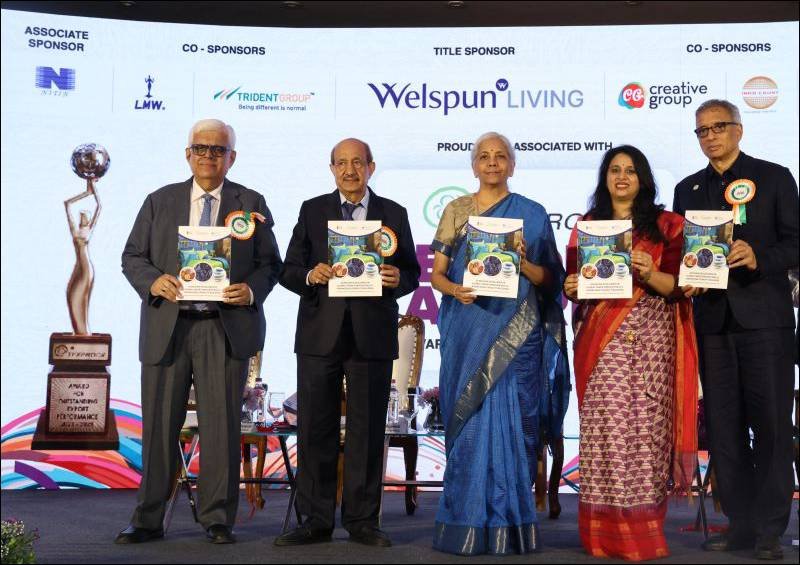
The Cotton Textiles Export Promotion Council (TEXPROCIL) has launched the Advanced Certificate Programme in International Trade (ACPIT), a structured certification initiative designed to strengthen India’s export capabilities and align with government schemes focused on boosting the country’s global trade competitiveness.
The programme was launched in Mumbai by Union Finance and Corporate Affairs Minister Nirmala Sitharaman during TEXPROCIL’s annual export awards ceremony.
Addressing exporters at the event, Sitharaman said India’s textile sector must prepare for emerging global challenges, including geopolitical fragmentation, rising protectionism, non-tariff barriers, increasing competition, sustainability compliance and the growing impact of artificial intelligence and automation.

She emphasised that global buyers are increasingly demanding greater traceability, organic and recycled fibres, lower carbon footprints and fair labour practices.
“Indian exporters who adapt early will thrive,” Sitharaman said, adding, “India has the potential to become a global leader in sustainable textiles, backed by its strengths in cotton, silk, handloom traditions, natural dyes and craft-based production.”
She noted that the industry must build robust certification systems, strengthen traceability infrastructure and create strong branding platforms to capture premium global markets.
“The future of textile exports lies not merely in commodity products but in design-led, value-added goods,” she said.
Highlighting the challenges ahead, Sitharaman said climate change, geopolitical disruptions and technological transformation would continue to reshape global trade, but added that these shifts also present new opportunities for Indian exporters.
Textile Commissioner Vrunda Desai said the Ministry’s district-led textiles transformation initiative aims to develop high-potential textile districts into globally competitive manufacturing and export hubs by leveraging local strengths, traditional skills, MSME ecosystems and cluster-based capabilities.
TEXPROCIL Chairman Vijay Agarwal said India’s textile sector is well-positioned to emerge as a reliable global sourcing destination, provided there is continued policy support in key areas such as access to raw materials at international prices, adequate remission of embedded taxes and levies, affordable export finance and improved logistics efficiency.
TEXPROCIL also expanded its annual export awards this year with the introduction of new categories recognising excellence in e-commerce, ESG performance and innovation, reflecting the sector’s evolving priorities in a rapidly changing global marketplace.