Maharashtra’s Technical Textile Moment: The Roadmap To Become A Global Powerhouse
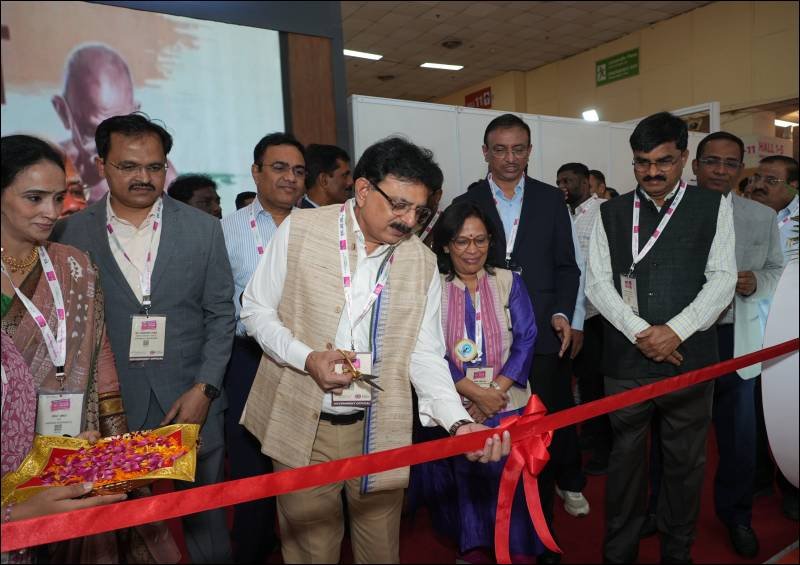
Maharashtra is aiming high. At Bharat Tex 2026, Maharashtra Minister of Textiles Sanjay Savkare made it clear that the state is not looking at technical textiles as a niche opportunity. It sees the sector as a critical pillar of industrial growth, employment generation and the state’s ambition to build a stronger, globally competitive economy.
“Technical textile is going to take a big lead in the future,” Savkare said, pointing to the sector’s applications across aerospace, healthcare, agriculture, infrastructure and other industries.
Maharashtra has already announced its own Technical Textile Mission and plans to establish six technical textile parks, one in each revenue division. But Savkare acknowledged that the first challenge is awareness.

Many products already being manufactured in the state could qualify as technical textiles, but manufacturers are often unaware of it.
“Many things were being made from the beginning and that was a part of technical textile. But the manufacturer was not aware that this is a part of technical textile,” he said.
The state now wants to bring these existing capabilities into the formal technical textile ecosystem through incentives, awareness and targeted support.
Technology, but not at the cost of employment
For Savkare, the future of textiles cannot be built on technology alone. Maharashtra must modernise, automate and adopt advanced technologies, but it must also continue to generate employment.
“We have to keep employment and also adopt technology. We have to run with the combination of both,” he said.
The Minister’s emphasis on this balance is significant in an industry that is rapidly embracing automation, artificial intelligence and advanced machinery. His argument is that technology should make the industry more productive and competitive without eliminating the employment opportunities that remain central to India’s development.
Maharashtra’s research advantage
The state’s technical textile ambitions are supported by a strong research and academic base. Savkare highlighted the development of 100% carbon fibre by the Bombay Textile Research Association (BTRA) as an example of the capabilities emerging from Maharashtra.
“Some countries have that technology. I am happy that BTRA has done that work and has made 100% carbon fibre, which is being made in Maharashtra,” Savkare said.
With applications in aerospace and other advanced industries, carbon fibre represents the kind of high-value, technology-intensive manufacturing that Maharashtra wants to attract and scale.
The state is also encouraging research institutions and industry to work more closely to bring innovations to market faster.
The circularity opportunity
Sustainability is emerging as another major pillar of Maharashtra’s textile strategy.
The state is working towards diverting 4.32 lakh tonnes of textile waste from landfills, while exploring solutions that can create value from discarded textiles.
The newly launched Mahasutra initiative demonstrated one such possibility, using recycled yarn made from textile waste to create handloom fabrics.
The idea is particularly significant because it connects two seemingly different worlds — circularity and traditional handloom.
Recycled fibres, which may be difficult to use in conventional mass production because of their shorter fibre length and colour variations, can potentially find a new application in handloom products.
The result could be a new market for recycled textiles while also helping revive handloom clusters and create livelihoods for artisans.
PM MITRA and the investment opportunity
Maharashtra’s PM MITRA Park at Amravati is expected to be another important engine of growth. With much of the infrastructure already in place, the park is designed to offer investors an integrated ecosystem for manufacturing.
The state is also improving connectivity and transport infrastructure around the park to make it more attractive to investors.
Savkare said the state was ready to support not only large investments but also individual units and MSMEs. “If someone wants to install an individual unit, we are ready to help him,” he said.
The state is also looking to attract textile machinery manufacturers, an area where India remains dependent on imports.
The China challenge and India’s different path
Savkare was candid about the technology gap between India and China. “China is 15–20 years ahead of us. If they say 50 years ahead, it will work. They are so advanced,” he said. But he believes India must not simply copy China’s model.
India’s democratic structure, social diversity and employment needs mean that development must follow a different path.
For Savkare, the answer lies in combining technology with human capability, improving productivity and using India’s own strengths more effectively.
“If you want to increase productivity, then what can you do with the existing machinery? If you make some changes in it, then you will have to give more production,” he said.
The focus, he argued, should not only be on increasing production by adding more machinery, manpower or capacity. The greater challenge is to improve productivity through better technology, better processes and better utilisation of existing resources.
From a textile state to a global technical textile hub
The Minister’s larger message was one of confidence. Maharashtra already possesses many of the ingredients needed to become a global technical textile hub, an established industrial base, research institutions, skilled talent, strong connectivity, access to ports and a large domestic market.
The challenge is to connect these strengths. That means bringing industry and academia closer together, helping MSMEs understand and access incentives, attracting global investors, developing machinery manufacturing and creating a skilled workforce for the next generation of textile technologies.
As Savkare put it, India has talent and capability. The challenge is to use it when it is needed and to bring everyone together to build solutions.
Maharashtra’s technical textile journey is therefore not just about creating parks or announcing incentives. It is about building an ecosystem.
An ecosystem where technology creates opportunity, research reaches the market, traditional skills find new applications, waste becomes a resource and Maharashtra’s textile legacy evolves into a globally competitive future.
The ambition is clear. Now, the race is to turn that ambition into reality.