Singapore Sends 70 Tonnes Of Discarded Clothing Every Week To Malaysia For Recovery & Recycling
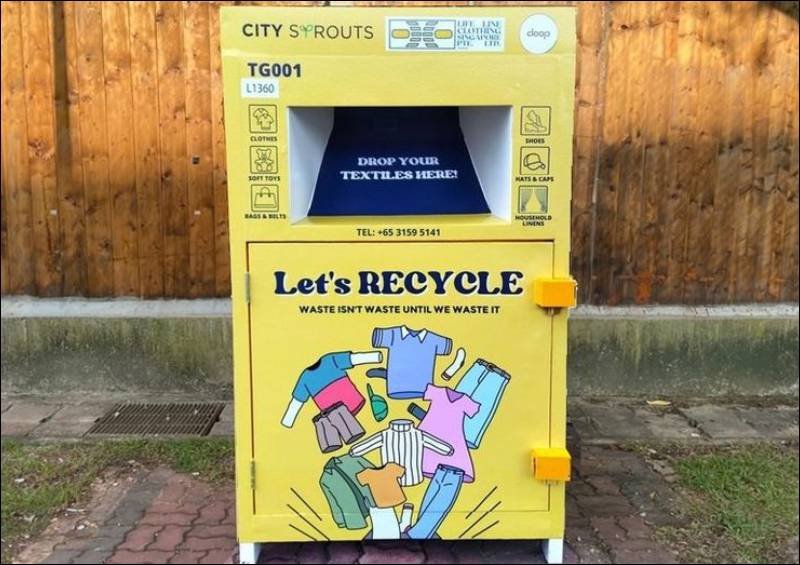
Singapore is sending up to 70 tonnes of unwanted clothing to Malaysia every week through a cross-border textile recovery partnership aimed at giving discarded garments a second life. The initiative, involving social enterprise Cloop and Malaysian textile recovery company Life Line Clothing, highlights both the growing scale of textile waste and the challenges of managing it sustainably.
Cloop collects unwanted clothing through textile recycling bins across Singapore before transporting the material to Life Line Clothing’s facility in Port Klang, Malaysia. The volume handled through the partnership has reportedly doubled compared with two years ago, reflecting the increasing quantities of unwanted clothing entering the recovery system.
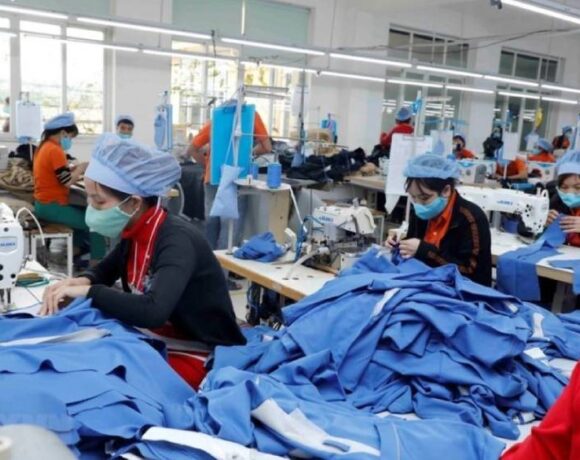
At the Malaysian facility, garments are sorted according to their condition, quality and material composition to determine whether they can be reused, repurposed or recycled. This process is important because textile waste often contains blended fibres, dyes, buttons, zips and other components that make recovery more complex.

Around half of the clothing received is resold, typically compressed into bales and supplied to wholesalers serving second-hand markets in countries including Kenya, Uganda and Papua New Guinea. Reuse provides the most direct way of extending a garment’s life while retaining the value of the original product.
The remaining clothing is generally repurposed into rags and industrial wiping cloths, while materials that cannot be reused or repurposed are ultimately incinerated to generate electricity.
The model demonstrates that textile circularity involves much more than collecting unwanted clothes. Collection is only the starting point of a longer process involving transportation, sorting, quality assessment, reuse and material recovery. The eventual destination of each garment depends on its condition and composition.
For Singapore, the partnership provides a route to divert significant quantities of clothing away from conventional disposal. However, the growing volume also underlines a broader challenge for the fashion and textile industries: recycling alone cannot solve the problem of textile waste.
Extending garment lifespans through better design, repair, reuse and responsible consumption is equally important. A truly circular textile system needs to address the entire lifecycle of clothing from how fibres and garments are designed and produced to how they are purchased, used, repaired, reused and finally recovered.
The collaboration between Cloop and Life Line Clothing shows how cross-border recovery networks can help manage unwanted textiles at scale. Its larger lesson is that circularity begins well before a garment reaches the recycling bin.