Welspun Living Targets Rs 15,000 Crore Revenue As It Expands Beyond Home Textiles
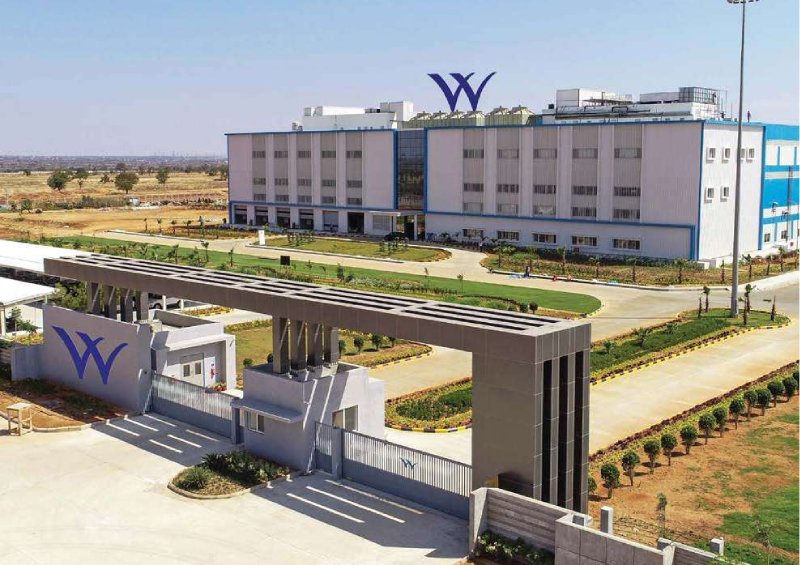
For a company that has spent decades making towels, bedsheets and other home textiles, Welspun Living is increasingly looking beyond the loom. Its latest annual report shows a business attempting a significant transformation from being primarily a large-scale textile manufacturer to becoming a consumer-led global home-solutions company with brands, technology, flooring, advanced textiles and even pillow manufacturing in the US.
The transformation is taking place against a difficult backdrop. FY26 brought tariff volatility, geopolitical tensions, changing global sourcing patterns and subdued discretionary demand.
Yet Welspun Living crossed the US$ 1 billion revenue mark for the fifth consecutive year, reporting consolidated revenue of Rs 9,468 crore. The challenge, however, was visible in profitability, with EBITDA falling to Rs 862 crore and the margin declining to 9.1%.

What makes the company’s FY26 story interesting is what happened beneath those headline numbers.

Dipali Goenka, Managing Director & CEO, Welspun Living.
Welspun Living is trying to build what its management describes as the FMCG of textiles, a business where brands, innovation and direct consumer relationships become as important as manufacturing scale.
“For several years, we have articulated our ambition to become the FMCG of textiles, a company where brands, innovation and consumer relationships create enduring value alongside manufacturing excellence,” said Dipali Goenka, Managing Director & CEO, Welspun Living.
The strategy is already beginning to show up in the numbers. Branded business contributed about 19.3% of revenue, while domestic consumer revenue grew about 9% during the year. In the fourth quarter, the domestic business grew about 29% year-on-year.
The company is also widening its geographical spread. The US remains its biggest market, but non-US markets accounted for around 41% of revenue in FY26, with the company expanding its presence across Europe, the UK, GCC, Japan, Australia and New Zealand. That diversification is becoming increasingly important as global retailers rethink their sourcing strategies.
The US, in fact, tells one of the more intriguing stories of Welspun’s transformation.
Rather than simply absorbing tariff pressures on Indian exports, the company is building manufacturing capacity closer to the American consumer. Its Ohio pillow facility continued to ramp up, reaching 60% utilisation, while a greenfield facility in Nevada began commercial production on March 31, 2026. The pillow business nearly doubled from US$ 15 million to US$ 27.5 million during FY26.
That is more than a tariff-response strategy. Welspun sees sleep solutions as a new growth platform, with the US facilities giving it faster replenishment and greater supply-chain flexibility.
“Our investment in US pillow manufacturing is not a response to tariffs alone. It represents a strategic entry into one of the fastest-growing categories within home textiles and reflects our broader approach of building growth platforms closer to the consumer,” Dipali Goenka said.
The two US pillow facilities together have annual capacity of 24.3 million pieces (13.5 million pieces in Ohio and 10.8 million in Nevada).
The company is simultaneously trying to make its brands more visible to consumers.
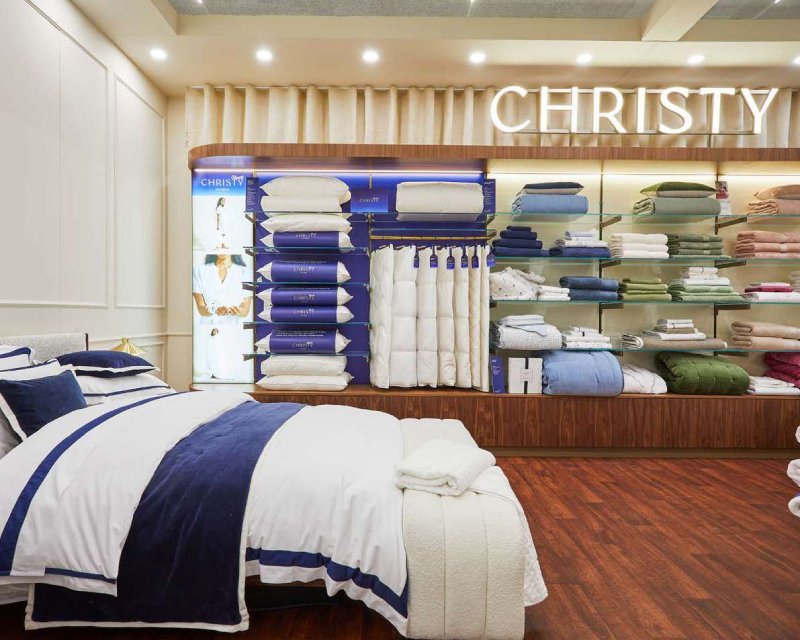
Christy, the British heritage brand acquired by Welspun, turned 175 during FY26. The brand generated £18.2 million in revenue, registering 15% growth, while its UK business grew 19%. Its US expansion included a Bloomingdale’s launch across 12 stores. E-commerce also became increasingly important, with Christy’s overall reach rising from 4.2 million to 13.1 million.
Welspun’s consumer ambition is not restricted to premium international markets.
In India, the company is using a two-brand approach: Welspun for the mass market and SPACES for premium, design-led consumers. Welspun has built a distribution network spanning more than 1,340 cities, while SPACES is focused on affluent consumers seeking more design and lifestyle orientation. The company’s wider domestic distribution footprint has reached about 22,000 stores across more than 500 districts.
The marketing strategy is becoming distinctly consumer-facing. Welspun brought actor Vidya Balan on board as brand ambassador and rolled out a 360-degree festive campaign across television, cinema, print, outdoor and digital platforms. The campaign reached more than 40 crore consumers, while television advertising ran across more than 52 channels with over 9,000 spots during an eight-week period.
SPACES, meanwhile, is taking a more digital-first route. One of its FY26 campaigns around the idea that comfort is personal reached more than 66 million people across 15 cities.
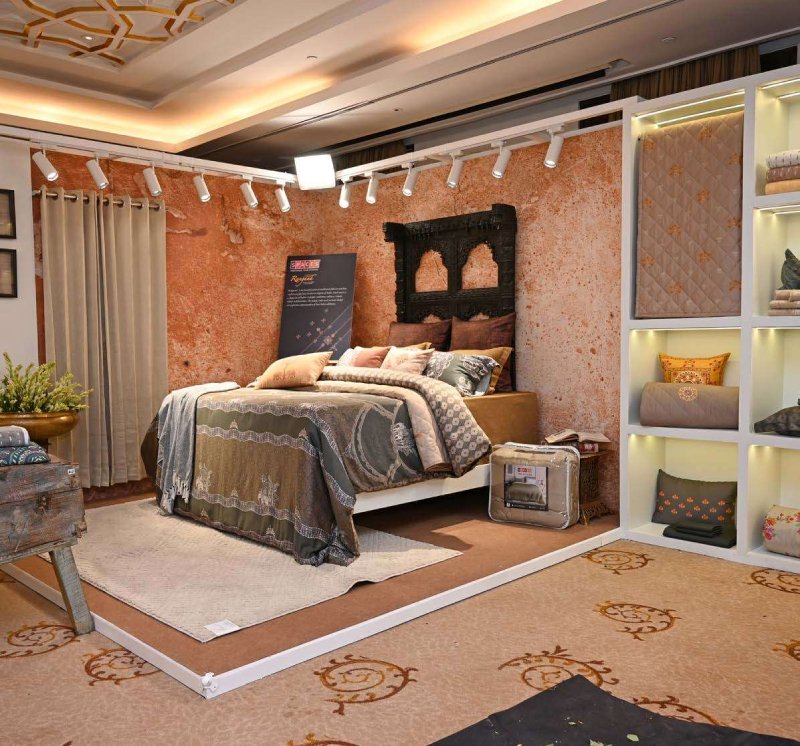
Another potentially important piece of the puzzle is Welhome. The company is positioning it as a global home brand rather than simply another textile label. The refreshed identity is intended to bring products, design language and consumer experience under one consistent proposition across markets. Welhome recorded US$19.4 million in sales during FY26.
And then there is flooring, a business that takes Welspun well beyond conventional home textiles.
Its Hyderabad facility has an annual capacity of 27 million sq metres and is described by the company as Asia’s largest vertically integrated flooring facility. The business combines carpet tiles, wall-to-wall carpets, rugs and hard flooring, with its own design and print-film capabilities. It has more than 80 distributors, over 1,600 dealers and engagement with more than 1,700 architects and interior designers.
The company is also trying to make flooring a design category rather than simply a construction material. Its portfolio includes products such as Click-N-Lock and MultiStile, while new collections are being developed around nature, art, texture and contemporary interiors. In commercial applications, Welspun Flooring has also developed carpets using waste PET bottles and designed a tactile carpet for visually impaired users at Google’s second-largest global facility.
The other diversification bet is less visible to the average consumer but could become strategically significant: advanced textiles.
Welspun Advanced Textiles has India’s largest spunlace capacity at 27,729 tonnes a year and operates across Spunlace, Needlepunch and Thermal Bond technologies. Its products are aimed at personal hygiene, healthcare, homecare, automotive, filtration, protective apparel and industrial applications. Its wet-wipes business has capacity of 100 million packs a year.
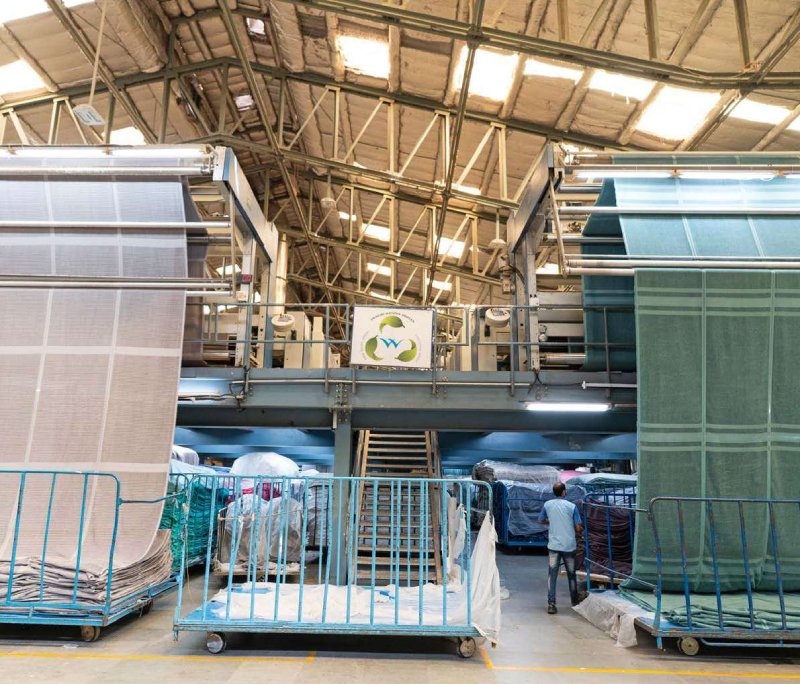
This gives Welspun exposure to a very different side of textiles, one where performance matters more than appearance. Technical textiles are increasingly being used in healthcare, automotive, construction, filtration and hygiene and the company believes its nonwoven capabilities can help it capture this growth.
Innovation is another thread running through the transformation.
Welspun Living has 50 patented technologies and products classified as innovation-led contributed about 22% of FY26 revenue, equivalent to Rs 1,872 crore in sales. Its technology portfolio includes HygroCotton, GX Pillow and Wel-Trak.
 Some of the innovations are aimed at very everyday problems. The company developed dual-fabric bed and bath products by combining different yarns, weaves or fibre compositions to achieve different functional characteristics. It also developed recyclable flooring based on a single polymer system, allowing recycling without separating different materials. Other developments include ergonomic rugs, industrial performance towels, wool carpets and protective nonwovens designed to withstand molten-metal splashes.
The technology story is moving beyond products and into the factory.
Welspun is implementing SAP S/4HANA as a common digital backbone across manufacturing, retail and global operations. It is also embedding AI in areas such as predictive maintenance, quality, supply-chain optimisation and demand forecasting. The stated objective is to move operations from reactive decision-making towards predictive and proactive management.
The company’s e-commerce business offers another glimpse of where it wants to go. E-commerce sales grew 60% year-on-year in FY26, while Welhome HygroCotton towel sales increased 72%. Welspun expanded the Franklin & James brand to Amazon Canada and Mexico and added new products across categories.
But perhaps the most consequential part of Welspun’s strategy is sustainability.
The company ranked No. 1 globally in the 2025 S&P Global Corporate Sustainability Assessment for the Textile, Apparel & Luxury Goods category, with its ESG score rising from 59 in FY23 to 90 in FY26. It sourced 95% of its cotton from sustainable sources and has set a target of 100% sustainable cotton by 2030.
The environmental numbers provide a sense of the scale of the effort. Welspun says it recycled 3.6 billion litres of water during FY26, equivalent to 59% of total water consumption, while its renewable energy portfolio expanded to 60 MW across four facilities. It also reported diverting 99.7% of waste from landfill.

The company has also set a 2030 roadmap covering carbon reduction, sustainable cotton, freshwater, waste, suppliers and communities. It is targeting 100% GHG emission reduction from its 2021 baseline by 2030, 100% sustainable cotton, zero hazardous waste to landfill and freshwater-positive production operations.
What makes this particularly relevant to the business is that sustainability is increasingly becoming a condition for access to global markets rather than merely a corporate responsibility exercise. Welspun itself identifies European regulations, supply-chain due diligence and rising retailer expectations for traceability as forces reshaping sourcing decisions. Its blockchain-based Wel-Trak 2.0 system is designed to provide traceability from fibre through the supply chain.
The company is therefore betting that its combination of scale, traceability, sustainability, brands and manufacturing integration will become more valuable as global retailers reduce their dependence on concentrated sourcing geographies.
There is also a sizeable India opportunity.
 The company estimates India’s home textile market is moving rapidly towards branded and premium products, driven by rising incomes, urbanisation, shorter replacement cycles and changing consumer preferences. India’s home textile industry is expected to expand at an 8.9% CAGR over the long term, according to the report.
For Welspun, the opportunity is not simply to sell more towels and bedsheets. It is to capture a larger share of the consumer’s home from bath linen and bedding to pillows, rugs, flooring and other lifestyle products.
That ambition explains why the company’s transformation is perhaps more important than its FY26 profit decline.
The annual report makes clear that Welspun is preparing for a world where being a low-cost manufacturer is no longer enough. Global retailers increasingly want fewer, larger and more reliable suppliers; consumers want design, functionality and sustainability; and trade agreements are reshaping sourcing economics. Welspun is responding by combining manufacturing scale with brands, digital commerce, technology, US nearshoring and ESG credentials.
The road ahead, however, is not without challenges. Home textile capacity utilisation declined in several businesses during FY26, while margins came under pressure. Bath linen utilisation fell to 78%, bed linen to 69% and rugs and carpets to 77%. Flooring utilisation was 36%, while spunlace stood at 54%.

B.K. Goenka, Chairman, Welspun Living
Yet management is looking beyond the immediate cycle. Welspun Living has retained an ambition to become a Rs 15,000-crore revenue enterprise in the medium term, with priorities including deeper branded and consumer businesses, expanded US pillow manufacturing, new trade opportunities, innovation, technology and design.
B.K. Goenka, Chairman, Welspun Living, said the ambition remains firmly on track, “Our aspiration of building a Rs15,000 crore revenue enterprise in medium-term remains firmly intact.”
The larger story, therefore, is not about a textile company surviving a difficult year. It is about a textile company attempting to redefine what it is.
From cotton fields to blockchain traceability, from towels to technical nonwovens, from Indian retail stores to Nevada pillows, and from manufacturing contracts to consumer brands, Welspun Living is trying to stitch together a much broader global home ecosystem.
Whether it ultimately succeeds in becoming the FMCG of textiles will depend on how effectively it converts this scale and ambition into profitable consumer loyalty. But FY26 suggests that the next chapter of Welspun Living may be less about how much fabric it can manufacture and increasingly about how much value it can create around the fabric.