Karnataka Unveils Textile and Apparel Policy 2026-31, Targets Rs 20,000 Crore Investment
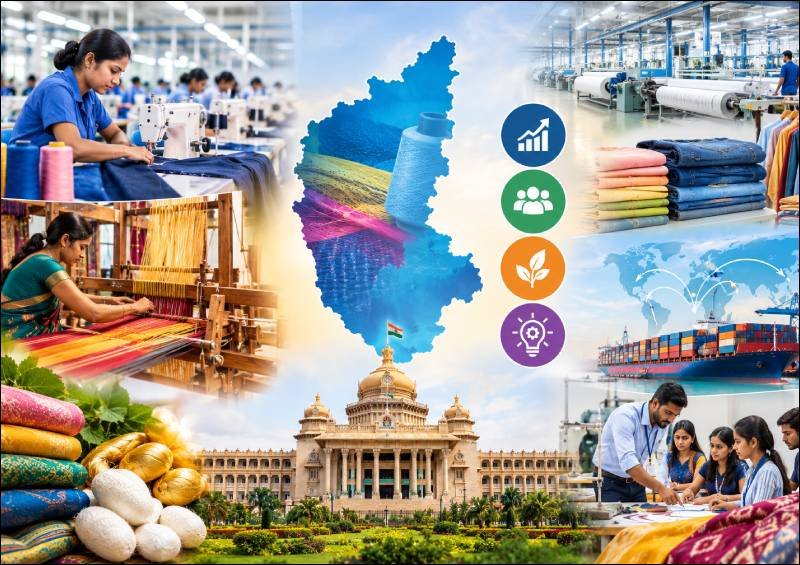
The Karnataka government has announced its Textile and Apparel Policy 2026-31, targeting Rs 20,000 crore in domestic and foreign investment across the textile value chain and the creation of around five lakh jobs over the policy period.
According to a government order issued on Wednesday, the policy aims to position Karnataka as a world-class, fibre-to-fashion and sustainable textile and apparel manufacturing hub, with a focus on expanding investment beyond the state’s established textile centres.
The Department of Handlooms and Textiles has secured Rs 4,000 crore in financial support for implementing the policy. The government said the funding will support various initiatives planned under the five-year policy.

The policy covers textile and apparel manufacturing, technical textiles, handlooms, silk, skill development, exports and sustainable manufacturing. For the first time, silk yarn production activities, including silk reeling and silk spinning, have been brought within the scope of the state’s textile policy.
A key focus is on reducing regional disparities by encouraging investments in Kalyana Karnataka and Tier-2 and Tier-3 cities. The government has identified 34 taluks for special attention, with eligible new textile and apparel units in these areas set to receive additional incentives and concessions over and above the general benefits available under the policy.
The policy also provides special incentives for textile units established at the PM MITRA Park in Kalaburagi, with the aim of developing an integrated textile manufacturing ecosystem and attracting investments across the value chain.
Skill development is another major component of the policy, with the government planning to establish a framework to address the industry’s workforce requirements. The policy also proposes the development of modern textile clusters and infrastructure to support manufacturing growth.
The government has identified export promotion and stronger market linkages as additional priorities. Measures will also focus on revitalising the handloom sector, promoting products with geographical indication (GI) status and establishing centres of excellence to support technology, skills and innovation.