Sustainability, Modernisation, Industry 4.0 And Automation Have Emerged As The Three Major Themes In Textile Processing: Smeesh Koul
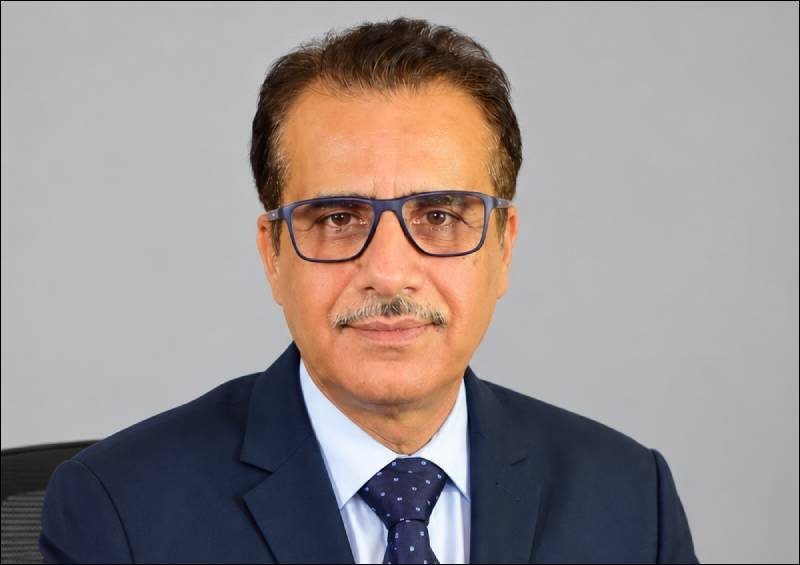
Intro: Greater export orientation could become a catalyst for investment, modernisation and sustainable growth in textile processing, states Smeesh Koul, Vice President – Processing Machinery, Accessories & CSG, A.T.E. Enterprises Private Limited (TEG), in this exclusive tete-e-tete with Henry Dsouza, Associate Editor, Textile Insights
You have progressed from managing a specific region to handling sales and service across India. How has this wider exposure changed your understanding of the textile processing industry and customer requirements?
It has been a rewarding and challenging journey. Over the years, I have seen the processing industry evolve significantly, which has required me to change and keep learning. My own role has also expanded from managing a relatively small region to handling sales and service across India. That too has meant I have to learn and change.
Working across different markets has given me a much broader understanding of the industry. Customer requirements in terms of their products and processes have become more diverse, and all businesses today are looking for greater efficiency, productivity and consistency. One of the biggest changes I have witnessed is the increasing diversity and complexity of the processing business.

At the same time, managing operations across India brings its own challenges, particularly in logistics, people development and understanding the needs of different markets. Earlier, my interaction was largely confined to a specific region and its requirements. Today, I work with customers and teams across the country, each operating in different business environments. This has made the role more demanding, but it has also been an extremely valuable learning experience and has helped me grow both professionally and as a leader.
What key trends you have witnessed in the processing sector over the years?
Over the last five years, these major themes have emerged in textile processing: sustainability, modernisation, Industry 4.0 and automation.
Sustainability, particularly water conservation and wastewater treatment, has become a major priority. Moving towards Zero Liquid Discharge (ZLD), requires significant capital investment as well as higher operating costs, making it challenging for many processing units.
The second challenge is modernisation. Compared with spinning and weaving, processing has seen relatively limited investment in new technology. Major processing hubs such as Surat and Ludhiana still have many units operating older machinery, which consume considerably more water, energy and other utilities. The hesitation to modernise is driven by high investment costs and concerns over whether the returns justify the expenditure.
The third major shift is automation. Labour availability and capability is becoming increasingly difficult, particularly because processing is a demanding shop-floor environment. Automation can address this challenge, but it requires modern, automation-ready equipment and significant investment.
Industry 4.0 can be an important catalyst. It can deliver the information required to drive more sustainable production as well as reduce manual error in report making, enabling much better decision making on quality and reproducibility.
Overall, the processing industry needs to adopt more efficient technologies, embrace Industry 4.0 and increase automation. However, a big hurdle remains the availability of capital and people to fund this transformation.
What are the biggest challenges facing textile processors today and what solutions do you see to overcome them?
The solutions and technologies are already available. The bigger challenge is that many processors, particularly MSMEs, lack the capital and skilled manpower required to adopt them.
There are machinery and technology suppliers today who can offer solutions for wastewater treatment, automation, chemical and dye handling and other processes. Still, processing has lagged behind spinning and weaving in terms of modernisation and automation.
Certification is another major challenge, especially for MSMEs. International buyers increasingly demand sustainability, traceability and various certifications, all of which involve additional investment and capability development. Smaller companies tell us they often struggle to recover these costs because they have limited bargaining power with buyers.
The way forward, in my view, is greater export orientation. A significant portion of India’s processing industry continues to serve the domestic market, where such requirements are less stringent. As exports increase, the need for certifications, sustainability, automation and skill development will naturally grow.
If trade policies can create better opportunities and returns for exporters, I believe the industry can move in the right direction. Greater export orientation could become a catalyst for investment, modernisation and sustainable growth in textile processing.
A.T.E. represents several leading international technology companies in textile processing. How do you see the company’s role in helping Indian mills choose the right technology for their specific needs?
We have continuously been in touch with our customers and principals to improve our approach and service.
The industry is looking for solutions around sustainability, labour savings, automation and resource efficiency and A.T.E. has a strong portfolio of technologies to address these requirements.
Over the past four to five years, we have developed several successful references in India, including end-to-end solutions that help reduce labour requirements, chemical consumption, water use and dye consumption.
However, we have only addressed a small portion of the overall market so far. A large opportunity remains, and we expect technology adoption to accelerate significantly over the next three to four years.
As the leader of A.T.E.’s processing division, what are your key priorities for the next few years?
My priorities are both short and medium-term. These priorities are set together with our principals and our customers. In the short term, people development is a key focus. The processing industry is changing rapidly, so we need to recruit, train and develop our team to address emerging market requirements.
The second priority is strengthening our product portfolio, based on feedback from our customers. We have strong end-to-end capabilities, but there are certain gaps in our portfolio. We are therefore looking at bringing in complementary technologies and products that can complete our solutions.
In the medium term, our focus is on increasing our presence in key processing clusters such as Surat, Panipat and Ludhiana, as well as markets including Bhiwandi, Solapur, Theni and Karur.
We have already strengthened our presence in Surat and Panipat with dedicated, experienced sales personnel, and the response has been encouraging. We will continue to build a stronger local presence in these markets.
How do you see the textile processing business evolving over the next five years, and what opportunities do you see for A.T.E. Enterprises?
The outlook is encouraging. In 2025, our processing division recorded its highest turnover in 15–20 years, and based on our current order bookings and execution, we expect to surpass that performance this year.
What is particularly encouraging is the consistency of order bookings. Earlier, we would see strong business for a year or two followed by a slowdown. Today, orders are coming in consistently, indicating that the processing industry is entering a stronger investment cycle.
The China+1 strategy of many multinationals is also creating significant opportunities for India, particularly in home textiles. Global buyers are increasingly looking at India as an alternative sourcing base, and this is driving investments in home furnishing projects. Companies across the country are expanding capacity, creating opportunities for technology suppliers like A.T.E.
We will try to catch the next wave of investment in key processing and home-textile clusters such as Surat, Panipat, Bhiwandi, Amritsar, Karur and Theni. Even a small shift towards modern technology in these markets can create significant opportunities. If we can penetrate even 5% of these markets, it can generate substantial business for us.
How are government initiatives such as PLI and PM MITRA contributing to this opportunity?
Government schemes can create significant opportunities, but their success ultimately depends on customers making the investments. The original PLI framework required investments of around Rs 300 crore, which limited participation to larger companies. Wherever such projects are executed, the opportunity for technology suppliers is substantial because these investments require high-end machinery and integrated solutions.
We have already seen this with some PLI projects, where A.T.E. secured a significant share of the machinery orders. The revised investment thresholds should potentially bring more companies into the scheme, although execution remains important.
Similarly, PM MITRA parks have considerable potential, but land allocation and project execution are still at an early stage in many locations. Once these projects move from land allotment to actual construction and machinery investment, they could create another major opportunity for the textile machinery industry.
Overall, I believe the next few years could be an important growth phase for processing. If investments actually move from announcements to execution, technology adoption and the demand for modern processing machinery should increase significantly.