Bangladesh’s Budget For FY2026-27 Provides Policy Stability For RMG Sector
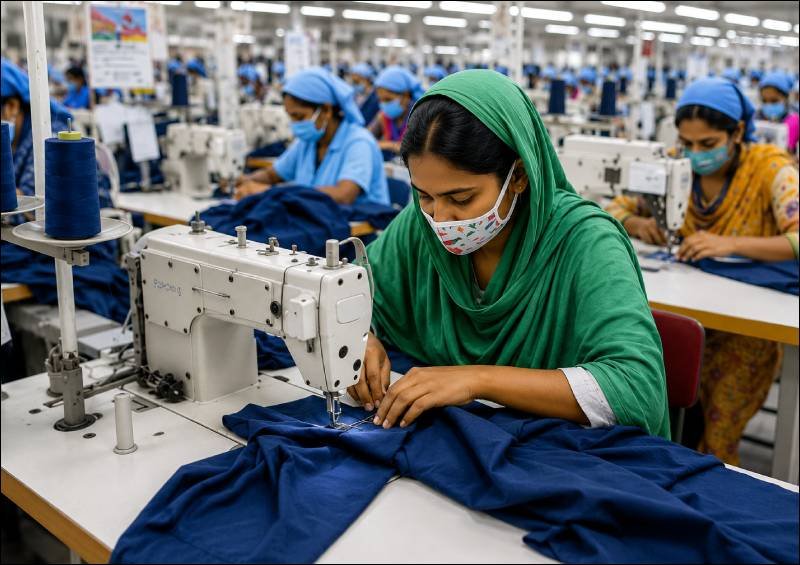
Bangladesh’s FY2026-27 Budget has provided short-term policy stability for the country’s ready-made garment (RMG) industry, but industry stakeholders say further reforms will be needed to strengthen long-term competitiveness as the sector prepares for eventual graduation from Least Developed Country (LDC) status.
The BDT 9.38 lakh crore budget retains the 12% corporate tax rate for garment manufacturers and the 10% preferential rate for green-certified factories, offering policy continuity for investors. It also reduces the withholding tax on export cash incentives from 10% to 5%, providing exporters with improved liquidity amid softer global demand. Tax reductions on electricity payments to power generation companies and incentives for solar energy and recycled products are also expected to support operating efficiency and sustainability.
The government has further expanded customs bond facilities for export-oriented industries and proposed a digital single-window licensing system aimed at reducing regulatory delays.

Despite these measures, concerns remain over the sector’s ability to diversify into man-made fibre (MMF) products. Industry representatives have criticised the new 5% import duty on polyester staple fibre (PSF) and spandex, arguing that it increases input costs at a time when global demand is shifting towards synthetic textiles. Exporters had also sought a reduction in export source tax from 1% to 0.65%, a proposal that was not included in the budget.
Energy availability also remains a major challenge. While the budget prioritises domestic gas exploration, renewable energy and infrastructure development, improvements in gas supply are expected to take several years, leaving manufacturers to contend with ongoing shortages.
Bangladesh has requested that its LDC graduation be deferred from November 2026 to November 2029, a proposal that has reportedly received a favourable response from the United Nations Committee for Development Policy, subject to formal approval. The additional three years would provide more time for the industry to improve productivity, expand MMF production, strengthen environmental compliance and secure post-graduation market access.
Industry observers believe the budget offers a stable foundation but stress that greater investment in green financing, technology, skills development and domestic MMF production will be essential to ensure the long-term competitiveness of Bangladesh’s RMG sector.