
China’s US$ 300 Bn Textile Sector Turns To Green Growth
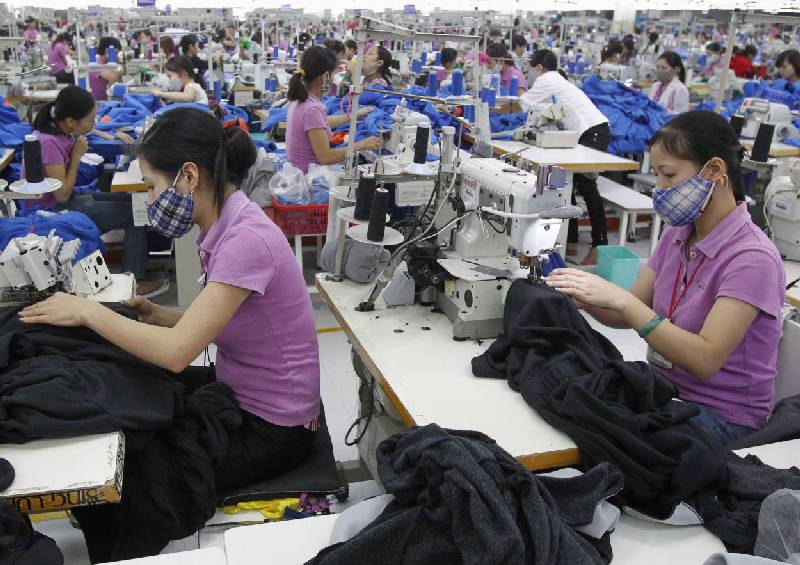
China’s textile and apparel sector, long regarded as the “workshop of the world,” is entering a pivotal phase where economic pragmatism collides with sustainability imperatives and shifting global trade dynamics. The China Country Report 2025 by Cascale offers a detailed account of how the sector, which directly employs nearly 8 million people and contributes almost 9% of national export revenue, is recalibrating for the next decade.
Macroeconomic Stability, But Slower Growth
China’s economy, valued at roughly US$ 19 trillion in 2024, is transitioning from decades of double-digit growth to what policymakers call ‘high-quality growth.’ Authorities remain confident of maintaining a 5% GDP growth rate in 2025. The textile and apparel industry, deeply woven into this economic fabric, reflects the same pivot: moving from high-volume, low-cost production toward technology-driven, sustainable and value-added manufacturing .
Sustainability Becomes Strategy
Decarbonization is now a central mandate. The sector emits about 230 million metric tonnes of CO₂ annually, nearly 3% of China’s industrial emissions. Beijing’s dual-carbon pledge (peak emissions by 2030, neutrality by 2060) is reshaping industry practices. Leading players are investing heavily:

- ANTA Sports is targeting carbon neutrality by 2050.
- Advance Denim has pioneered plant-based dyes and recycled fibres.
- Jiangsu Dasheng unveiled China’s first carbon-neutral spinning facility in 2025 .
At the policy level, China is rolling out nationwide waste textile recycling systems and tightening enforcement of water pollution controls in dyeing hubs. Together, these measures aim to align production with both domestic sustainability goals and the rising compliance demands of Western markets.
Export Performance: Resilient but Rebalancing
China remains the world’s top apparel exporter with a commanding 31.6% market share in 2023. Yet, export dynamics are evolving. After a slowdown in 2023, when apparel exports dipped 7.8% due to inflationary pressures abroad, the industry rebounded in 2024, recording US$ 301.4 billion in combined textile and apparel exports, up 2.7% year-on-year.
The geographic spread of exports is diversifying. Traditional markets like the U.S., and EU now account for under 45% of China’s clothing exports, down from over 50% previously, while Africa, Belt and Road countries, and Asian neighbours under RCEP have grown in significance. However, looming regulatory shifts such as EU due diligence laws and carbon border adjustments may challenge China’s cost advantages.
Domestic Market: Urban, Digital and Premium
Domestically, the consumer story is robust. By 2023, two-thirds of China’s population lived in urban areas, a share projected to rise to 70% by 2028. Rising middle-class incomes, coupled with digital-first shopping behaviours, have made China the world’s largest e-commerce market for 12 consecutive years.
Over 35% of apparel sales now occur online, with platforms like Alibaba’s Tmall, JD.com, Pinduoduo, and Douyin (TikTok) driving real-time, influencer-led sales. Events such as Singles’ Day and 6.18 generate “new seasons” of demand, reshaping manufacturing cycles.
Meanwhile, consumers are “trading up.” Premiumization is evident not only in luxury but also in mass-market segments, where demand for functional fabrics, eco-friendly apparel and authentic brand storytelling is on the rise. Surveys show nearly half of Chinese consumers are willing to pay more for sustainable products, reinforcing industry shifts toward organic cotton, recycled fibres and transparent sourcing.
Competitive Pressures and Opportunities
China faces intensifying competition from Bangladesh, Vietnam, and other low-cost hubs, particularly in basics like cotton T-shirts and footwear. Its response has been to double down on comparative advantages: automation, vertical integration, speed, and increasingly, innovation.
The country already leads globally in industrial robotics adoption, with 392 robots per 10,000 workers in 2023—more than double the global average. This technological edge, combined with scale and an expansive domestic supply chain, underpins its continuing dominance in higher-value or quick-turnaround orders.
Outlook: From “Made in China” to “Designed in China”
Looking ahead, analysts expect China to remain indispensable but transformed. The workforce may shrink in numbers as automation scales, yet become more productive and skilled. Domestic brands like Li-Ning and Bosideng are already gaining traction globally, hinting at a future where “Designed in China” rivals “Made in China.”
The industry’s trajectory toward sustainability and innovation could also position China as a global rule-maker, not just a rule-taker, in fashion’s climate and labour standards .
China’s textile and apparel sector stands at crossroads. Its next chapter is less about sheer output and more about quality of product, environmental stewardship and labour conditions. With robust fundamentals and a vast home market, the sector is poised to remain a global powerhouse, provided it successfully balances growth with responsibility in a changing world.