
Denmark Unveils Textile Action Plan To Drive Circular Transition
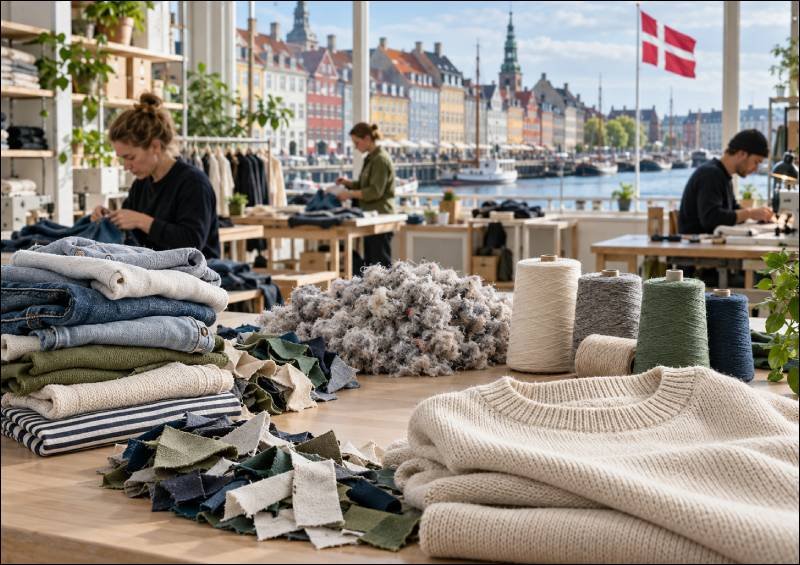
Denmark has unveiled a National Action Plan for Textiles aimed at reducing the sector’s environmental footprint while helping businesses develop circular business models and prepare for new European Union requirements.
Developed through collaboration among industry, the public sector, knowledge institutions and civil society, the plan establishes a shared framework for changing how textiles are produced, consumed and managed. DM&T, Lifestyle & Design Cluster and TRACE have brought together expertise from across the textile value chain to support the initiative.
Speaking to CIFF, Marie Busck, Chief Sustainability Officer at DM&T and Chair of the plan’s steering group, said the initiative responds to a longstanding call for coordinated action. “First and foremost, we need to get more out of fewer textiles. Textiles are an essential part of our everyday lives, but they also have a significant impact on the climate and the environment,” Busck said.

A key priority is helping companies, particularly small and medium-sized enterprises, prepare for evolving EU requirements covering documentation, product design, marketing and producer responsibility. The plan includes an initiative focused on equipping businesses to comply with legislation and anticipate further changes.
Busck said the complexity of global textile supply chains makes cooperation essential, with businesses, consumers, public-sector organisations and authorities all having a role in the transition. Steering and advisory groups will bring additional perspectives and expertise to guide implementation.
The plan also recognises the need to reduce textile production and consumption, encouraging companies to explore circular ways of doing business. Busck said these models would become an increasingly important source of competitiveness as environmental pressures and regulation reshape the industry.
By 2029, the ambition is to equip Danish businesses, public sector organisations and civil society with the skills, partnerships and infrastructure needed for a more circular textile economy. The initiative aims to position Denmark among Europe’s leading countries in developing and implementing circular textile solutions.