European Textile Industry Faces Continued Decline, Urgent Action Needed: EURATEX
Europe’s textile and apparel industry continues to face mounting challenges, with factory closures becoming an increasingly frequent reality across the region. Each shutdown brings not only job losses and community disruption but also the erosion of critical industrial capabilities.
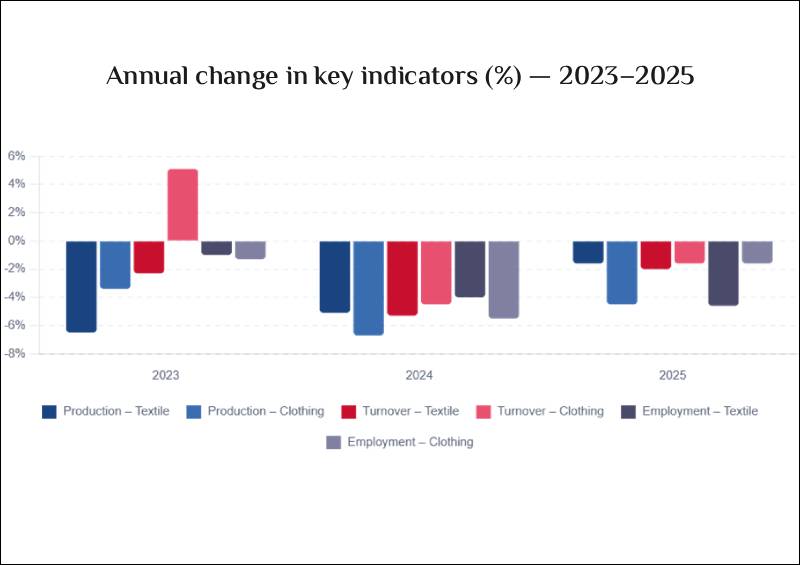
According to the latest Economic Update released by EURATEX, the industry recorded negative performance across all key indicators in 2025, including production, turnover and employment. This marks the third consecutive year of decline, highlighting a sustained loss of competitiveness within the European textile sector.
The downturn is driven by a combination of structural and market pressures. Persistently high energy costs, subdued consumer demand and rising import competition from Asia have placed significant strain on manufacturers. At the same time, the growing influence of low-cost online platforms and an increasingly complex regulatory environment have further intensified challenges for European producers.

While the European Union is advancing policy initiatives such as the Industrial Accelerator Act, reforms to the Union Customs Code and the Energy Union framework, industry stakeholders warn that these measures may not come quickly enough to address the immediate crisis. Many companies are struggling to sustain operations and require urgent relief.
EURATEX is calling for immediate and targeted action, including measures to reduce energy costs, simplify regulatory requirements, strengthen market surveillance and ensure fair competition. The organisation emphasises that without swift intervention, further closures and loss of industrial capacity are inevitable.
The textile sector remains a vital part of Europe’s industrial ecosystem, extending far beyond fashion. In addition to clothing, footwear and home textiles, the industry supports key sectors such as healthcare, defence, mobility, construction and agriculture. It also plays a crucial role in advancing circularity through reuse and recycling initiatives.
With the stakes rising, EURATEX has urged the European Commission and Member States to implement concrete measures before the end of 2026 to stabilise the sector and safeguard its future.
Industry leadership has underscored the urgency of the situation, warning that continued inaction will lead to increased dependence on external supply chains and a higher environmental footprint, counteracting Europe’s broader sustainability goals.