Gujarat Renewable Curtailment Hits Spinning Mills, Delays Returns
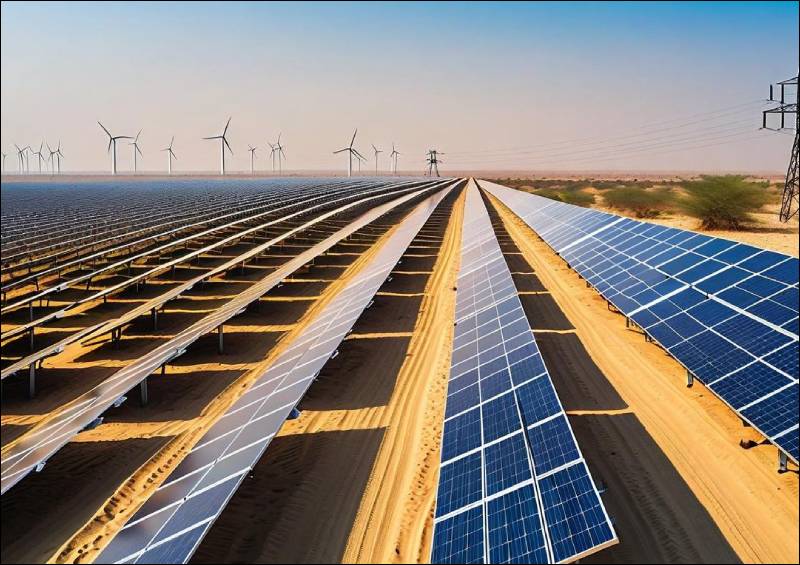
Renewable power curtailment in Gujarat is increasingly impacting the textile spinning industry, with mills reporting rising financial stress, delayed return on investments and disruptions in captive energy planning, according to industry sources.
The issue has escalated over the past 20 months, particularly during high-wind seasons, when grid operators have imposed curtailments ranging between 50% and 70% on wind, solar, and hybrid power projects.
The Spinners’ Association of Gujarat (SAG), representing cotton spinning mills across the state, has raised concerns with the state government, stating that the situation is undermining investments made under Gujarat’s textile growth initiatives. Several power-intensive spinning mills had installed wind and solar capacities for captive consumption after receiving the necessary approvals and grid connectivity from the state transmission system.

Industry stakeholders maintain that these renewable energy projects were commissioned only after undergoing detailed technical evaluations, safety clearances and formal connectivity approvals. Such processes are expected to ensure that the grid is capable of absorbing the sanctioned renewable capacity.
The association has also pointed out that the Gujarat Energy Transmission Corporation regularly publishes renewable energy integration capacity for substations following system studies, leading to questions over why projects that have already been approved are later subjected to generation restrictions.
According to industry representatives, spinning mills invested in renewable energy based on policy support, technical clearances, and the assurance of grid connectivity. However, repeated curtailment is now resulting in significant revenue losses and extending project payback periods.
While Gujarat continues to be one of India’s leading renewable energy hubs supported by strong wind potential, an extensive coastline and a growing base of solar and hybrid projects, the benefits of this capacity are being diluted due to persistent curtailment despite completed infrastructure and compliance with transmission norms.
The impact is particularly severe for captive users such as spinning mills, where energy costs form a substantial portion of overall production expenses. Reduced renewable generation is forcing mills to rely on more expensive alternative power sources, even as they continue to bear the capital costs of underutilized renewable assets.
Additionally, developers supplying power to the grid are witnessing weakened returns, as curtailed generation directly affects revenue realization.
Industry stakeholders warn that curtailment at this scale is not only affecting businesses and investors but is also leading to a loss of clean energy generation at a time when renewable output is critical.
The association has urged authorities to address the gap between approved renewable integration capacity and actual power evacuation. It has emphasized that projects granted connectivity after comprehensive system studies should be allowed to operate without arbitrary restrictions, ensuring both investor confidence and optimal utilization of renewable resources.