Is Indian Textile Industry Ready To Capitalize On India-UK CETA?
India needs to overcome structural challenges in areas of speed of delivery, consistency, innovation, sustainability, compliance, traceability and the ability to deliver large orders within increasingly compressed timelines
The implementation of India–UK Comprehensive Economic and Trade Agreement (CETA) marks a defining moment for the Indian textile sector. With the agreement now in force, Indian exporters can ship a wide range of textile and apparel products to the UK at preferential or zero-duty rates, eliminating import duties that had long eroded their competitiveness. For an industry that contributes around 2.3 per cent to India’s GDP, accounts for nearly 13 per cent of industrial production, generates about 11 per cent of merchandise exports and provides direct employment to more than 45 million people, the agreement opens the door to one of the world’s most sophisticated consumer markets.
Yet, even as the industry celebrates the removal of tariff barriers, the more important question is whether India is truly prepared to convert this policy breakthrough into sustained export growth. History suggests that free trade agreements create opportunities, but they do not automatically create competitiveness.

The UK may not be India’s largest textile export destination, but it remains one of the most attractive. British consumers have traditionally favoured premium home textiles, garments, fashion products and furnishings—segments where Indian manufacturers enjoy considerable strengths. Companies producing bed linen, towels, carpets, cotton garments and home furnishings are expected to be among the biggest beneficiaries.

Ashwin Chandran
Industry bodies have welcomed the implementation of the CETA with optimism. The Confederation of Indian Textile Industry (CITI) has described the agreement as a significant milestone that gives Indian exporters long-awaited certainty in planning production, negotiating contracts and strengthening relationships with UK buyers. CITI Chairman Ashwin Chandran has said that clarity on implementation will help exporters prepare more effectively while enhancing India’s competitiveness in the British market.
 The Cotton Textiles Export Promotion Council (TEXPROCIL) also expects the agreement to provide a meaningful boost to exports. According to the council, India’s textile exports to the UK, currently estimated at around US$ 1.9 billion, have the potential to approach US$ 3 billion over the next few years as exporters leverage preferential market access and expand their customer base. Similarly, the Apparel Export Promotion Council (AEPC) believes the agreement could improve the price competitiveness of Indian apparel in Britain while encouraging leading retailers to diversify sourcing from India.
The timing could hardly have been better. Global supply chains are undergoing one of their biggest transformations in decades. The pandemic, geopolitical tensions, shipping disruptions and the growing “China Plus One” strategy have prompted international brands to diversify sourcing across multiple geographies. India, with its abundant raw material base, integrated textile value chain and large manufacturing ecosystem, is increasingly being viewed as a reliable alternative.
The CETA strengthens that proposition. Beyond tariff concessions, it signals that India is deepening its engagement with global trade while giving exporters greater confidence to invest in capacity expansion, technology, product development and market diversification.
However, if tariffs were the only barrier to export growth, India would already be among the world’s leading apparel exporters.
Global buyers today evaluate suppliers on far more than price. Speed, consistency, innovation, sustainability, compliance, traceability and the ability to deliver large orders within increasingly compressed timelines have become equally important. It is in these areas that India continues to face structural challenges.
One of the biggest concerns remains the fragmented nature of the country’s textile manufacturing ecosystem. While India is home to several globally competitive companies, a substantial share of production still comes from thousands of micro, small and medium enterprises (MSMEs). These businesses are the backbone of the industry, yet many continue to operate with ageing machinery, limited financial resources and lower productivity.
Unlike countries with highly integrated manufacturing ecosystems, India’s textile value chain often stretches across multiple locations and enterprises. Cotton may be sourced from one state, yarn produced in another, fabric processed elsewhere and garments stitched in yet another cluster before reaching ports for exports. Such fragmentation increases logistics costs, extends lead times and reduces efficiency.
This is especially critical in today’s fashion industry, where international brands increasingly operate on shorter design cycles and maintain lower inventories. Buyers expect suppliers to respond quickly to changing consumer preferences, produce smaller batches and ensure reliable deliveries. Production or logistics delays can quickly negate the price advantage created by tariff concessions.
Technology adoption presents another challenge. While several large Indian textile companies have embraced automation, artificial intelligence, digital quality inspection and data-driven manufacturing, adoption across the wider industry remains uneven. Thousands of smaller units continue to rely on conventional practices, limiting their ability to compete with technologically advanced producers in countries such as China and Vietnam.
Technology will therefore play a decisive role in determining whether India can translate the opportunities created by the CETA into sustained export growth. Around the world, textile manufacturing is being transformed by AI, automation, robotics and advanced analytics. AI-powered demand forecasting, computer vision-based quality inspection, predictive maintenance, automated cutting and digital production planning are helping manufacturers improve productivity, reduce wastage and shorten lead times.
Leading Indian exporters have already begun this transition. Companies such as Welspun Living, Arvind Ltd, Trident Group, Indo Count Industries and Himatsingka Seide have invested in smart manufacturing, sustainability, digital traceability and product innovation to meet evolving global buyer expectations. These investments are expected to strengthen their competitiveness in the UK market, where retailers increasingly seek reliable partners capable of delivering consistent quality, innovation and responsible manufacturing.
The challenge, however, extends beyond India’s largest companies. A significant proportion of textile production continues to come from MSMEs, many of which have limited financial resources and ageing technology. While these enterprises provide employment to millions and form the backbone of the manufacturing ecosystem, many struggle to invest in automation, digitalisation and internationally recognised certifications. Bridging this technology gap will be critical if the benefits of the CETA are to be shared across the industry rather than confined to a handful of large exporters.
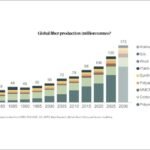
Another structural challenge is India’s product mix. For decades, India’s global reputation has been built on cotton. From premium bed linen and home furnishings to garments and yarn, cotton has remained the industry’s principal strength. Yet the global market is changing rapidly. Man-made fibres (MMF) now account for nearly three-fourths of global fibre consumption, driven by demand for sportswear, performance apparel, athleisure, outerwear and technical textiles.
Countries such as China and Vietnam have invested heavily in MMF production, integrated supply chains and specialised manufacturing. India, despite being one of the world’s largest textile producers, continues to lag in this segment. Unless investments in MMF and technical textiles accelerate, India risks missing out on the fastest-growing segments of global apparel demand, even as it gains preferential market access through agreements such as the CETA.
Recognising this gap, the Government of India has launched initiatives such as the Production Linked Incentive (PLI) Scheme to encourage investments in MMF apparel and technical textiles. These segments are expected to become major growth drivers over the coming decade and could significantly improve India’s competitiveness in international markets.
Sustainability is another area that will determine the industry’s future. The UK is among the world’s most environmentally conscious consumer markets. British retailers face growing pressure from regulators, investors and consumers to ensure that supply chains meet stringent environmental, social and governance (ESG) standards. Carbon emissions, water consumption, waste management, ethical sourcing and supply chain transparency are now central to sourcing decisions.
Indian exporters have made notable progress in sustainability. Several leading companies have invested in renewable energy, recycled fibres, zero-liquid discharge systems, water conservation, circular manufacturing and digital traceability. These initiatives strengthen relationships with international brands and position India as a credible supplier in an increasingly sustainability-focused marketplace.
However, the transition remains uneven. Smaller enterprises often find compliance expensive and technically challenging. Access to affordable finance, technology support and capacity-building programmes will therefore be essential if the industry is to achieve sustainability at scale.
Another important aspect of the CETA is compliance with its Rules of Origin. Preferential tariffs are available only when prescribed value-addition norms are met. Exporters must therefore maintain robust documentation, transparent sourcing practices and traceable supply chains to ensure that products genuinely qualify for duty-free treatment. As global buyers demand greater transparency, compliance will become a competitive advantage rather than merely a regulatory requirement.
Infrastructure and logistics also remain critical. India has made considerable progress through investments in highways, ports, dedicated freight corridors and multimodal logistics. Nevertheless, logistics costs remain higher than costs in several competing economies. For an industry where fashion cycles are becoming shorter and delivery schedules increasingly stringent, reducing turnaround times will be as important as lowering manufacturing costs.
Government initiatives such as the PM MITRA Park programme seek to address these challenges. By creating integrated textile manufacturing ecosystems where spinning, weaving, processing and garmenting are located within the same industrial cluster, the initiative aims to reduce logistics costs, improve efficiency and create economies of scale. If implemented successfully, it could significantly strengthen India’s global competitiveness over the coming decade.
Even then, the competitive landscape remains intense. Bangladesh continues to dominate global apparel exports through large-scale manufacturing and competitive labour costs. Vietnam has leveraged an extensive network of free trade agreements, efficient manufacturing systems and strong integration with global supply chains. China, despite rising wages, remains unmatched in scale, technology, infrastructure and manufacturing efficiency. Turkey continues to benefit from its proximity to European markets, enabling exceptionally short delivery timelines.
 The India–UK CETA narrows one important gap by removing tariff disadvantages, but it does not erase these structural strengths enjoyed by competing nations. Industry bodies acknowledge this reality. CITI has consistently emphasised that market access must be complemented by greater investments in technology, productivity, sustainability and innovation. AEPC has highlighted the need for faster capacity expansion and stronger manufacturing competitiveness, while TEXPROCIL believes the agreement offers a historic opportunity, provided exporters move swiftly to capitalise on it.
Ultimately, the success of the CETA will not be measured by the number of products that become duty-free, but by the extent to which India expands its market share in the UK and strengthens its position in global textile value chains.
The agreement undoubtedly provides a rare opportunity. It removes a tariff disadvantage that Indian exporters have faced for decades, enhances confidence among global buyers and reinforces India’s credentials as a reliable sourcing destination at a time when supply chains are being reconfigured worldwide.
Yet the next phase of growth will demand far more than a favourable trade policy. It will require faster adoption of AI and advanced manufacturing technologies, greater investment in MMF and technical textiles, stronger sustainability credentials, integrated supply chains, lower logistics costs and continuous skill development. Above all, it will require Indian manufacturers to compete on innovation, quality, speed and value addition rather than price alone.