Indian textile and apparel exporters may face increased competitive pressure in the US market despite India being placed in a relatively favourable tariff bracket under the latest Section 301 measures, according to a report by Emkay Research. The report noted that India has been subjected to a
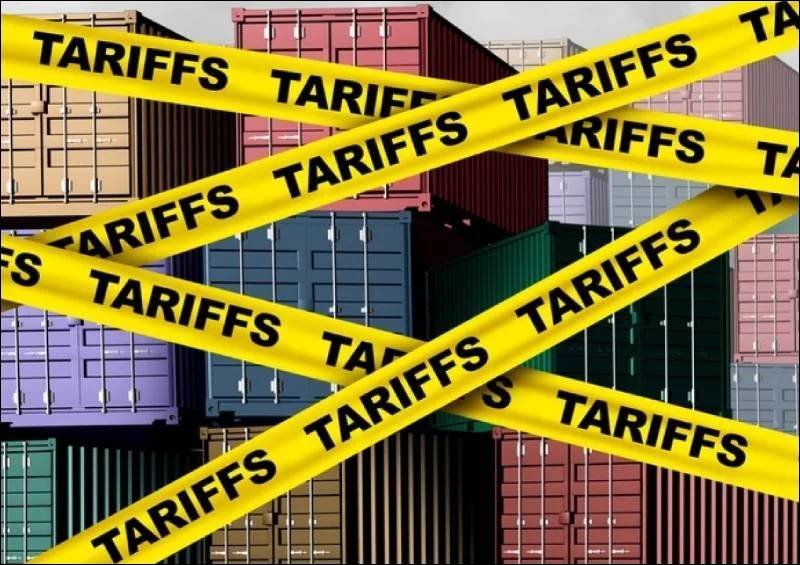
The Confederation of Indian Textile Industry (CITI) has expressed serious concern over the United States’ decision to impose a 10 per cent tariff on Indian goods following investigations conducted under Section 301 by the Office of the United States Trade Representative (USTR) related to the enforcement of prohibitions on imports produced with forced labour. CITI
Sustainability is no longer a niche agenda for India’s textile industry. As global markets demand greater transparency, traceability and environmental responsibility, circularity is emerging as a strategic imperative for the sector’s next phase of growth. India’s textile and apparel industry has long been one of the country’s most important economic pillars.
Samir Joshipura, Group CEO, Trident Group, speaks on the overwhelming response at Bharat Tex 2026, evolving consumer preferences, global market challenges, India’s growing competitiveness and Trident’s sustainability journey. Trident Group’s booth at Bharat Tex 2026 has been witnessing a steady stream of visitors, reflecting the growing interest in the company’s diverse
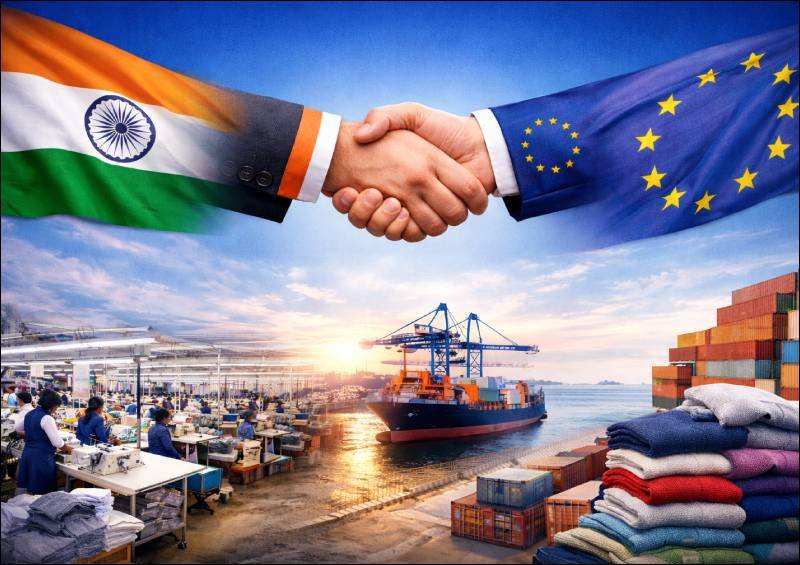
The Confederation of Indian Textile Industry (CITI) and the European Apparel and Textile Confederation (EURATEX) have launched a bilateral industry platform to support the effective implementation of the India-EU Free Trade Agreement (FTA) in the textile and apparel sector. The EU-India Textile and Apparel Dialogue (TAD) will provide a structured forum for industry
Union Textile Minister Giriraj Singh has called on Tamil Nadu’s textile and apparel industry to accelerate investments in technical textiles and manmade fibre (MMF) manufacturing by leveraging the Centre’s Rs 11,000-crore Production Linked Incentive (PLI) Scheme, while also urging the sector to target a threefold increase in exports. Addressing industry members
India’s export sector continues to demonstrate strong momentum, supported by policy reforms, enhanced digital infrastructure, improved logistics, and a series of trade facilitation measures, according to a senior official from the Ministry of Commerce and Industry. Speaking at a regional media interaction jointly organised by the Apparel Export Promotion Council (AEPC) and
India’s knitwear capital, Tirupur, faced a challenging fiscal year in 2025-26 as geopolitical tensions, trade uncertainties and rising logistics costs impacted export performance. The cluster recorded exports worth Rs 42,544.40 crore during the year, compared to Rs 44,747 crore in FY2024-25, reflecting a decline of 4.91%. The slowdown comes at a time when global apparel
India’s textile and apparel industry is facing one of its most complex operating environments in recent years as the escalating crisis in West Asia disrupts shipping routes, inflates freight and insurance costs, delays export deliveries and increases volatility in crude-linked raw materials. For a sector already battling uneven global demand, tariff-related uncertainties
The domestic textiles and apparel sector is facing severe disruptions following the imposition of 50 per cent tariff by the U.S. on Indian exports. A nationwide survey conducted recently by the Confederation of Indian Textile Industry (CITI) has revealed that around 33 per cent of businesses have reported more than 50 per cent decline in […]