
Biji Chacko shares his strategic vision for the company in an exclusive interview with Henry Dsouza, Associate Editor of Textile Insights. With a steadfast focus on sustainability, advanced technology and operational efficiency, Chacko outlines how Alok Industries aims to redefine the global
Alfredo Ferre, Chief Product, Innovation, and Sustainability Officer at Recover, has been appointed to the Textile Exchange Governance Board. With over 30 years of experience in the textile industry, Alfredo is recognized for his expertise in textile recycling and his dedication to advancing sustainability and innovation within the sector. In his new role, Alfredo will
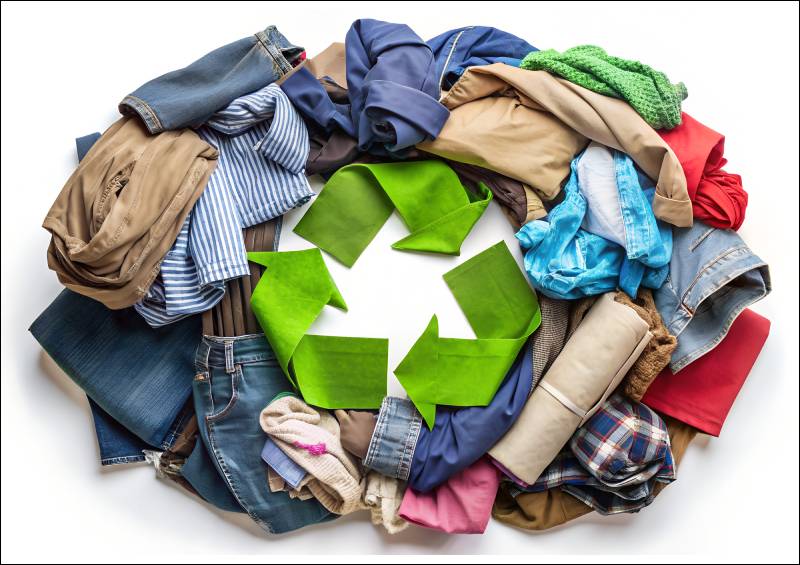
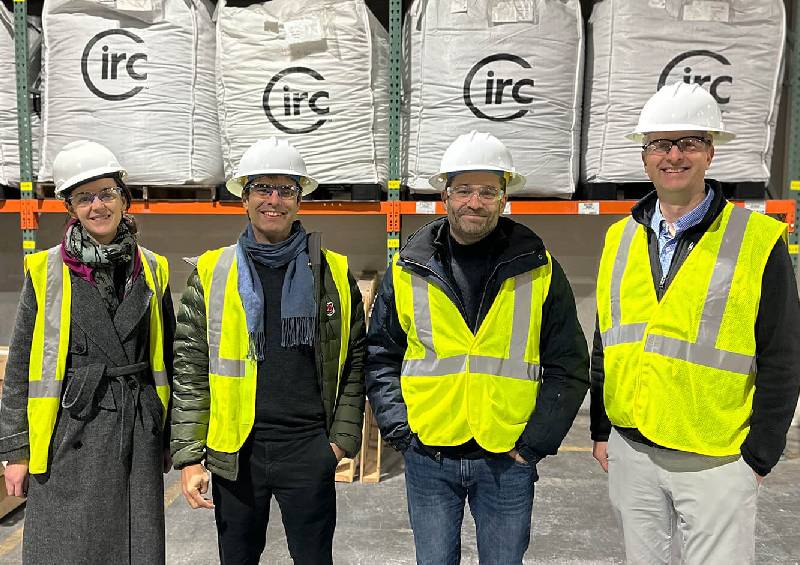
International technology group ANDRITZ has secured an engineering order from Circ, a U.S.-based textile recycling innovator, to develop its first large-scale textile recycling plant. This groundbreaking facility will be the first to successfully recover cotton and polyester from blended textile waste, marking a significant step toward circularity in the fashion industry.
As the fashion industry grapples with mounting environmental concerns, the concept of Extended Producer Responsibility (EPR) has emerged as a cornerstone policy to address textile waste. This report, authored by the Ellen MacArthur Foundation, explores how EPR can reshape the textile industry by shifting the focus from linear consumption patterns to sustainable, circular
On September 28, 2024, California Governor Gavin Newsom signed SB707, the Responsible Textile Recovery Act of 2024, into law. This is the first extended producer responsibility (EPR) law for textiles in the United States. The new law requires producers of household textiles—such as clothing, footwear and hospitality items—to fund and manage a statewide programme for […]
Lululemon published its fourth annual Impact Report, detailing the company’s progress in FY23 across its social and environmental commitments. The report emphasizes Lululemon’s integrated Impact Agenda, launched in 2020, which focuses on the interconnected pillars of Be Human, Be Well, and Be Planet. “In 2023, we made significant strides toward our impact goals while
According to a new briefing by the European Environment Agency (EEA), reducing the use of PFAS—also known as “forever chemicals”—in textiles is crucial for enhancing recyclability and advancing a circular economy. Textiles are a major source of PFAS pollution in Europe. These chemicals, widely used in clothing, carpets, and household items for waterproofing and
Birla Cellulose, a pioneer in sustainable textile solutions, is revolutionizing the perception of Open End (OE) yarn with its groundbreaking product, Excel. Contrary to the prevailing belief that OE yarn is only suitable for low-end applications using cotton waste, Birla Cellulose has unlocked the true potential of OE yarn, particularly in home textile business and […]
The General Assembly of ACIMIT, the Italian Textile Machinery Manufacturers Association, held in Milan on July 9, emphasized the industry’s commitment to innovation amidst current global uncertainties. Marco Salvadè, ACIMIT’s president, highlighted key data from the Italian textile machinery sector: in 2023, production and exports both declined by 16%, reaching
By leveraging the efforts of Circular Economy Catalysts, the textile industry can significantly reduce its environmental impact and contribute to a more sustainable future, write Dr P Alli Rani, Director and Dr TKS Lakshmi Priya, Adjunct Faculty at Sardar Vallabhbhai Patel International School of Textiles & Management, Coimbatore The circular economy is a