Reimagining Handloom for AI-Enabled Technical Textiles By Rony Banerjee I returned from Bharat Tex 2026 with optimism, but also with a familiar discomfort. Everywhere there was confidence. Technical textiles, sustainability, AI, circularity, traceability, ESG, exports, global markets. All the
European Commission Study Highlights the Promise and Challenges of Closing the Loop on Textile Waste As the global textile industry races to meet ambitious sustainability targets, chemical recycling is increasingly being viewed as a critical technology for achieving true circularity, particularly for polyester-based textiles. A new report from the European Commission’s
Giriraj Singh, Hon’ble Minister of Textiles, Government of India, released the India Textiles & Apparel CXO Blueprint 2030, a strategic report by the Clothing Manufacturers Association of India (CMAI) and the Global Alliance for Textile Sustainability (GATS), at the Sustainability & Circularity Impact Pavilion during Bharat Tex 2026. The report outlines strategic
Reju, a textile regeneration company, has opened its first proprietary Research and Development (R&D) Centre in North America in Conshohocken, Pennsylvania, to accelerate the commercialisation of its textile recycling technologies. Located within Technip Energies’ Advanced Materials and Catalysts Research Center, the facility will support the development of
Researchers at the Delft University of Technology (TU Delft) have successfully transformed wastewater treatment sludge into a sustainable textile dye, creating garments that demonstrate a novel approach to circular fashion. Developed in collaboration with Dutch sustainable fashion label Hul le Kes, the innovation uses a melanin-like biopolymer recovered from sewage sludge
For decades, the textile industry has been a cornerstone of craftsmanship, employment and economic growth. Yet alongside this progress, textile waste has emerged as one of the sector’s most pressing environmental challenges. Globally, an estimated 92 million tonnes of textile waste is generated annually, while less than 1% of used clothing is recycled back into […]
Lindex has partnered with BASF to introduce textile-to-textile recycled polyamide into the lingerie segment, marking a significant step towards circular material innovation in fashion. Through the collaboration, Lindex will integrate BASF’s loopamid, a recycled polyamide 6 produced entirely from textile waste, into selected lingerie products scheduled for launch in early
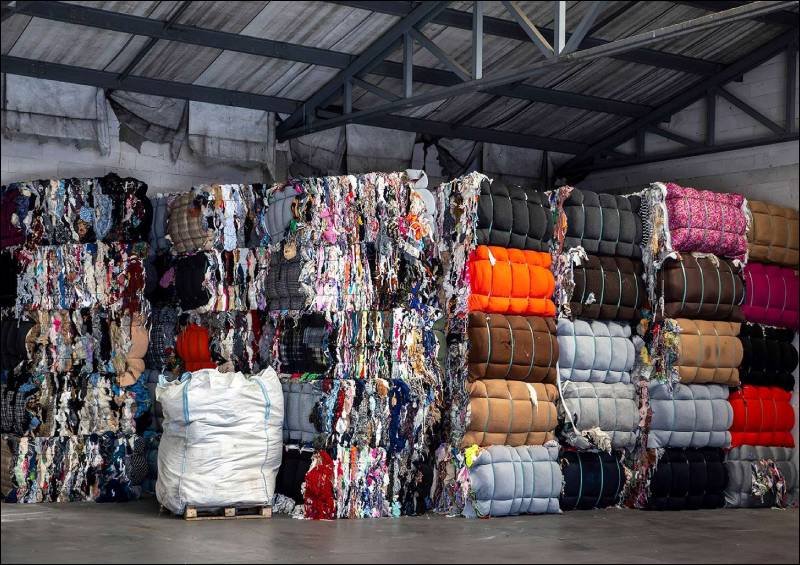
The textile industry is standing at a turning point. Built on speed, scale and global integration, it has delivered growth which few sectors can claim, but at a cost that is now impossible to ignore. Every year, an estimated 90 to 110 million tonnes of textile waste is either landfilled or incinerated, exposing a system […]
Birla Cellulose, a global leader in sustainable viscose fibre, has entered into a cooperation agreement with Circulose, a leading producer of regenerated textile pulp, to accelerate textile recycling and circularity across the value chain. Under the agreement, Circulose will supply pulp made entirely from textile waste to Birla Cellulose, which will convert it into
SK Chemicals has partnered with China’s Kelinle to establish the Feedstock Innovation Center (FIC) in Shaanxi, China. The facility will convert hard-to-recycle plastics and textiles such as discarded blankets and PET-bottle fines into feedstock for chemical recycling. The FIC will initially produce 16,000 tonnes of PET pellets annually, ramping up to 32,000 tonnes,