‘Garment Manufacturing Will Unlock India’s Full Textile Potential’
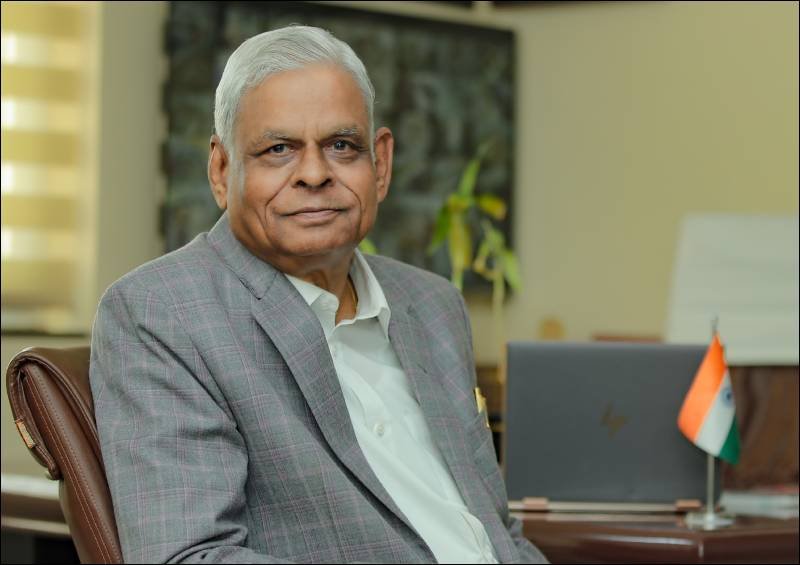
In this exclusive interview, J C Laddha speaks candidly about Sudiva and India’s textile industry with Henry Dsouza, Associate Editor, Textile Insights
Could you take us back to the start of your textile industry journey?
My journey in the textile industry began in 1973, when I joined the prestigious LNJ Bhilwara Group as a management trainee. As a qualified Chartered Accountant, I entered the sector at a time when India’s organised textile industry was still in its formative years. What began as a professional assignment soon evolved into a lifelong commitment.
Over the next 42 years, I had the privilege of working closely with one of the country’s most influential textile groups, eventually serving as Executive Director for 26 years. One of the most remarkable aspects of my journey was the opportunity to work across three generations of leadership, which gave me first-hand exposure to every phase of industrial growth and transformation.

What was Bhilwara like in its early years and how have you seen it transform over time?
Bhilwara was very different from what it is today. Before textiles became synonymous with the city, it was primarily known for its explosives industry. Industrial infrastructure was limited and textile entrepreneurship was yet to take shape.
The transformation began in the late 1970s, when the first seeds of the textile revolution were sown. The establishment of weaving units under the Bhilwara Group marked the beginning of a new industrial era. In 1977–78, with the launch of weaving operations under the iconic Mayur brand, Bhilwara entered a new phase of industrial growth. Fabric production expanded steadily, creating confidence among aspiring entrepreneurs.
The period between 1978 and 1983 proved particularly decisive. What began with a few weaving units quickly evolved into a full-fledged textile ecosystem. Processing units followed, enabling integrated manufacturing and greater value addition. Companies such as Sangam and several others emerged during this period, helping transform Bhilwara into one of India’s most vibrant textile clusters.
Today, Bhilwara’s textile economy is estimated at nearly Rs 35,000 crore annually, with exports exceeding Rs 15,000 crore, highlighting the city’s critical role in India’s textile landscape.
What made Bhilwara’s entrepreneurial culture unique?
Bhilwara’s entrepreneurial culture was truly distinctive. Once the textile business began showing promise, it sparked a chain reaction. Success inspired confidence and confidence encouraged more people to enter the sector.
What makes Bhilwara particularly remarkable is that nearly 85 percent of its textile entrepreneurs are first-generation industrialists. That is a rare phenomenon in any industrial cluster and speaks volumes about the city’s strong entrepreneurial spirit, risk-taking ability and determination to build from the ground up.
How did your association with Sudiva begin and what shaped its journey?
After retiring from the LNJ Bhilwara Group in 2015, I joined Sudiva Spinners, a company founded by my son in 2008. For me, it marked the beginning of a new entrepreneurial chapter.
Sudiva was conceived as a focused spinning enterprise built on the principles of quality, consistency and disciplined growth. Unlike many modern ventures driven by aggressive leverage or external equity, Sudiva has remained a closely held family enterprise.
The journey was not without challenges. There were difficult phases, but building the company through internal resources gave us stability, financial discipline and greater control over our growth. That disciplined approach has delivered strong results. From a modest turnover of Rs 19 crore in 2008–09, Sudiva has grown into a Rs 1,075 crore enterprise in FY 2025–26, achieving a compounded annual growth rate of nearly 30 percent.
What has driven Sudiva’s impressive growth over the years?
Sudiva’s growth has been driven by carefully planned and phased expansion. We have always believed in growing step by step, ensuring that every phase of investment is backed by operational stability and market demand.
In 2015, the company invested Rs 107 crore, followed by a Rs 230 crore expansion in 2018 and followed by Rs. 280 crores in 2023. Our latest expansion, involving an investment of Rs 350 crore, is currently underway and will add 51,000 spindles to further strengthen our production capabilities.
What has been most important is our disciplined approach to growth. We have focused on expanding with prudence, adopting the right technology and maintaining financial stability at every stage.
What is your perspective on automation in the textile industry and how is Sudiva adapting to this shift?
Automation is no longer optional, it has become essential for competitiveness in today’s textile industry. It is critical not only for improving efficiency and quality consistency, but also for addressing the growing challenge of labour availability.
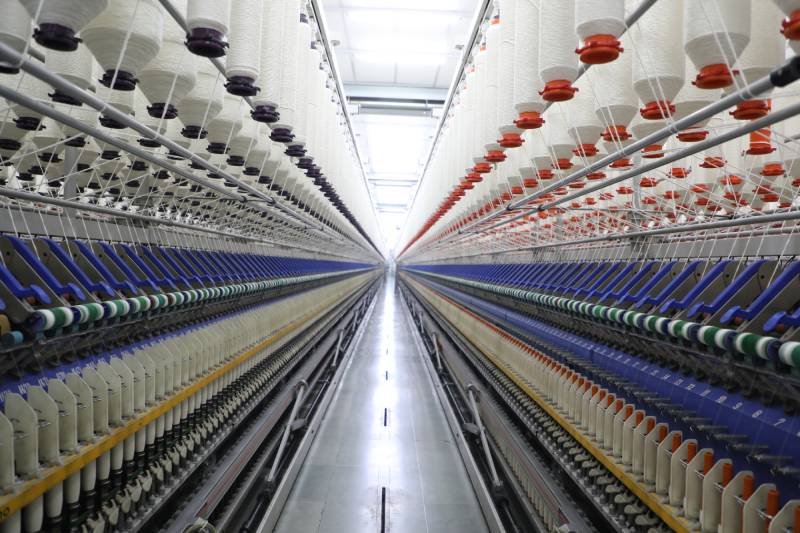
Sudiva’s technological journey reflects this forward-looking approach. We began with open-end spinning, later transitioned to ring spinning and have since converted all our operations to compact spinning. Every phase of expansion has been guided by three key priorities: advanced technology, automation and energy efficiency.
The industry is increasingly facing labour shortages, with nearly 60–70 percent of the workforce in units like ours coming from states such as Uttar Pradesh, Bihar and Odisha. As economic opportunities improve in these regions, retaining migrant labour is becoming more difficult. In this environment, automation is not just a strategic choice; it is a business necessity.
How does Sudiva engage with its customers and build long-term relationships?
Sudiva’s customer engagement model is one of our key strengths. Unlike many spinners who rely heavily on dealers or merchant exporters, we work directly with end-user customers.
This direct engagement allows us to understand customer requirements more closely, respond faster to feedback and build stronger long-term relationships. It also helps us maintain greater consistency in quality standards, as we receive immediate market inputs and can align our production accordingly.
How is Sudiva performing on the export front and how do you view the balance between domestic and international markets?
Our export business has evolved in line with changing global market conditions. During FY 2021–22, exports accounted for nearly 65 percent of our revenue. As global demand softened, that share declined to around 35 percent. However, with international markets showing signs of recovery, we expect exports to contribute nearly 55 percent in the coming cycle.
That said, India remains a very large and attractive market and domestic demand can often be more rewarding than exports.
One structural characteristic of the textile industry, however, is that consumer purchases are highly deferable. Unlike essential goods, garment purchases can easily be postponed during periods of economic uncertainty. This makes demand cycles highly sensitive to broader market sentiment, both domestically and internationally.
What needs to be done for India to fully realise its textile potential?
For India to fully realise its textile potential, strengthening garment manufacturing capacity is essential. A robust garment sector would create stronger demand across the entire upstream value chain and significantly enhance the overall competitiveness of the industry.
Technical textiles also present immense long-term opportunity. However, Bhilwara is still in the early stages of readiness for this segment.
Technical textiles demand deep specialisation, clear market access and a long-term perspective. Unlike conventional spinning or weaving, they involve longer gestation periods and significantly higher entry barriers. Many investors naturally seek quicker returns, but technical textiles require patience, expertise and conviction.
What is Sudiva’s approach to sustainability?
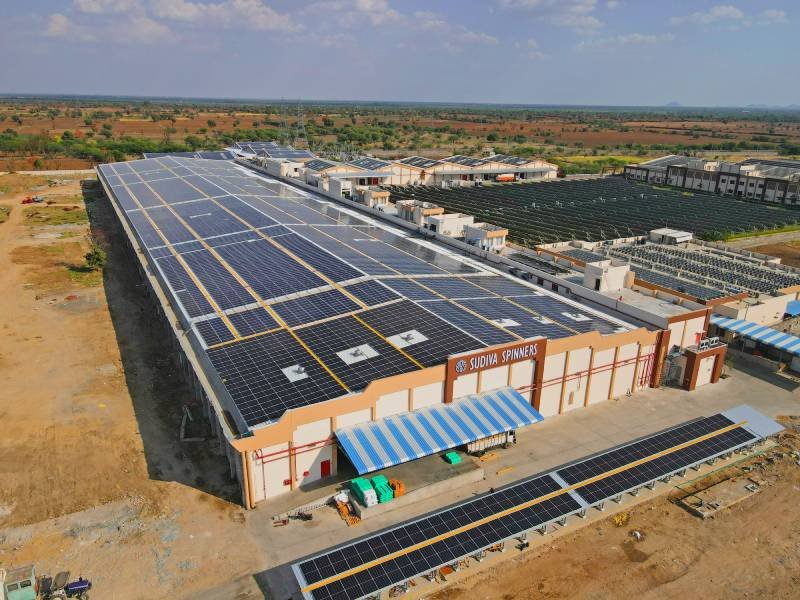
Sustainability has become central to Sudiva’s long-term strategy. Currently, nearly 30 percent of our energy requirements are met through renewable sources and we aim to increase this to 80 percent by 2027.
We have also entered the recycled yarn segment and offer organic as well as customer-specific sustainable yarn solutions to meet evolving market expectations.
Today, sustainability is no longer optional, it is essential for long-term competitiveness and for building a future-ready textile business.
In your view, what are the key policy challenges facing the textile industry today?
At the state level, Rajasthan offers relatively weaker textile incentives compared to neighbouring states such as Madhya Pradesh and Gujarat. Higher power costs, slower approvals and bureaucratic hurdles around land conversion and environmental clearnace have made expansion more challenging.
As a result, several Bhilwara-based textile units have shifted operations to Neemuch in Madhya Pradesh, attracted by more investor-friendly policies and lower operating costs.
There are also limitations in central incentive schemes. For instance, Sudiva has not benefited from the Production Linked Incentive (PLI) scheme, as cotton spinning was excluded from its scope, with greater emphasis placed on man-made fibre segments.
For India to remain globally competitive, policy frameworks must be more inclusive, balanced and aligned with the needs of the entire textile value chain.
What has been the guiding philosophy behind your leadership?
There are two enduring principles that define my leadership philosophy ethics and people.
Human resources are the greatest assets of any organisation. No amount of automation or technology can truly replace the value of committed people.
This belief has guided my five-decade-long career and has shaped the culture of every organisation I have had the privilege to lead.
Looking ahead, what is your outlook for the Indian textile industry and Sudiva’s future growth?
My outlook for Indian textiles is firmly optimistic. I believe the next 10 to 15 years hold significant potential for the sector, driven by India’s vast domestic consumption base.
However, success will belong to companies that combine technological agility, cost discipline, sustainability and ethical leadership.
For Sudiva Spinners, the roadmap is clear, disciplined expansion, operational excellence, sustainability-led transformation and an unwavering commitment to customer trust.