
‘Our Vision Is To Keep Sangam At The Forefront Of India’s Textile Evolution’
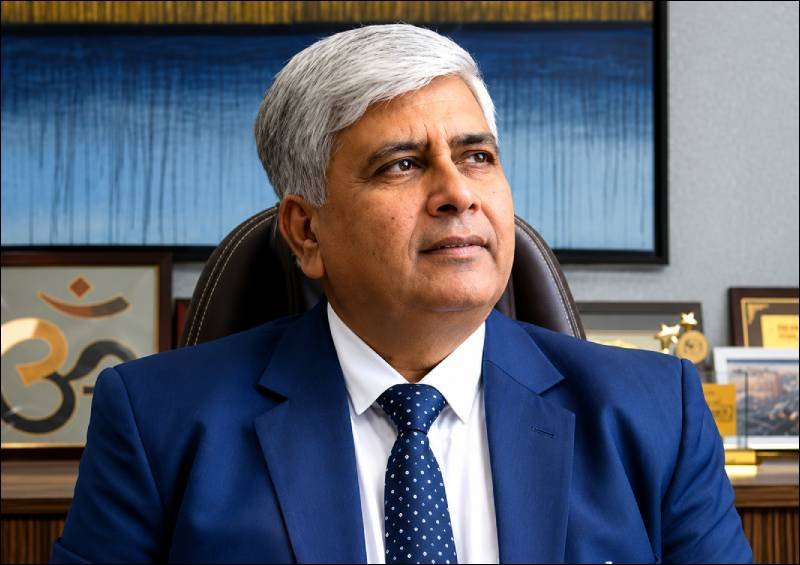
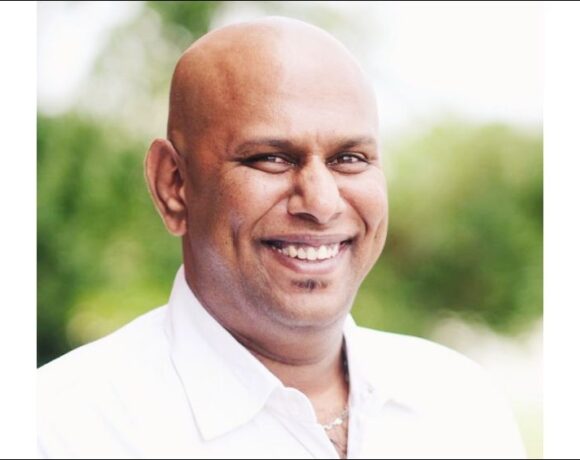
In an exclusive conversation with Textile Insights Associate Editor Henry Dsouza, Dr. S.N. Modani, reflects on Bhilwara’s rise as a textile powerhouse, Sangam’s integrated growth journey and the company’s roadmap for the future.
Could you take us back to the early days of Bhilwara’s textile journey and tell us how the city emerged as one of India’s leading textile hubs?
Bhilwara is a city that today commands a significant place on India’s textile map. Its industrial journey began long before liberalization, when cotton and synthetic textile manufacturing first started taking shape in the region. What set Bhilwara apart was its entrepreneurial spirit and its willingness to seize industrial opportunities at the right time.
The city witnessed a major turning point in the early 1980s, when policy support and industrial reforms created an enabling environment for textile investments. Entrepreneurs recognized the region’s potential and Bhilwara gradually evolved into a strong centre for synthetic and PV suiting production.

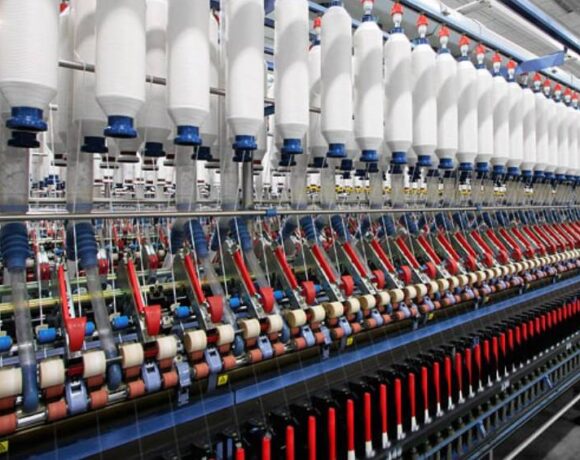
Over the years, this momentum attracted further investments in spinning, weaving and processing, helping create a fully integrated textile ecosystem. This strong industrial foundation, combined with continuous innovation and business vision, established Bhilwara as one of India’s most prominent textile hubs.
What do you believe sets Bhilwara apart from other textile manufacturing centres in India?
Bhilwara’s greatest strength lies in its enterprising culture. The city has always been home to people willing to take calculated risks, invest patiently and think long-term. This mindset is what transformed Bhilwara from a regional textile base into one of India’s most vibrant manufacturing centres.
Today, Bhilwara stands as a benchmark for textile manufacturing efficiency, with hundreds of textile units operating within a relatively compact industrial geography. This concentration has created a powerful ecosystem where raw materials, technical expertise, processing infrastructure, market linkages and skilled manpower are all available within close proximity.
This integrated ecosystem enables faster decision-making, greater operational efficiency and stronger collaboration across the value chain, giving Bhilwara a distinct competitive advantage in India’s textile industry.
What do you see as Bhilwara’s comparative advantage as a textile manufacturing base?
Bhilwara’s cost efficiency is one of its greatest strengths. The city is among the most cost-effective textile manufacturing centres in India. When operating costs remain under control, scale becomes more efficient and overall competitiveness improves.
Much of the credit also goes to Bhilwara’s mature industrial culture. Over the decades, the city has developed a strong ecosystem of experienced professionals, entrepreneurs and skilled workers who deeply understand the demands of textile manufacturing.
This combination of cost efficiency, industrial expertise and entrepreneurial dynamism has enabled Bhilwara-based companies to remain resilient even during challenging market cycles.
It is this strong foundation that continues to make Bhilwara one of India’s most competitive and dependable textile manufacturing hubs.
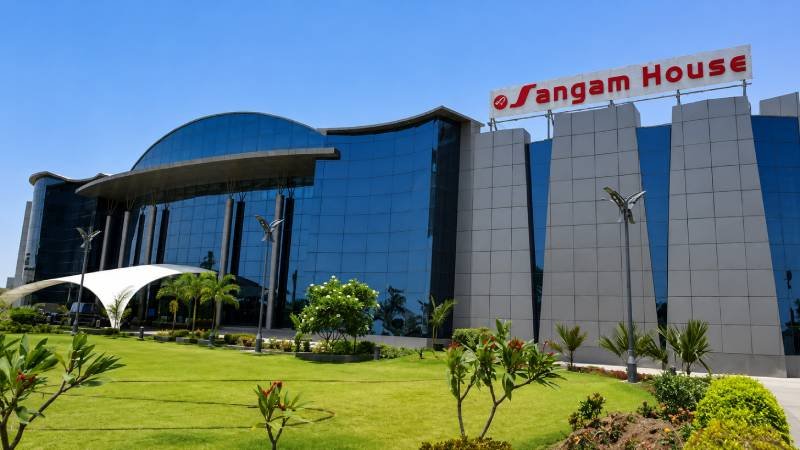
Could you take us back to the early days of Sangam and share how the company’s journey began?
The company started its journey in 1982 with a relatively small investment and a clear entrepreneurial vision. In those early years, Sangam’s operations were modest, but the foundation was built on strong values, disciplined execution and a commitment to quality.
Ram Pal Soni, the founder of Sangam, brought with him a practical engineering mindset and an unwavering determination to create something substantial. The company initially focused on processing and gradually built capabilities across weaving.
When did you join the Sangam family and what role did you play in the company’s transformation and growth?
I joined the organization in 1989, marking the beginning of a transformative phase in Sangam’s journey. It was during this period that the company began expanding aggressively, guided by a clear strategy of backward integration and capacity building.
A significant milestone came in 1991, when we introduced shuttle weaving machines, which marked an important step in strengthening our manufacturing capabilities. Soon after, economic liberalization reshaped the industrial landscape. The removal of licensing restrictions created new opportunities for growth and we moved quickly to expand into spinning.
The years that followed were marked by steady and strategic expansion. Sangam added spinning capacities in the mid-1990s, expanded further in 1998 and again in 2003, steadily strengthening its integrated manufacturing base.
Each expansion was part of a larger long-term strategy to reduce dependence on external suppliers while improving control over quality, timelines and costs. This disciplined approach played a key role in transforming Sangam into a fully integrated textile enterprise.
What prompted Sangam’s decision to pursue backward integration and later enter denim manufacturing?
Backward integration was not simply a capacity expansion decision; it was a strategic necessity. In an industry where margins are often tight and delivery commitments are critical, gaining greater control over the value chain became essential to Sangam’s long-term competitiveness.
A major milestone in this journey came in 2007, when Sangam entered denim manufacturing. This move not only diversified the company’s product portfolio but also played a significant role in strengthening Bhilwara’s position as an emerging denim manufacturing centre.
Denim added an entirely new dimension to Bhilwara’s textile ecosystem. Today, the city is regarded as second only to Ahmedabad as a denim hub, reflecting how rapidly the region adapted, expanded and built capabilities in this segment.
This expansion reflects the broader philosophy that has guided Sangam throughout its journey of continuous reinvention. Rather than remaining confined to a single product category, the company has consistently evolved in response to changing market opportunities and industry demands.
How do you view the balance between exports and domestic sales in Sangam’s growth strategy?
While exports continue to remain an important part of Sangam’s business, the company has increasingly focused on strengthening domestic consumption and enhancing value addition. A key part of this strategy has been steadily increasing internal yarn consumption and moving further toward higher-value finished products.
The future of the textile industry lies in faster response times, greater value addition and shorter delivery cycles. Today’s customers demand speed, flexibility and consistent quality and this is where integration provides a significant competitive advantage.
Our integrated manufacturing model enables us to respond quickly to market demands while maintaining better control over quality, efficiency and delivery timelines. This positions Sangam to serve both domestic and international markets more effectively.
What is Sangam currently focusing on as it enters its next phase of growth?
One of Sangam’s most important strategic focus areas at present is garmenting. This represents the next logical stage in the company’s evolution as it continues to move further up the value chain.
Expanding downstream into garmenting will enable the company to capture greater value, respond more quickly to market demands and build stronger, more direct relationships with customers.
This strategic shift also aligns with Sangam’s long-term vision of strengthening its integrated business model and enhancing its ability to deliver complete, value-added solutions to the market.
What are Sangam’s plans regarding technical textiles? Do you see this as a potential area for future expansion?
Technical textiles is certainly an area we are actively evaluating, but it requires a very different ecosystem compared to conventional textile manufacturing. It demands specialised expertise, certifications and a distinct market approach.
Our approach, therefore, is cautious and pragmatic. While Bhilwara is a strong textile hub, access to specialised technical manpower and the required supporting infrastructure remains more challenging compared to larger industrial centres.
We remain open to opportunities in this space, particularly through strategic collaborations and partnerships. However, at present, our priority is to strengthen and expand the businesses where we already have scale, integration and strong market positioning.
We believe that focused consolidation within our existing integrated operations offers faster growth, greater operational efficiency and stronger long-term returns. This disciplined approach will continue to guide our expansion strategy.
How would you describe Sangam’s financial growth and evolution over the years?
Sangam’s financial transformation over the years has been remarkable. What began as a company with relatively modest turnover has evolved into a large integrated textile enterprise with a strong presence in both domestic and export markets.
However, financial growth cannot be sustained through expansion alone. Long-term sustainability requires operational discipline, strategic planning and the ability to continuously adapt to changing market conditions.
Growth is essential, but it must be intelligent and purposeful. It should create efficiencies, strengthen capabilities and deliver sustainable long-term value. This philosophy has been central to Sangam’s financial evolution and continued success.
With energy costs becoming a critical factor in textile manufacturing, what steps is Sangam taking to improve operational efficiency and accelerate its transition toward green energy?
Energy management is one of Sangam’s key operational priorities, as it accounts for nearly 33% of our manufacturing cost. This makes efficiency and optimisation critical to long-term competitiveness.
Our immediate focus is on increasing the share of green energy in our operations. Over the next 18 months, Sangam is targeting around 60% green energy utilisation through strategic investments in renewable infrastructure.
This includes a diversified energy mix comprising on-site solar installations, procurement from large-scale solar parks and wind-solar hybrid sourcing to ensure supply stability. Rajasthan’s supportive policy environment further enables this transition.
A balanced energy model is essential, as each source has a different generation profile—solar supports daytime demand, wind complements it, while grid power ensures reliability during night operations and peak loads.
This transition is not only about cost efficiency but also about building a more sustainable and future-ready manufacturing ecosystem that strengthens our long-term competitiveness.
As the textile industry embraces recycling, traceability and AI-driven transformation, how is Sangam positioning itself for the future?
These are no longer emerging concepts; they are now central to the future of the textile industry and Sangam has already taken meaningful steps across these areas.
On the sustainability front, we operate a recycled polyester fibre facility and are actively advancing cotton circularity by converting cotton waste into value-added yarns, which are also used in our denim operations.
On the digital front, we continue to invest in technology. Our SAP S/4HANA implementation has enabled real-time operational visibility, with live dashboards providing better monitoring of productivity, costs and efficiency.
At the same time, technology alone is not sufficient. In textiles, success also depends on disciplined execution and strong people commitment. Our lean structure, decentralised decision-making and experienced workforce allow us to respond quickly to changing market requirements.
Our approach is to combine sustainability, digital intelligence and organisational strength to remain competitive in a rapidly evolving industry.
How do you see the Indian textile industry evolving in future?
I am strongly optimistic about the country’s future and the broader Indian textile industry. India is entering a phase of industrial maturity, supported by a growing domestic market, improving financial systems, stronger infrastructure and rising investment participation across sectors.
The Indian textile sector has tremendous potential. We have manpower, entrepreneurial capability, capital availability and an expanding domestic market. The opportunity is significant. However, capital alone is not enough. Success depends on vision, planning and execution.
What is Sangam’s vision for the next decade?
At Sangam, we are entering the next decade with confidence and clarity of purpose. A strong younger management team is already in place within the leadership pipeline. With years of operational exposure and close mentorship, they are fully prepared to lead the company into its next phase of growth.
Under the continued guidance of R.P. Soni and the experienced leadership team, Sangam will continue to strengthen its position as a frontrunner in India’s textile sector through deeper integration, operational efficiency, innovation and disciplined expansion.
Our focus will remain on building a future-ready organization that is resilient, adaptive and globally competitive. As India’s textile industry enters a new era of opportunity, Sangam is not merely prepared to participate in that transformation but is committed to helping define it.