Punjab Pitches Integrated Textile Ecosystem To Global Investors At Bharat Tex 2026
Punjab is positioning itself as a complete textile manufacturing and export hub, with the state government unveiling a new industrial policy and inviting domestic and global investors to expand their presence in the sector.
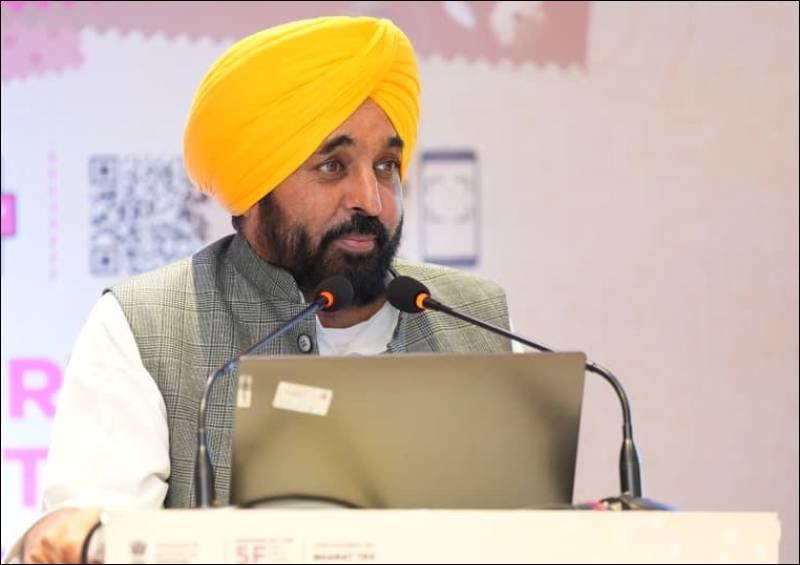
Speaking at the inauguration of the Punjab State Pavilion and the Punjab State Session at Bharat Tex 2026 in New Delhi, Chief Minister Bhagwant Singh Mann said the Punjab Industrial and Business Development Policy 2026 has been designed to create a more investor-friendly business environment, simplify approvals and strengthen the state’s manufacturing ecosystem.
Mann said Punjab has attracted investments worth Rs 2 lakh crore over the past four years, creating nearly five lakh employment opportunities, according to the state government. He highlighted the Single Window and Single Pen systems, along with the Invest Punjab and FastTrack Punjab portals, as key initiatives aimed at streamlining approvals, reducing compliance burdens and improving transparency for investors.

“Entrepreneurs are partners in Punjab’s growth,” Mann said, emphasising the government’s efforts to reduce procedural hurdles and improve the ease of doing business. He also said the state was exploring the possibility of leasing railway rakes to improve industrial logistics and connectivity.
At the heart of Punjab’s investment pitch is its integrated textile value chain. The state has capabilities spanning cotton cultivation, spinning, yarn manufacturing, fabric production, knitting, processing, garment manufacturing and exports, enabling companies to undertake much of the production cycle within the state.
Punjab exported textile and apparel products worth more than US$ 1.2 billion in FY2024-25, contributing nearly 4% of India’s textile and apparel exports, with the United States, the UAE and the UK among key markets.
Mann also highlighted Ludhiana’s position as North India’s largest knitwear and apparel cluster. The city accounts for nearly 90% of India’s woollen knitwear production and around 65% of the country’s hosiery output.
Looking ahead, Punjab aims to expand into technical, industrial, medical and protective textiles, geotextiles, sustainable fibres, smart fabrics, functional apparel and high-performance sportswear.
The new policy, developed through stakeholder consultations, focuses on infrastructure, reliable power, skill development, innovation and export promotion. Cabinet Minister Aman Arora and industry representatives also attended the Punjab session, as the state seeks to strengthen its role in global textile value chains.