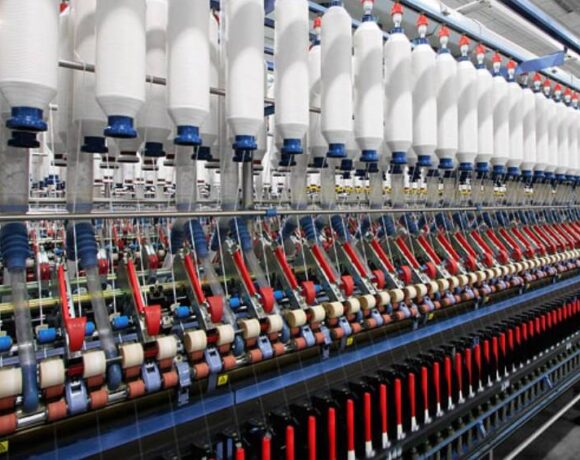

For nearly two centuries, the country that grew some of the world’s finest cotton was not allowed to make much cloth from it. Colonial law taxed Indian-woven textiles until British mills in Manchester could undersell them — raw cotton left Indian ports one way and came back the
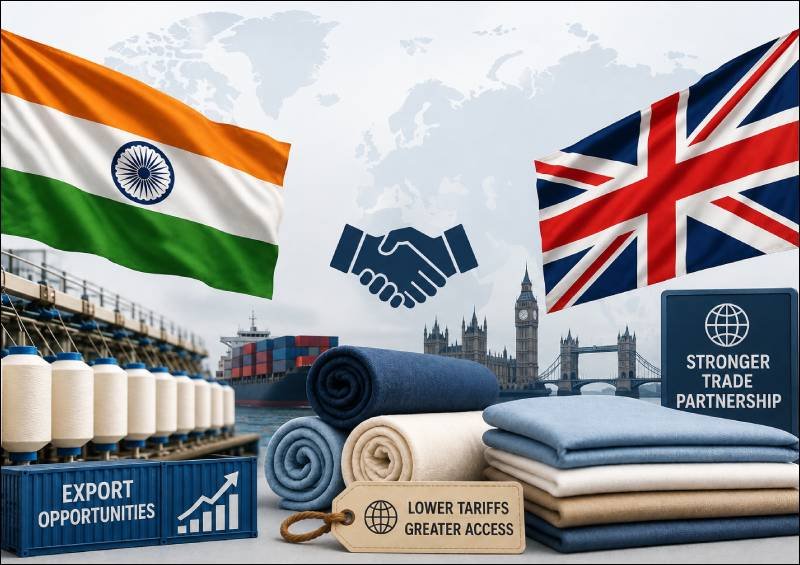
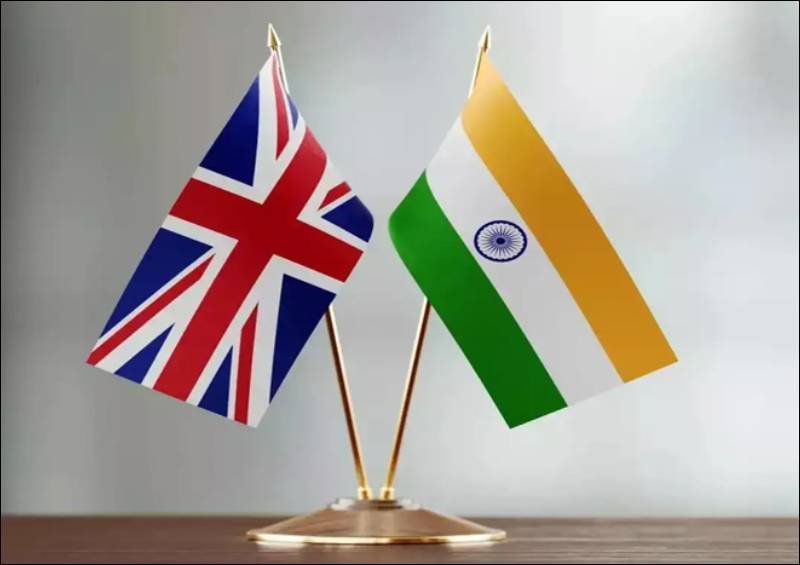
India needs to overcome structural challenges in areas of speed of delivery, consistency, innovation, sustainability, compliance, traceability and the ability to deliver large orders within increasingly compressed timelines The implementation of India–UK Comprehensive Economic and Trade Agreement (CETA) marks a defining moment for the Indian textile sector. With the
RSWM Ltd., one of India’s leading manufacturers of value-added yarns, denim fabrics, knitted fabrics and green polyester fibre, reported resilient financial performance for the first quarter ended June 30, 2026, despite continued challenges in global textile markets. The company posted revenue of Rs 1,161 crore in Q1 FY27, up 1.7 percent sequentially, supported by
Siyaram Silk Mills Ltd., one of India’s leading producers of blended fashion fabrics and apparel, reported a strong performance for the first quarter of FY27, with growth in revenue, profitability and retail expansion. The company’s standalone total income rose 16.4 per cent year-on-year to Rs 466 crore in Q1 FY27, compared to Rs 400 crore […]
The Cotton Association of India (CAI) has revised upward its cotton pressing estimate for the 2025-26 season to 337 lakh bales of 170 kg each, an increase of 3 lakh bales from its previous estimate of 334 lakh bales, reflecting improved crop availability in key producing regions. The latest assessment, finalised by the CAI Crop […]
India’s textile and apparel exports have remained around the US$ 40 billion mark for nearly six years, despite the industry’s ambition to reach US$ 100 billion by 2030. The ongoing West Asia crisis has disrupted trade routes and logistics, but it has also exposed deeper structural challenges that India must address to accelerate export growth. […]
Samir Joshipura, Group CEO, Trident Group, speaks on the overwhelming response at Bharat Tex 2026, evolving consumer preferences, global market challenges, India’s growing competitiveness and Trident’s sustainability journey. Trident Group’s booth at Bharat Tex 2026 has been witnessing a steady stream of visitors, reflecting the growing interest in the company’s diverse
India’s textile and apparel exporters have secured zero-duty access across 1,143 specific tariff lines in the UK market under the India-UK Comprehensive Economic and Trade Agreement (CETA), removing tariffs that previously reached up to 12 percent. The agreement provides duty-free or reduced-tariff access for 99 percent of Indian goods entering the UK, while 90 percent
The first three days of Bharat Tex 2026 have witnessed a strong response from domestic and international stakeholders with Bharat Mandapam emerging as a major global hub for textile and apparel business, sourcing, innovation and investment. Spread across more than 16 lakh square feet, the world’s largest integrated textile event has brought together 1,647 exhibitors,
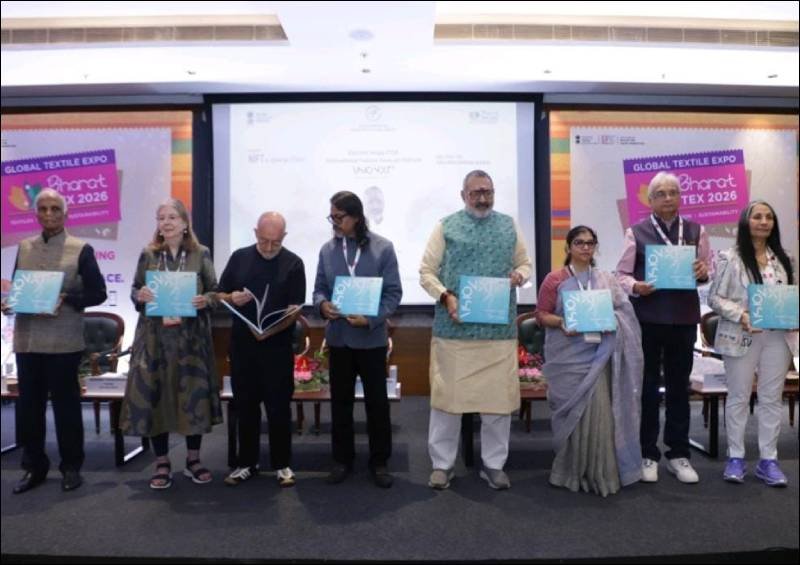
Giriraj Singh, Hon’ble Minister of Textiles, Government of India, released the India Textiles & Apparel CXO Blueprint 2030, a strategic report by the Clothing Manufacturers Association of India (CMAI) and the Global Alliance for Textile Sustainability (GATS), at the Sustainability & Circularity Impact Pavilion during Bharat Tex 2026. The report outlines strategic