
Trützschler’s IDF 3 Unlocks New Levels Of Productivity And Quality In Short-Fibre Processing
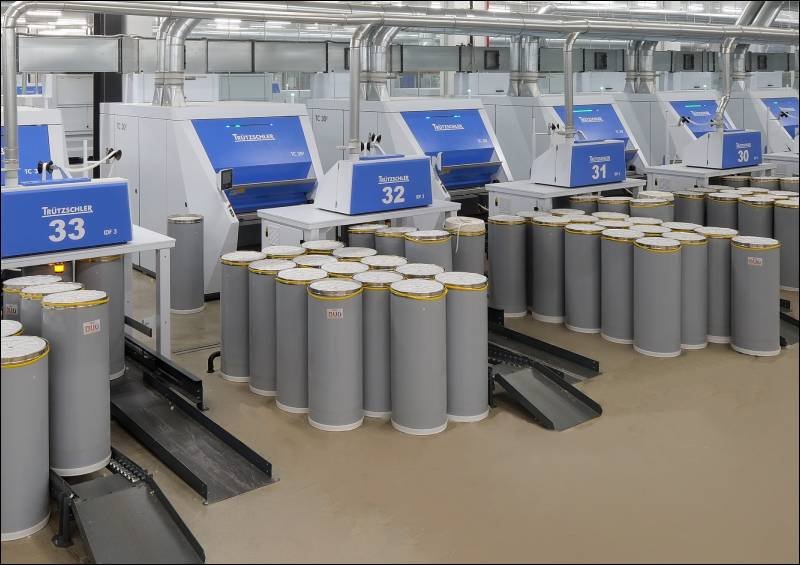
Spinning mills are increasingly seeking solutions that combine higher productivity, consistent quality and streamlined processing, particularly when handling short fibres and recycled materials. Trützschler’s Integrated Draw Frame (IDF 3) is emerging as a proven solution, with customer trials in Türkiye demonstrating significant improvements in both production efficiency and yarn quality.
Strong Results with TC 30i and IDF 3
A leading Turkish spinning mill producing 100 per cent cotton rotor yarn (Ne 30/1) recently evaluated the performance of Trützschler’s TC 30i card combined with the IDF 3. The mill compared the system against its conventional setup comprising a breaker and finisher draw frame operating at 90 kg/h.
While the traditional process was limited to 90 kg/h, the TC 30i-IDF 3 combination enabled production rates to increase progressively to 130 kg/h and subsequently to 150 kg/h. Across all production levels, the system delivered higher and more consistent quality, accompanied by lower imperfection index (IPI) values, demonstrating excellent process stability at significantly higher output levels.

Additional customer experiences in Türkiye further underline the benefits of the integrated system. Another spinning mill processing cotton and cotton blends in a rotor spinning line reported a 33 per cent increase in productivity compared with a conventional setup using separate breaker and finisher draw frames. The customer also reported maintaining consistently high yarn quality while benefiting from a shorter process route.
Performance Proven Across Diverse Applications
The advantages of IDF 3 extend beyond its combination with the TC 30i. In another trial, a Turkish spinner processing a blend of 50 per cent cotton waste and 50 per cent polyester evaluated the IDF 3 alongside a TC 19i card.
Operating at 130 kg/h, the integrated draw frame reduced IPI levels by approximately 50 per cent compared with a conventional two-passage draw frame process. Even when production was increased to 220 kg/h, the IPI values achieved with the IDF 3 remained lower than those recorded with the conventional setup.
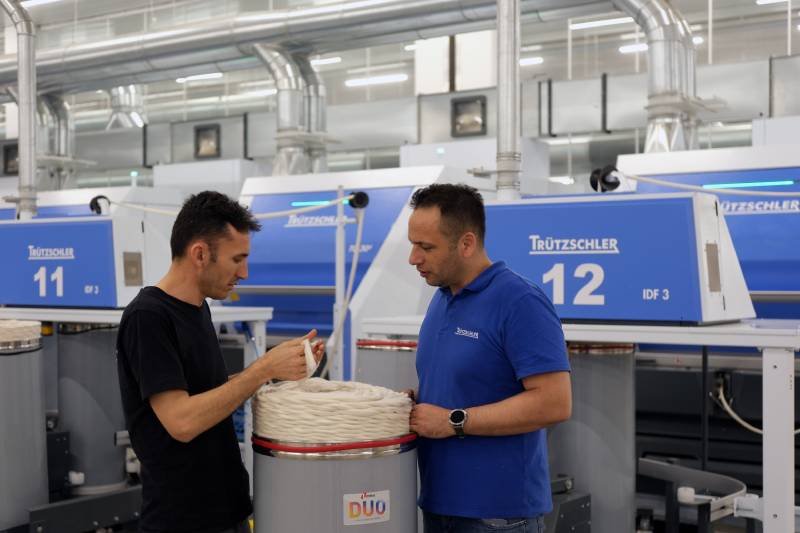
IDF 3 helps improve sliver quality, yarn evenness and strength – especially when processing higher short fiber content.
Encouraged by these results, the mill subsequently decided to replace competitor carding and draw frame equipment with Trützschler’s latest TC 30i card and IDF 3 system.
Optimised for Direct Spinning
According to Trützschler, the success of the IDF 3 lies in its ability to control short fibres effectively while enabling a shortened spinning preparation process.
The company notes that the benefits become increasingly pronounced as fibre lengths decrease and the proportion of short fibres rises. Mills report improvements in yarn evenness, lower IPI values and maintained yarn strength, even under demanding processing conditions.
Unlike conventional draw frames, which typically use two drafting zones and can generate higher levels of floating fibres, the IDF 3 operates with a single drafting zone. Its specialised drafting geometry ensures reliable fibre guidance, stabilises floating fibres and minimises count variations, resulting in more homogeneous sliver and improved yarn quality.
When integrated with the high-performance TC 30i card, the system supports high production rates while maintaining operational stability, including during can changes. The combination also helps reduce floor space requirements, compressed air consumption and operator intervention.
By combining productivity, quality and process simplification, Trützschler says the TC 30i and IDF 3 offer spinning mills an effective solution for direct spinning applications, particularly those involving short-fibre content, cotton waste and recycled raw materials.