Loop Industries Advances India Recycling Project With Gujarat MoU

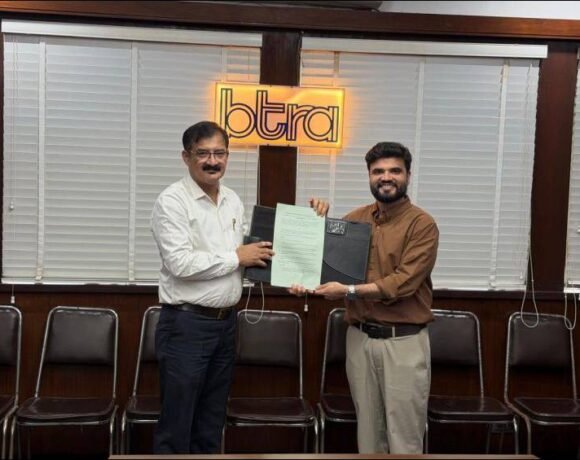
Loop Industries has signed a memorandum of understanding (MoU) to advance development of its first commercial-scale recycling facility in India, marking a significant step in the company’s global circular polyester expansion strategy.
The proposed plant will be located in Gujarat’s Bharuch industrial corridor, a key manufacturing hub offering strong logistics connectivity and access to industrial infrastructure critical for large-scale recycled polyester production.
The agreement is expected to accelerate administrative approvals, streamline permitting and support infrastructure coordination as the project moves toward execution.

The facility’s first phase is expected to deliver annual production capacity of approximately 70,000 tonnes, with scope for future expansion through a second unit that could add nearly 100,000 tonnes.
Loop Industries has also lowered the projected capital expenditure for the first phase to between US$ 165 million and US$ 170 million, down from its earlier estimate of US$ 190 million. The company attributed the reduction to favourable foreign exchange conditions, procurement efficiencies and lower land-related costs.
The revised investment is expected to improve project economics and strengthen the commercial case for the company’s India expansion.
“This agreement marks an important milestone as we move from planning toward execution,” said Daniel Solomita, Chief Executive Officer of Loop Industries. “With government alignment, secured expansion capacity and lower capital costs, we are building a scalable platform to meet growing demand for virgin-quality recycled polyester.”
The project aligns with rising demand across the textile and apparel sector for circular production solutions as brands accelerate efforts to integrate recycled materials and reduce supply chain emissions.
Once operational, the facility is expected to strengthen India’s position in sustainable textile manufacturing while supporting the global shift toward advanced recycling-led polyester production.