Bharat Tex 2026: Maharashtra Targets Rs 25,000 Crore Investments To Strengthen Textile Value Chain
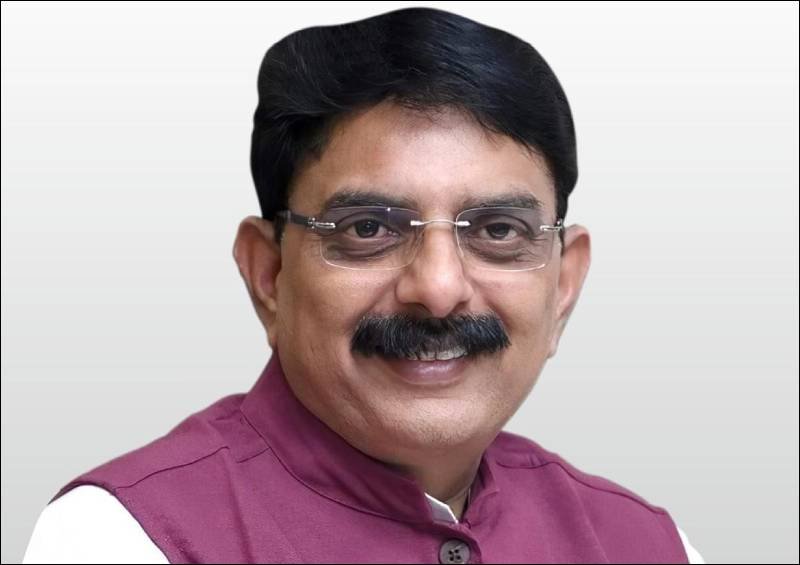
As Bharat Tex 2026 brings together the global textile fraternity in New Delhi, Maharashtra has reinforced its commitment to becoming India’s leading destination for textile manufacturing, investment and innovation. In an exclusive interaction, Sanjay Savkare, Hon’ble Minister for Textiles, Government of Maharashtra, shared the State’s roadmap to strengthen cotton value addition, modernise textile clusters, accelerate technical textile development and create sustainable employment under the Integrated and Sustainable Textile Policy 2023–28.
Strengthening the Cotton Value Chain
Maharashtra contributes more than 10% of India’s textile and apparel production and remains one of the country’s largest cotton-producing states. However, a significant share of cotton produced in regions such as Vidarbha and Marathwada is still transported outside the State for processing.
To address this, Maharashtra is building an integrated ‘Farm to Fiber to Factory to Fashion to Foreign’ ecosystem that will expand spinning, weaving, processing and garmenting capacities closer to cotton-growing regions. The objective is to increase in-state cotton processing from nearly 30% to 80%, enabling greater value addition, higher farmer incomes and stronger industrial growth.

The State has set an ambitious target of attracting Rs 25,000 crore in investments during the current policy period. Through capital subsidies, electricity incentives and special support for projects in backward regions, the Government aims to strengthen the entire textile value chain while creating large-scale employment opportunities.
Modernising Textile Clusters
Maharashtra’s textile industry is driven by established clusters such as Bhiwandi, Ichalkaranji, Solapur, Malegaon and Nagpur, where MSMEs play a crucial role. Recognising the need for technology adoption and improved competitiveness, the Government has introduced attractive incentives under its textile policy.
Eligible MSME textile units can avail capital investment subsidies of up to 45%, while the Maharashtra Technology Upgradation Fund Scheme (MAHA-TUFS) offers capital subsidy of up to 40% on eligible machinery investments, with graded assistance across different regions of the State.
The policy also supports sustainable manufacturing through incentives for Effluent Treatment Plants (ETPs), Common Effluent Treatment Plants (CETPs), Zero Liquid Discharge (ZLD) systems and renewable energy solutions such as solar power. These initiatives are expected to improve productivity while helping textile units meet global sustainability standards.
Improving Ease of Doing Business
The Government acknowledges that timely implementation of incentives is critical for investor confidence. To improve transparency and efficiency, Maharashtra has launched an e-Textile Portal that enables end-to-end online applications, real-time tracking and quicker subsidy disbursements.
Designed for both MSMEs and large enterprises, the digital platform minimises documentation requirements and features an AI-powered chatbot to assist applicants, making access to government schemes faster and more transparent.
Building a Technical Textile Hub
Technical textiles have emerged as one of Maharashtra’s key growth priorities. The State has proposed six dedicated Technical Textile Parks and has become the first in India to launch the Maharashtra Technical Textile Mission (MTTM), modelled on the National Technical Textiles Mission.
The Mission aims to promote research, product development, testing infrastructure and industry-academia collaboration. Under its Research and Development component, the Government has earmarked ₹50 crore to support innovation and technology adoption.
Detailed Project Reports for the proposed parks are currently under evaluation, while future initiatives will focus on expanding capabilities in high-growth segments such as Agrotech, Meditech, Buildtech and Geotech. Along with skilling and export promotion, these initiatives are expected to position Maharashtra as a preferred destination for high-value technical textile investments.
Preserving Maharashtra’s Textile Heritage
Alongside industrial expansion, Maharashtra continues to promote its rich handloom traditions, including Paithani, Himroo, Karvat Kathi, Khana fabrics and Ghongadi.
The State provides free electricity of up to 200 units to eligible weavers, festival assistance, marketing support and opportunities to participate in exhibitions. Outstanding craftsmanship is recognised through annual awards presented on National Handloom Day.
A unique initiative is the Kargha documentary series, developed in collaboration with Prasar Bharati and hosted on the WAVES OTT platform, which showcases Maharashtra’s traditional textile heritage to wider audiences. The Government is also exploring blockchain-based traceability solutions that will help authenticate heritage products, improve consumer confidence and enhance their value in global markets.
Investing in Skills and Employment
Creating skilled manpower remains central to Maharashtra’s textile growth strategy. The Integrated and Sustainable Textile Policy aims to generate nearly five lakh employment opportunities by strengthening workforce development across the textile value chain.
The Government supports training through Weaver Seva Kendras, Technical Training Institutes and ITIs, while encouraging partnerships with leading institutions including DKTE, IIT Bombay, VJTI and SASMIRA. Financial assistance is also available for establishing and upgrading textile training centres.
To strengthen social security, eligible handloom weavers are covered under the Pradhan Mantri Jeevan Jyoti Bima Yojana, with the State Government bearing the insurance premium. Maharashtra is also working with the Department of Skill Development to establish a dedicated Textile Skill Development Mission, focusing on industry-driven skilling and sustainable livelihoods.
A Global Investment Destination
Highlighting the significance of Bharat Tex 2026, Sanjay Savkare said the event provides Maharashtra with an ideal platform to showcase its strengths before global investors, technology providers and international brands.
He invited textile manufacturers to explore opportunities across the State’s expanding textile infrastructure, including the PM MITRA Park at Amravati, the proposed Technical Textile Parks and Mini Textile Parks spread across Maharashtra.
With a progressive policy framework, strong industrial infrastructure and a growing focus on sustainability, innovation and value addition, Maharashtra aims to leverage Bharat Tex 2026 to attract new investments, expand exports, strengthen technology partnerships and create quality employment. The State’s long-term vision is to build a globally competitive textile ecosystem that delivers growth across the entire value chain from cotton farms to finished products reaching international markets.