From Wheat Straw To Wardrobes: How Agricultural Residues Could Rewrite Fashion’s Fibre Future
By turning farm waste into fashion-grade fibre, Project Latvus offers a glimpse into a forest-free future for textiles.
The fashion industry is standing at a critical crossroads.
As global demand for sustainable materials intensifies, brands are increasingly shifting away from petroleum-based synthetics and searching for lower-impact alternatives. Yet this transition presents an uncomfortable paradox, many of the fibres positioned as better alternatives such as viscose and lyocell, still depend heavily on wood pulp, placing enormous pressure on forests already strained by climate change, biodiversity loss and industrial demand.

In its latest Project Latvus report, Canopy has presented a compelling case for transforming wheat straw into fashion-grade fibre, offering a scalable, forest-friendly alternative for the textile industry.
A breakthrough initiative, Project Latvus is now challenging this model with an elegant solution hiding in plain sight – wheat straw.
The project has successfully demonstrated that agricultural residues can be transformed into high-quality lyocell fibre suitable for textile production, potentially opening a new chapter for the man-made cellulosic fibre (MMCF) industry.
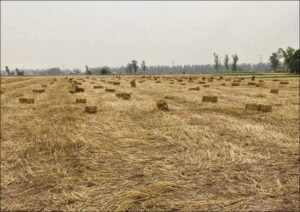
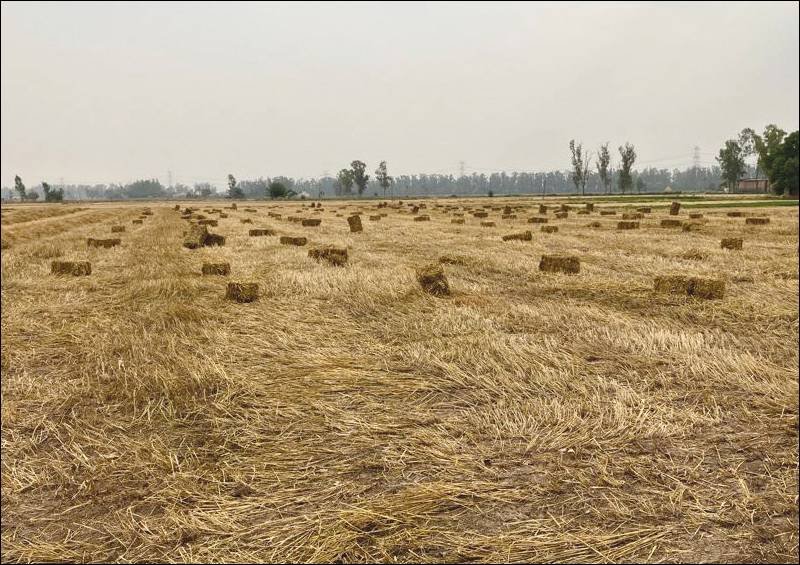
Wheat Straw Processing In Punjab, India.
Turning Waste Into Opportunity
Every year, millions of tonnes of wheat straw are left behind after harvest. In many agricultural regions, particularly in India, large portions of this residue are burned in open fields, a practice that contributes significantly to air pollution, greenhouse gas emissions and public health concerns.
Project Latvus asks a compelling question: What if this agricultural by-product could become a valuable raw material for fashion instead?
The answer appears increasingly promising.
By converting wheat straw into dissolving pulp and subsequently into lyocell fibre, the project has proven that crop residues can serve as a technically viable feedstock for premium textile applications. The resulting fibre has demonstrated performance characteristics comparable to commercially produced lyocell, showing compatibility across spinning, knitting, dyeing and finishing processes.
This is more than a material innovation, it is a systems-level rethink of how textiles can be sourced.
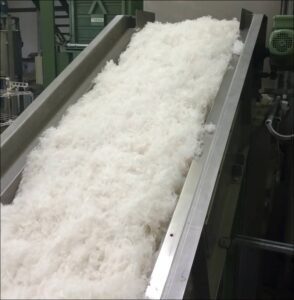
Latvus Staple Lyocell Fibre At Titk
A Forest-Friendly Fibre Pathway
The significance of this innovation extends far beyond textile performance.
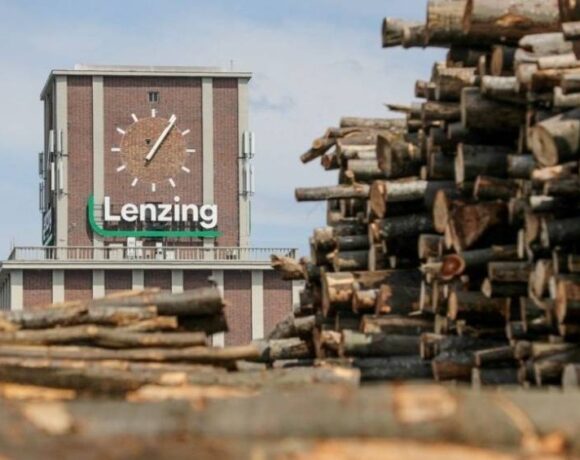
Traditional MMCF production relies heavily on forest-derived pulp, with hundreds of millions of trees harvested annually to meet growing demand for viscose, modal and lyocell. While these fibres are often marketed as renewable alternatives to polyester, their dependence on forest ecosystems raises urgent environmental concerns.
Project Latvus offers a compelling alternative.
By sourcing cellulose from wheat straw rather than trees, the initiative demonstrates how the fashion industry can decouple fibre production from deforestation risks. This approach not only preserves climate-critical forests but also helps safeguard biodiversity-rich ecosystems that play a crucial role in carbon sequestration and ecological resilience. In essence, it represents a shift from extractive sourcing to circular resource utilization.
Benefits Beyond Fashion
What makes the wheat-straw model especially powerful is its multi-dimensional impact.
For farmers, agricultural residues become an additional revenue stream rather than a disposal problem. This creates economic incentives while reducing the need for environmentally damaging stubble burning.
For manufacturers, crop-residue feedstocks offer a diversified and potentially more resilient supply chain.
For brands, the material presents a credible route to lower-impact fibre sourcing without compromising quality or performance.
And for consumers, it signals the arrival of garments whose sustainability story extends beyond recycled content or reduced water use, into the very origin of the fibre itself.
Collaboration as the Real Innovation
Perhaps the most important lesson from Project Latvus is that next-generation materials cannot succeed through isolated innovation.
The project brought together stakeholders across the textile value chain from pulp producers and fibre processors to yarn spinners, knitwear manufacturers and fashion brands to test the material under real-world conditions.
This collaborative approach accelerated validation across each production stage, proving that innovation in sustainable textiles is not simply about inventing new materials. It is about ensuring they can move seamlessly through existing industrial systems.
That practical scalability is what separates promising concepts from commercially viable solutions.
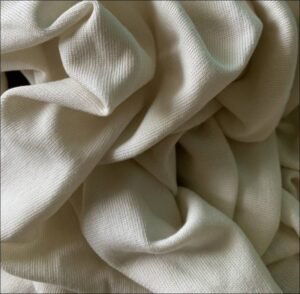
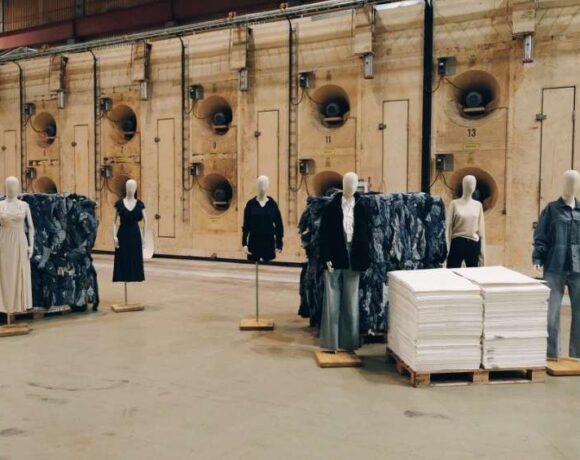
Yee Chain’s Knit Fabric Made With 100% Latvus Staple Lyocell From Wheat Straw.
The Road Ahead
While further optimization and scale-up are still required, Project Latvus has established something profoundly important: wheat-straw-based lyocell is no longer a theoretical possibility.
It is a credible pathway toward commercial adoption.
For an industry under mounting pressure to decarbonize, reduce deforestation risk, and build more circular supply chains, this breakthrough arrives at exactly the right moment.
The future of fashion may not be grown in forests alone.
It may also rise from the fields transforming what was once agricultural waste into the next generation of sustainable textiles.
From wheat straw to wardrobes, the textile industry may be witnessing the early blueprint of a truly regenerative fibre future.