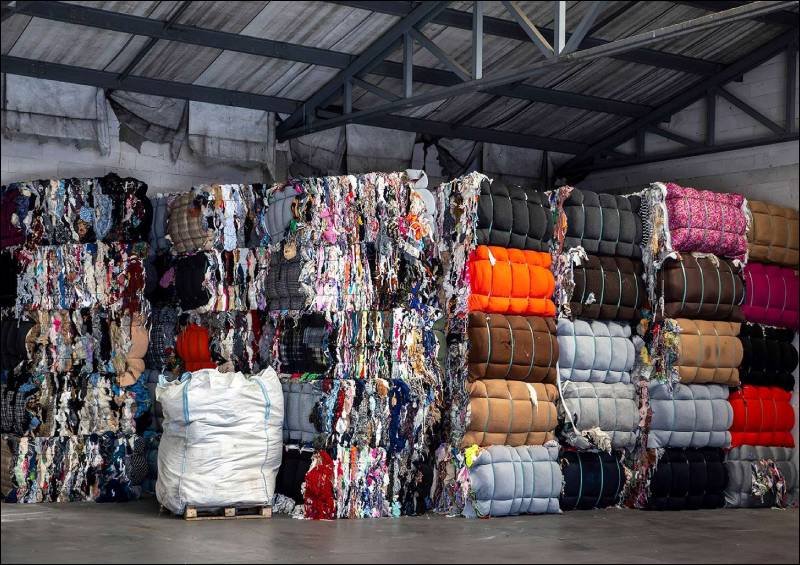
Sustainability is no longer a niche agenda for India’s textile industry. As global markets demand greater transparency, traceability and environmental responsibility, circularity is emerging as a strategic imperative for the sector’s next phase of growth. India’s textile and apparel
Researchers at the German Institutes of Textile and Fiber Research Denkendorf, in collaboration with the Fraunhofer Institute for Applied Polymer Research, have developed smart textile yarns capable of reversibly changing shape in response to temperature, paving the way for energy-efficient textile actuators. The innovation is based on thermoplastic two-way shape-memory
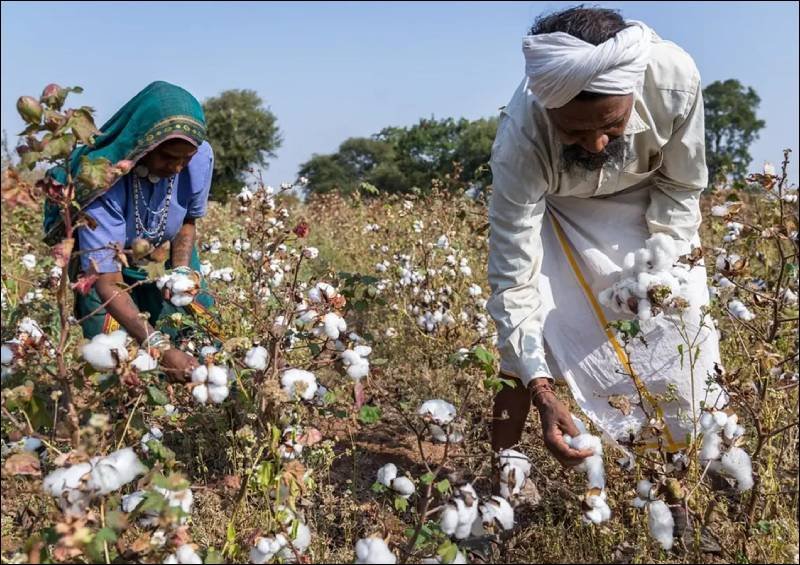
For nearly two centuries, the country that grew some of the world’s finest cotton was not allowed to make much cloth from it. Colonial law taxed Indian-woven textiles until British mills in Manchester could undersell them — raw cotton left Indian ports one way and came back the other—spun, woven and priced by someone else. […]
Dr. Ajay Ranka believes the future of Indian cotton lies in restoring soil health, reducing chemical dependence and creating a profitable transition to bio-based farming. For Dr. Ajay Ranka, the future of Indian cotton farming will depend on one fundamental question: can the country improve soil health while making farming more profitable for the farmer? […]
Global cotton trade is expected to remain on a growth trajectory over the medium term despite increasing supply-side pressures and geopolitical uncertainties, according to the latest World Cotton Trade Report – July 2026 released by the International Cotton Advisory Committee (ICAC). The report projects global cotton trade to reach 9.6 million tonnes in 2026/27 and […]
US apparel imports continued to weaken during the Jan-May 2026 period, with total imports falling by 9.1 per cent compared with the same period last year, reflecting softer sourcing activity and a sharp decline in shipments from China. According to the latest trade data, US apparel imports during the January–May 2026 period were valued at […]
India needs to overcome structural challenges in areas of speed of delivery, consistency, innovation, sustainability, compliance, traceability and the ability to deliver large orders within increasingly compressed timelines The implementation of India–UK Comprehensive Economic and Trade Agreement (CETA) marks a defining moment for the Indian textile sector. With the
Cantabil Retail India Ltd. (CRIL), one of India’s leading value fashion retailers, reported a strong start to FY27, with double-digit growth in revenue and profitability, supported by healthy consumer demand, positive same-store sales growth and continued operational efficiency. For the quarter ended June 30, 2026, revenue from operations rose 13% year-on-year to Rs 178.8
The global textile industry witnessed a slight weakening in business conditions during July 2026, although companies remain cautiously optimistic about the months ahead, according to the latest 39th Global Textile Industry Survey (GTIS) released by the International Textile Manufacturers Federation (ITMF). The survey, conducted between July 14 and 22, 2026, found that 10%
The Bangladesh Garment Manufacturers and Exporters Association (BGMEA) and the Society of Dyers and Colourists (SDC) have signed a Memorandum of Understanding (MoU) aimed at strengthening collaboration in education, sustainability and innovation across Bangladesh’s textile and apparel sector. The partnership seeks to enhance industry capabilities by promoting knowledge and